

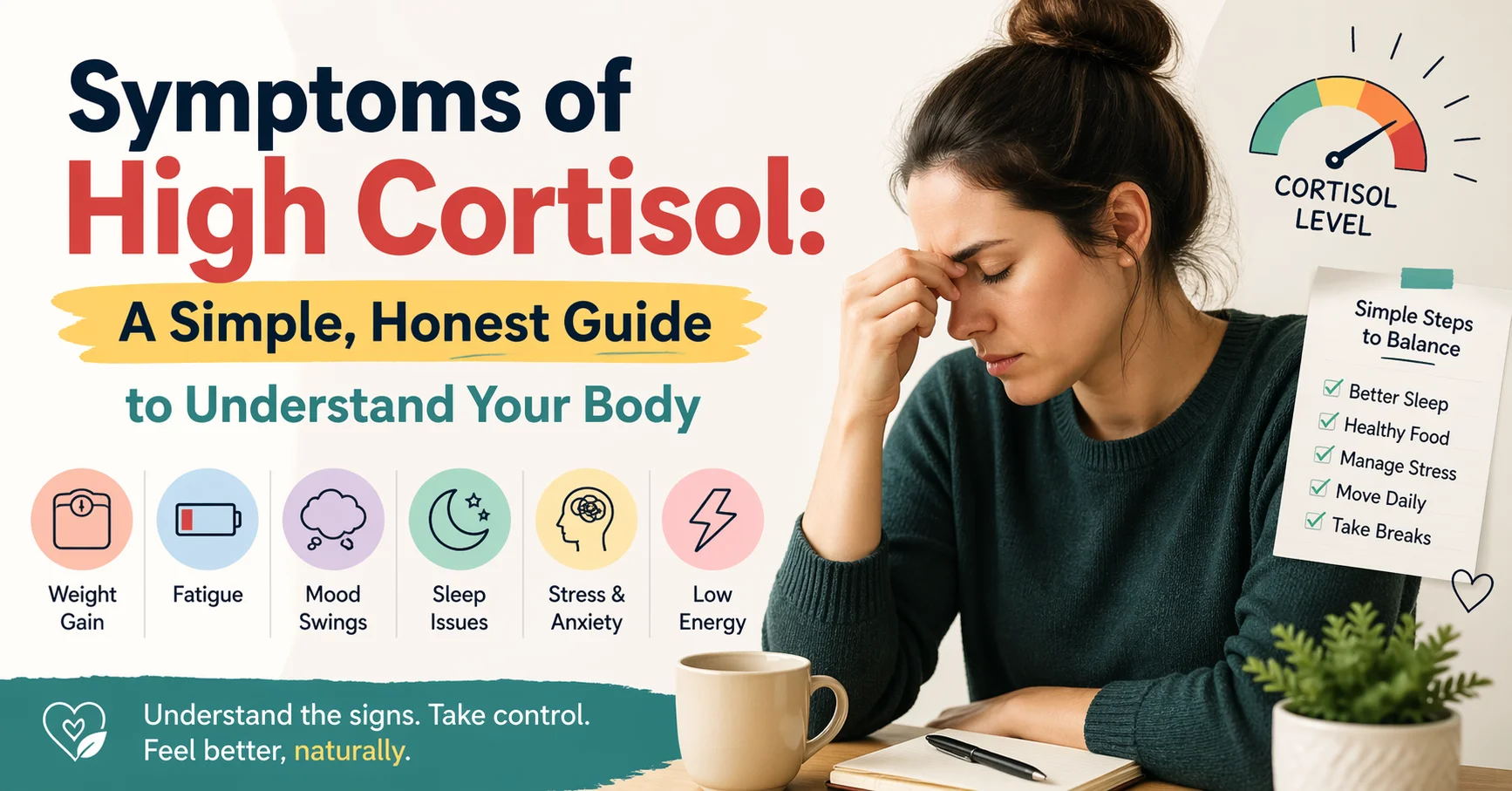
Stress is part of life. But when stress sticks around too long, your body reacts. One key player in this process is cortisol. It’s often called the “stress hormone.” In small amounts, it helps you stay alert and focused. But too much can cause real problems.
In this guide, we’ll break down the symptoms of high cortisol in a clear and friendly way. You’ll learn how it affects your body, mind, and daily life. We’ll also look at symptoms of high cortisol in females, early warning signs, and what happens in the morning when cortisol spikes.
This is not just medical info. It’s practical, real-life guidance you can actually use.
What Is Cortisol and Why Does It Matter?
Cortisol is a hormone made by your adrenal glands. These sit on top of your kidneys. Your body releases cortisol when you face stress. This could be physical stress, like illness, or emotional stress, like worry.
In short bursts, cortisol helps you. It boosts energy and sharpens focus. But long-term high levels can harm your health. That’s when the symptoms of high cortisol levels begin to show.
Think of cortisol like a fire alarm. It’s helpful in emergencies. But if it keeps ringing all day, it becomes a problem.
Common Symptoms of High Cortisol
When cortisol stays high, your body sends signals. These signals can be physical, mental, and emotional. Many people ignore them at first.
Here are the most common symptoms of high cortisol:
| Symptom | What It Feels Like |
|---|---|
| Weight gain | Fat builds around belly and face |
| Fatigue | Feeling tired even after rest |
| Mood swings | Irritability, anxiety, or sadness |
| Sleep issues | Trouble falling or staying asleep |
| High blood pressure | Often unnoticed without testing |
These signs may seem normal at first. But when they happen together, they point to a deeper issue.
Symptoms of High Cortisol in Females
Women often experience cortisol imbalance differently. Hormones like estrogen and progesterone interact with cortisol.
Here are specific symptoms of high cortisol in females:
| Symptom | Why It Happens |
|---|---|
| Irregular periods | Hormone disruption |
| Acne breakouts | Increased oil production |
| Hair thinning | Stress affects hair growth cycle |
| Low libido | Hormonal imbalance |
| Increased PMS | Heightened sensitivity to stress |
Many women mistake these for normal hormonal changes. But ongoing symptoms may signal high cortisol levels.
Early Warning Signs You Shouldn’t Ignore
Your body whispers before it screams. Early symptoms of high cortisol levels are often subtle.
You might notice:
- Feeling “wired but tired”
- Craving sugary or salty foods
- Trouble focusing
- Mild anxiety without reason
These signs are easy to dismiss. But catching them early can prevent bigger health issues later.
Symptoms of High Cortisol Levels in Morning
Cortisol naturally rises in the morning. This helps you wake up. But when levels are too high, mornings feel rough instead of refreshing.
Here are symptoms of high cortisol levels in morning:
| Symptom | Description |
|---|---|
| Early waking | Waking too early and unable to sleep again |
| Morning anxiety | Feeling nervous right after waking |
| Rapid heartbeat | Heart feels like it’s racing |
| Low appetite | No desire to eat breakfast |
| Brain fog | Slow thinking and poor focus |
Instead of feeling energized, you feel overwhelmed before the day even starts.
How High Cortisol Affects Your Mental Health
Cortisol has a strong effect on your brain. Long-term high levels can change how you feel and think.
You may notice:
- Increased anxiety
- Low mood or depression
- Memory problems
- Feeling overwhelmed easily
This happens because cortisol affects brain areas linked to emotion and memory. Over time, it can make even small problems feel huge.
Physical Effects on Your Body
High cortisol doesn’t just affect your mood. It also changes your body.
Here’s how:
| Body Area | Effect |
|---|---|
| Heart | Increased blood pressure |
| Immune system | Weaker defense against illness |
| Muscles | Weakness or loss |
| Skin | Thinning and easy bruising |
| Bones | Reduced strength over time |
These changes don’t happen overnight. But over time, they can lead to serious health issues.
Causes of High Cortisol Levels
Understanding the cause helps you fix the problem.
Common causes include:
- Chronic stress
- Lack of sleep
- Poor diet
- Overtraining (too much exercise)
- Medical conditions like Cushing’s syndrome
Lifestyle plays a huge role. Small daily habits can slowly push cortisol higher.
Daily Habits That Increase Cortisol
Sometimes, your routine is the hidden cause.
Here are habits that may raise cortisol:
| Habit | Impact |
|---|---|
| Skipping meals | Blood sugar drops, stress rises |
| Too much caffeine | Stimulates stress response |
| Late-night screen use | Disrupts sleep hormones |
| Constant worry | Keeps body in stress mode |
| Overworking | No time for recovery |
Even small changes can make a big difference.
How to Lower High Cortisol Naturally
The good news is, you can take control.
Try these simple steps:
- Get 7–9 hours of sleep
- Eat balanced meals
- Practice deep breathing
- Spend time outdoors
- Reduce caffeine intake
Consistency matters more than perfection. Small daily habits lead to big results.
Foods That Help Balance Cortisol
Food is powerful. What you eat affects your hormones.
Here are helpful foods:
| Food | Benefit |
|---|---|
| Oats | Stabilize blood sugar |
| Nuts | Provide healthy fats |
| Leafy greens | Rich in magnesium |
| Berries | Reduce inflammation |
| Yogurt | Supports gut health |
Avoid too much sugar and processed foods. They can spike cortisol quickly.
When Should You See a Doctor?
Sometimes, lifestyle changes are not enough.
You should seek help if:
- Symptoms last for months
- You feel constant fatigue
- You have unexplained weight gain
- Mood changes affect daily life
A doctor can run tests to check your cortisol levels. Early help can prevent long-term damage.
Long-Term Risks of High Cortisol
Ignoring the symptoms of high cortisol can lead to serious problems.
These include:
- Heart disease
- Diabetes
- Chronic anxiety
- Hormonal disorders
Your body is always trying to protect you. Listening early can save you from bigger issues later.
Simple Daily Routine to Support Healthy Cortisol
Here’s an easy routine to follow:
| Time | Action |
|---|---|
| Morning | Sunlight exposure + light movement |
| Midday | Balanced meal + hydration |
| Afternoon | Short walk or break |
| Evening | Relaxation (reading, music) |
| Night | Screen-free wind-down |
A calm routine helps your body feel safe. This naturally lowers cortisol.
FAQs About Symptoms of High Cortisol
1. What are the main symptoms of high cortisol?
Common symptoms include weight gain, fatigue, mood swings, and sleep problems.
2. Are symptoms of high cortisol in females different?
Yes, women may have irregular periods, acne, and hormonal changes.
3. Why are symptoms worse in the morning?
Cortisol peaks in the morning. High levels can cause anxiety and fatigue early in the day.
4. Can stress alone cause high cortisol?
Yes, chronic stress is one of the biggest causes of high cortisol levels.
5. How long does it take to lower cortisol?
It depends on the cause. Lifestyle changes may show results in a few weeks.
6. Can diet really help control cortisol?
Yes, a balanced diet supports hormone health and reduces stress responses.
Final Thoughts: Listen to Your Body
Your body speaks to you every day. The symptoms of high cortisol are not random. They are signals asking for change.
You don’t need a perfect life to fix this. Small steps matter. Better sleep, healthier food, and less stress can transform your health.
If something feels off, don’t ignore it. Pay attention. Take action. And if needed, reach out for help.
Your health is worth it.
