

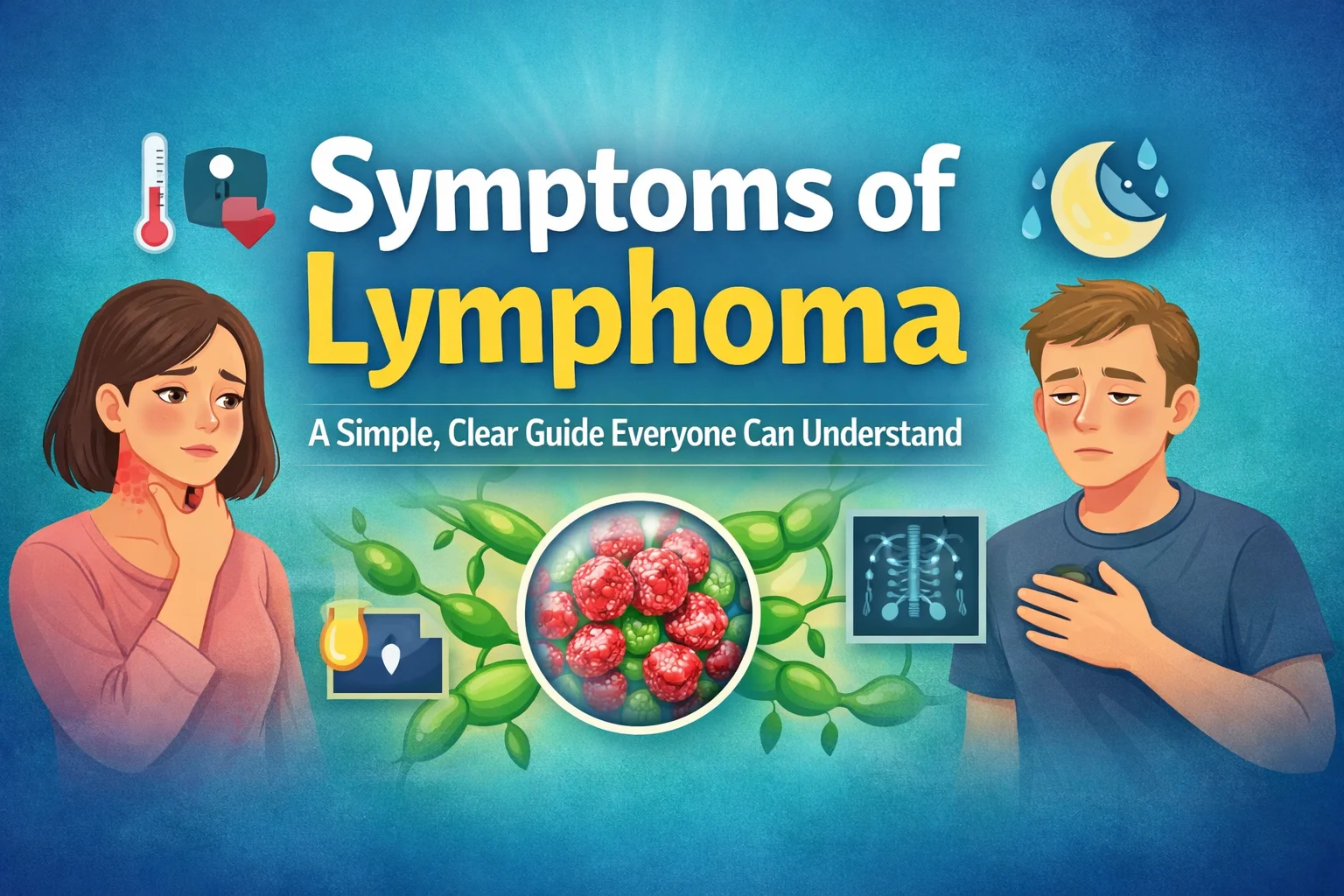
Lymphoma is a type of cancer that starts in the lymphatic system. This system helps your body fight infections. When something goes wrong, certain white blood cells grow out of control. These cells can form tumors in lymph nodes and other parts of the body.
Understanding the symptoms of lymphoma early can make a big difference. Many people ignore early signs because they seem small. But noticing changes in your body is very important. This guide will help you learn what to watch for in a simple way.
I’ve seen many people delay checking symptoms. They think it’s just stress or a mild illness. But sometimes, your body is trying to tell you something serious. This article will walk you through clear signs, real-life examples, and when to take action.
What Is Lymphoma and Why It Happens
Lymphoma is a cancer of the lymphocytes, a type of white blood cell. These cells normally protect your body from infections. When they grow abnormally, they can form lumps or spread through the body.
There are two main types: Hodgkin lymphoma and non-Hodgkin lymphoma. Both types share many common signs. The causes are not always clear, but risk factors include weak immunity, infections, and family history.
Some people develop lymphoma without any clear reason. That is why knowing the symptoms of lymphoma disease is so important. Early awareness can help you act fast.
Early Symptoms of Lymphoma You Should Not Ignore
Early signs are often mild and easy to miss. Many people think they have a simple infection.
Here are some early symptoms of lymphoma:
- Painless swelling in neck, armpit, or groin
- Mild fever that comes and goes
- Feeling tired all the time
- Night sweats
- Unexplained weight loss
These signs may not look serious at first. But if they last more than two weeks, it’s best to see a doctor.
From experience, many people ignore fatigue. They blame work or stress. But constant tiredness without reason should not be ignored.
Common Signs and Symptoms of Lymphoma Cancer
As lymphoma grows, symptoms become more noticeable. These signs affect daily life.
Below is a helpful table showing common signs:
| Symptom | What It Feels Like | Why It Happens |
|---|---|---|
| Swollen lymph nodes | Lump under skin | Cancer cells build up |
| Fever | Low or high temperature | Body reacting to disease |
| Night sweats | Soaking sweat at night | Hormone and immune response |
| Fatigue | Constant tiredness | Body using energy to fight cancer |
| Weight loss | Losing weight quickly | Increased metabolism |
These sign and symptoms of lymphoma cancer may appear slowly or suddenly.
Where Do Lymphoma Symptoms Appear in the Body?
Lymphoma can affect many parts of the body. It often starts in lymph nodes but can spread.
Common areas include:
- Neck
- Chest
- Abdomen
- Armpits
- Groin
If lymphoma spreads, symptoms depend on the affected area. For example, chest involvement may cause coughing or breathing problems.
Here’s a quick guide:
| Body Area | Possible Symptoms |
|---|---|
| Chest | Cough, chest pain |
| Abdomen | Bloating, pain |
| Skin | Itching, rashes |
| Brain | Headaches (rare) |
Understanding these patterns helps identify symptoms of lymphoma disease earlier.
Symptoms of Lymphoma in Females
Women may experience general lymphoma symptoms along with some unique signs. Hormonal changes can sometimes mask the symptoms.
Common symptoms of lymphoma in females include:
- Breast swelling or lumps
- Irregular menstrual cycles
- Pelvic discomfort
- Extreme fatigue
Women often ignore these signs, thinking they are hormonal. But if symptoms persist, medical advice is important.
In real life, many women delay care due to busy routines. But early testing can save lives.
Advanced Symptoms of Lymphoma
When lymphoma progresses, symptoms become more serious. These signs affect overall health.
Here’s a table of advanced symptoms:
| Symptom | Description |
|---|---|
| Severe fatigue | Unable to perform daily tasks |
| Persistent fever | High or recurring fever |
| Intense itching | Whole body itching without rash |
| Shortness of breath | Trouble breathing |
| Swollen abdomen | Enlarged organs |
Advanced symptoms of lymphoma need immediate medical attention.
Symptoms of Dying of Lymphoma
In the late stages, the body becomes very weak. These signs show the disease is severe.
Common symptoms of dying of lymphoma include:
- Extreme weakness
- Loss of appetite
- Difficulty breathing
- Confusion or memory issues
- Pain in different parts of the body
This stage requires supportive care and comfort. Families should seek medical guidance for proper care.
How Lymphoma Symptoms Change Over Time
Lymphoma symptoms do not stay the same. They often change as the disease grows.
Early stage: mild symptoms like fatigue and swelling
Middle stage: more noticeable signs like fever and weight loss
Late stage: severe symptoms affecting organs
Here’s a simple timeline:
| Stage | Symptoms |
|---|---|
| Early | Mild swelling, fatigue |
| Middle | Fever, weight loss |
| Late | Organ problems, weakness |
Tracking changes helps doctors diagnose faster.
When Should You See a Doctor?
You should not panic, but you should stay alert. Some symptoms need medical attention.
See a doctor if you have:
- Swelling lasting more than 2 weeks
- Unexplained weight loss
- Night sweats regularly
- Constant fatigue
Ignoring the symptoms of lymphoma can delay diagnosis. Early action improves treatment success.
How Doctors Diagnose Lymphoma
Doctors use several tests to confirm lymphoma.
Common tests include:
- Blood tests
- Biopsy (removing tissue sample)
- CT or PET scans
- Bone marrow tests
Here’s a simple table:
| Test | Purpose |
|---|---|
| Blood test | Check cell levels |
| Biopsy | Confirm cancer |
| Scan | Find spread |
| Bone marrow test | Check deeper involvement |
Diagnosis helps decide the best treatment plan.
Risk Factors That Increase Lymphoma Chances
Some factors may increase the risk of lymphoma.
These include:
- Weak immune system
- Certain infections
- Family history
- Age (older adults more at risk)
But remember, anyone can develop lymphoma. That’s why knowing the symptoms of lymphoma disease matters.
Lifestyle Tips for Early Awareness
You cannot always prevent lymphoma, but you can stay alert.
Helpful tips:
- Check your body for lumps regularly
- Track unusual symptoms
- Maintain a healthy lifestyle
- Visit a doctor for regular checkups
Being aware of your body is the first step to early detection.
Emotional Impact of Lymphoma Symptoms
Living with symptoms can be stressful. Many people feel fear and anxiety.
It’s normal to feel worried. Talking to family or a doctor helps. Support groups can also provide comfort.
From real-life experience, emotional support plays a big role in recovery.
FAQs About Symptoms of Lymphoma
1. What are the first symptoms of lymphoma?
The first signs often include swollen lymph nodes, fatigue, and mild fever. These may seem harmless at first.
2. Are lymphoma symptoms painful?
Most swollen lymph nodes are painless. Pain may appear in later stages.
3. Can lymphoma symptoms come and go?
Yes, some symptoms like fever or fatigue may appear and disappear.
4. How fast do lymphoma symptoms progress?
It depends on the type. Some grow slowly, while others spread quickly.
5. Are symptoms different in females?
Yes, symptoms of lymphoma in females may include hormonal changes and pelvic discomfort.
6. When should I worry about symptoms?
If symptoms last more than two weeks or worsen, consult a doctor.
Conclusion: Listen to Your Body Early
The symptoms of lymphoma can start small but grow serious over time. Many people ignore early signs, thinking they are minor issues. But your body often gives warning signals before things get worse.
Pay attention to changes like swelling, fatigue, or weight loss. These may seem simple but can be important clues. Early detection can improve treatment success and quality of life.
If something feels off, do not wait. Talk to a doctor and get checked. It is always better to be safe than sorry.
Your health matters. Stay aware, stay informed, and take action when needed.
