
Blood clots can sound scary. But knowing the signs early can save lives. One common type is a clot in the leg, often called deep vein thrombosis (DVT). Many people ignore the early warning signs because they seem small. That’s why learning the symptoms of blood clot in leg is so important.
In this guide, I’ll walk you through everything in a simple way. You’ll learn what to watch for, when to worry, and how to stay safe. I’ll also share real-life style examples and easy tips you can follow daily.
What Is a Blood Clot in the Leg?
A blood clot in the leg happens when blood thickens and sticks together inside a vein. This usually occurs deep inside the leg muscles. That’s why doctors call it deep vein thrombosis.
The scary part is not always the clot itself. The danger comes if the clot breaks loose and travels to the lungs. This can cause a serious condition called pulmonary embolism.
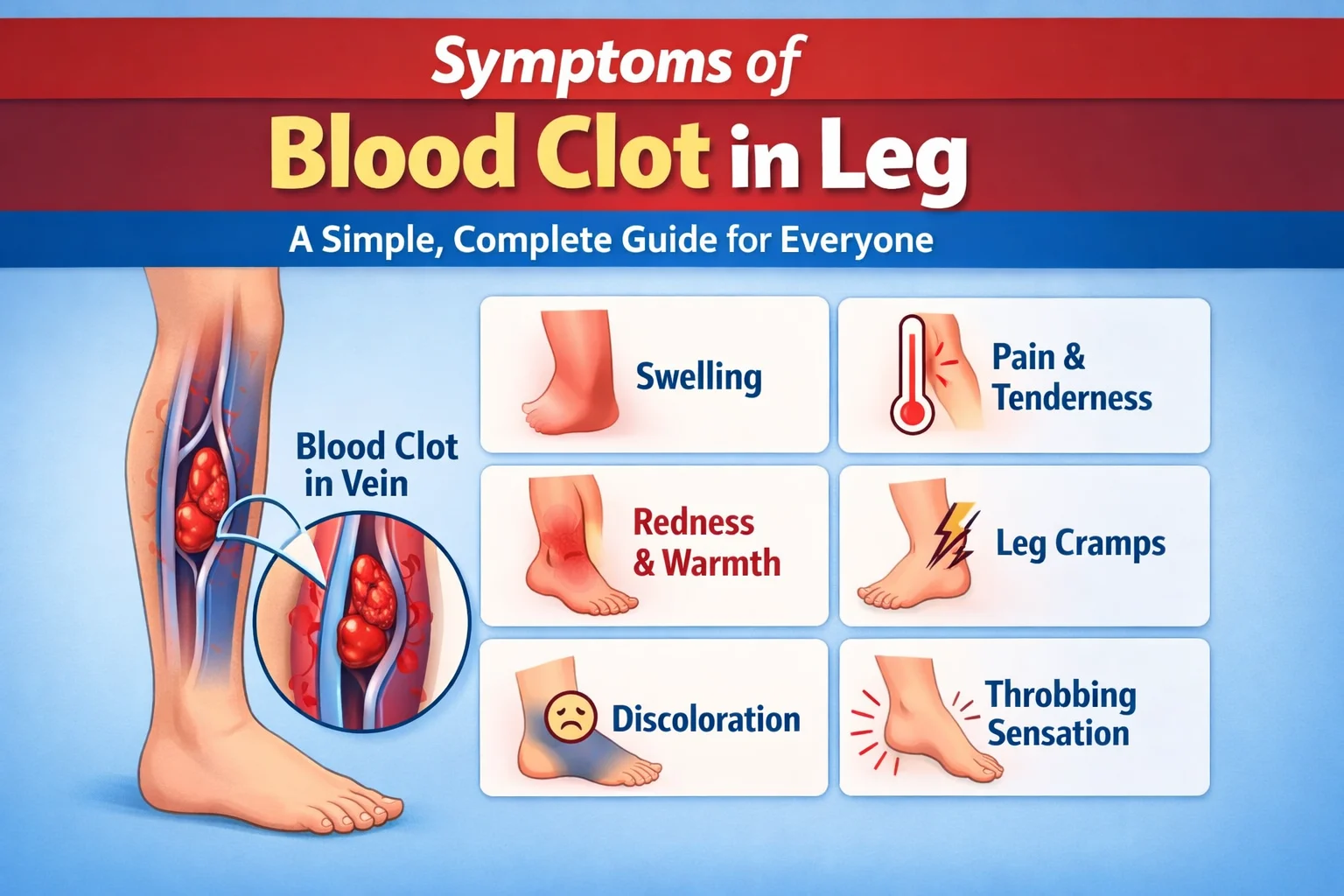
The symptoms of blood clot in leg can start slowly. Some people feel nothing at first. Others notice pain or swelling. Because the signs vary, many people miss them.
Think of it like a blocked pipe. Blood cannot flow properly, so pressure builds up. That causes pain, swelling, and color changes in the leg.
Why Blood Clots Form in the Leg
Blood clots do not happen without a reason. There are common causes behind them. Knowing these helps you understand your risk.
One major cause is staying still for too long. For example, long flights or sitting all day. Blood moves slowly when you don’t move. This increases clot risk.
Another cause is injury or surgery. Your body forms clots to stop bleeding. But sometimes it overreacts.
Certain health conditions also play a role. These include obesity, cancer, and heart disease. Smoking also raises the risk.
Understanding these causes helps you notice early symptoms of blood clot in leg before they become serious.
Early Symptoms of Blood Clot in Leg
Early signs are often mild. Many people ignore them at first. That can be risky.
Here are the most common early signs:
| Symptom | What It Feels Like |
|---|---|
| Mild pain | Feels like a cramp or soreness |
| Slight swelling | One leg looks a bit bigger |
| Warm skin | Area feels warmer than usual |
| Tenderness | Pain when touching the leg |
The early symptoms of blood clot in leg may come and go. That’s why people mistake them for muscle strain.
For example, I once heard from someone who thought it was just a gym injury. Days later, the pain got worse. It turned out to be a clot.
Common Symptoms of a Blood Clot in Leg
As the clot grows, symptoms become clearer. These signs should not be ignored.
The symptoms of a blood clot in leg often include pain that does not go away. The leg may swell more, especially in the calf.
You may also notice skin color changes. The skin can turn red or slightly blue. It may also feel tight or shiny.
Walking might become painful. Some people feel heaviness in the leg. Others say it feels like a pulled muscle that never heals.
These symptoms usually affect only one leg. That is a key warning sign.
Symptoms of Blood Clot in Lower Leg
Clots often form in the lower leg, especially in the calf area. This is where blood flow slows down easily.
The symptoms of blood clot in lower leg include sharp pain in the calf. It may hurt more when you stand or walk.
Swelling in the ankle or foot is also common. The skin may feel warm and look red.
Sometimes, the pain feels like a charley horse. But unlike a cramp, it does not go away with stretching.
Here’s a simple comparison:
| Feature | Muscle Cramp | Blood Clot |
|---|---|---|
| Pain duration | Short | Long-lasting |
| Swelling | Rare | Common |
| Warmth | No | Yes |
| Color change | No | Yes |
This table helps you spot the difference quickly.
Severe Symptoms You Should Never Ignore
Some symptoms mean the clot may be getting dangerous. These require immediate attention.
Severe symptoms of blood clots in legs include intense swelling and strong pain. The leg may feel very tight.
If the clot moves, you may feel chest pain or shortness of breath. This is an emergency.
You may also feel dizzy or have a fast heartbeat. These signs suggest the clot may have traveled.
Do not wait in these cases. Quick action can save your life.
Who Is at Higher Risk?
Not everyone has the same risk level. Some people are more likely to develop clots.
Here are common risk factors:
| Risk Factor | Why It Matters |
|---|---|
| Long sitting | Slows blood flow |
| Surgery | Increases clotting response |
| Pregnancy | Changes blood flow |
| Smoking | Damages blood vessels |
| Obesity | Adds pressure to veins |
If you have these risks, watch closely for symptoms of blood clot in leg.
Even young people can get clots, especially with poor lifestyle habits.
How Doctors Diagnose Blood Clots
Doctors use simple tests to confirm a clot. The most common test is an ultrasound.
This test shows how blood flows in your veins. It helps doctors see if there is a blockage.
Sometimes, a blood test is used. It checks for clotting activity in the body.
In rare cases, imaging scans are needed. These give a clearer picture.
If you notice symptoms of a blood clot in leg, do not guess. Always get checked.
Treatment Options for Blood Clots
Treatment depends on how serious the clot is. Most people are treated with medication.
Doctors often prescribe blood thinners. These help stop the clot from growing.
In some cases, stronger treatments are needed. These may include clot removal or special procedures.
Rest and leg elevation also help reduce swelling.
Here’s a quick overview:
| Treatment | Purpose |
|---|---|
| Blood thinners | Prevent clot growth |
| Compression stockings | Improve blood flow |
| Surgery | Remove large clots |
Treatment is usually very effective when started early.
Simple Ways to Prevent Blood Clots
Prevention is always better than treatment. Small changes can make a big difference.
Move your body often. Even short walks help keep blood flowing.
Drink enough water. Dehydration can thicken blood.
Avoid sitting for long periods. If you travel, stretch your legs often.
Maintain a healthy weight and avoid smoking.
These steps reduce your risk of developing symptoms of blood clot in leg.
Real-Life Example for Better Understanding
Let’s take a simple example. Imagine someone working at a desk all day. They sit for hours without moving.
After a few days, they feel pain in their calf. They think it’s just tired muscles. But the pain does not go away.
Soon, the leg starts swelling. It feels warm and looks slightly red.
These are clear symptoms of blood clot in lower leg. If they act quickly, treatment is simple.
But if ignored, the situation can become dangerous.
This shows why awareness matters.
When to See a Doctor
Knowing when to act is very important.
See a doctor if you notice swelling in one leg. Pain that does not improve is also a warning.
Warm skin and color changes should not be ignored.
If you have breathing trouble or chest pain, seek emergency help.
Never take chances with symptoms of blood clots in legs.
FAQs About Symptoms of Blood Clot in Leg
1. What are the first symptoms of a blood clot in the leg?
The first signs often include mild pain, slight swelling, and warmth in the leg.
2. Can a blood clot go away on its own?
Some small clots may improve, but most need medical treatment to prevent danger.
3. How can I tell if it’s a clot or muscle pain?
Clot pain lasts longer and comes with swelling, warmth, and color changes.
4. Are blood clots in legs dangerous?
Yes, they can be life-threatening if they travel to the lungs.
5. How quickly do symptoms appear?
Symptoms can develop slowly over days or suddenly in some cases.
6. Can young people get blood clots?
Yes, especially with risk factors like long sitting or smoking.
Conclusion: Stay Aware, Stay Safe
Understanding the symptoms of blood clot in leg can truly save lives. The signs are often simple, but easy to ignore. Pain, swelling, and warmth in one leg are not normal. They deserve attention.
The good news is that blood clots are treatable. When caught early, recovery is usually smooth. That’s why awareness is your best defense.
Listen to your body. If something feels off, do not ignore it. Take action and seek help.
Your health matters more than anything. Stay active, stay informed, and protect yourself every day.
