

Bringing home a puppy is exciting. They are playful, loving, and full of energy. But puppies are also fragile. One serious illness every owner should know about is parvo, a fast-spreading and dangerous virus.
Understanding the sign and symptoms of parvo in puppies can save your puppy’s life. The earlier you notice the signs, the better the chances of recovery.
In this guide, I’ll walk you through everything in a simple way. No confusing words. Just clear, helpful information you can trust.
What Is Parvo and Why Is It So Dangerous?
Parvo, also called canine parvovirus, is a highly contagious virus. It mainly affects puppies under six months old. It attacks the intestines and immune system, making it hard for the puppy to fight infections.
This virus spreads through contact with infected dogs, feces, or contaminated surfaces. Even shoes or clothes can carry it.
What makes parvo scary is how fast it works. A healthy puppy can become very sick in just 24–48 hours. Without treatment, it can be fatal.
From my experience, many owners mistake early symptoms for simple stomach issues. That delay can be deadly. Knowing the sign and symptoms of parvo in puppies helps you act quickly and protect your pet.
How Puppies Catch Parvo
Puppies are curious. They sniff, lick, and explore everything. That’s how they often get infected.
Parvo spreads through:
- Contact with infected feces
- Contaminated soil or surfaces
- Shared food bowls or toys
- Visiting parks or public places
Even if your puppy stays indoors, the virus can enter your home on your shoes.
Young puppies are at higher risk because their immune systems are still developing. If they are not fully vaccinated, the risk increases even more.
Understanding how it spreads helps you prevent it. But prevention starts with knowing the early signs and symptoms of parvo in puppies.
Early Signs and Symptoms of Parvo in Puppies
The early stage of parvo is easy to miss. The symptoms can look mild at first.
Here are the early signs and symptoms of parvo in puppies:
| Early Symptom | What It Looks Like |
|---|---|
| Low energy | Puppy seems tired or weak |
| Loss of appetite | Refuses food or treats |
| Mild fever | Slightly warm body |
| Quiet behavior | Less playful than usual |
These signs may not seem serious. But they are often the first warning.
I’ve seen many cases where owners waited, thinking the puppy just had a bad day. Within a day, the condition worsened.
If your puppy shows these signs, monitor closely and contact a vet.
First Signs and Symptoms of Parvo in Puppy You Should Never Ignore
As the virus progresses, symptoms become more obvious and severe.
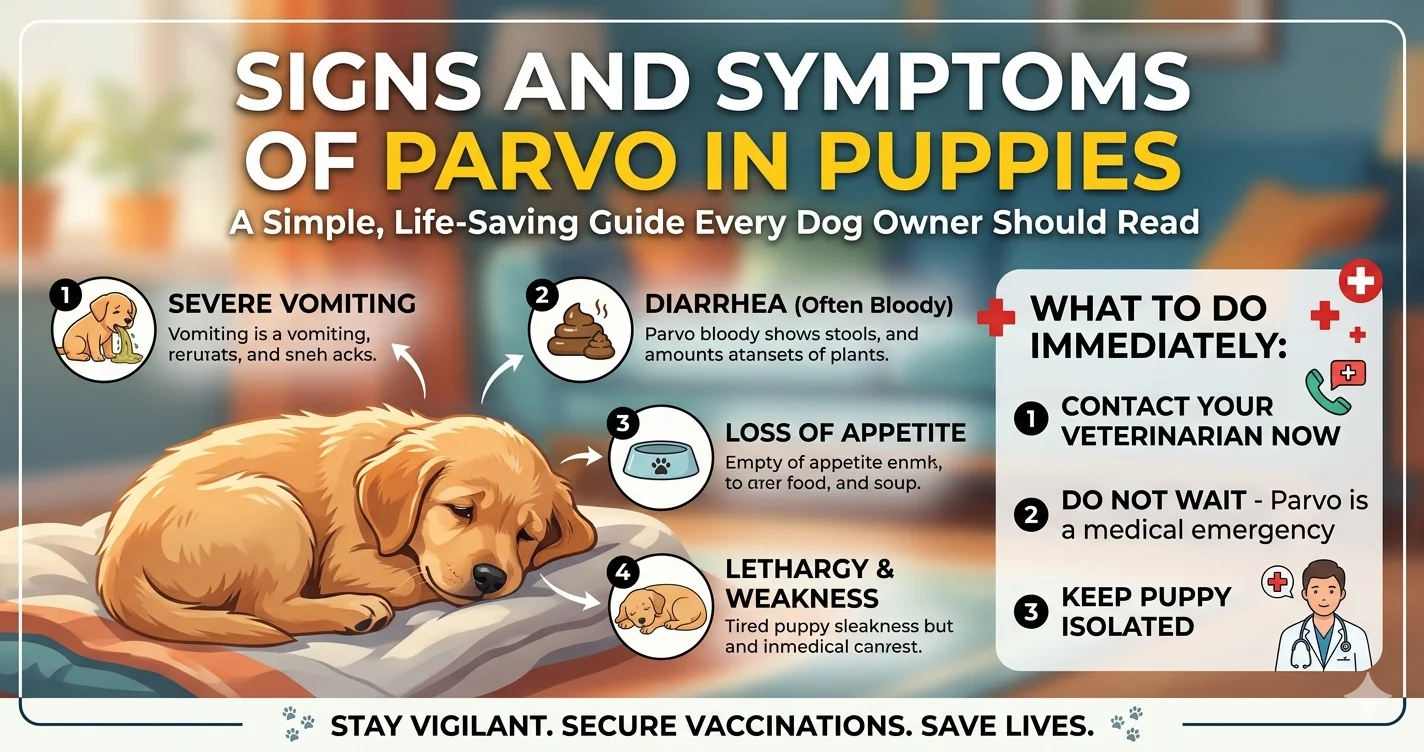
The first signs and symptoms of parvo in puppy that need urgent attention include:
| Warning Sign | Description |
|---|---|
| Vomiting | Frequent and severe |
| Diarrhea | Watery, often bloody |
| Dehydration | Dry gums, sunken eyes |
| Weakness | Trouble standing or walking |
These signs mean the virus is attacking the digestive system.
Bloody diarrhea is one of the most common and alarming symptoms. It has a strong, foul smell.
At this stage, your puppy needs immediate medical care. Waiting can be life-threatening.
Main Signs and Symptoms of Parvo in a Puppy
When parvo reaches its peak, the symptoms become very serious.
Here are the main signs and symptoms of parvo in a puppy:
| Severe Symptom | What Happens |
|---|---|
| Severe vomiting | Continuous and exhausting |
| Bloody diarrhea | Leads to fluid loss |
| Rapid weight loss | Due to dehydration |
| Shock | Weak pulse, pale gums |
The puppy’s body becomes weak quickly. The immune system cannot fight back.
This is why early detection is so important. Recognizing the sign and symptoms of parvo in puppies early can make a huge difference.
How Fast Does Parvo Progress?
Parvo moves fast. Very fast.
Here’s a simple timeline:
| Time After Infection | What Happens |
|---|---|
| Day 1–2 | No visible symptoms |
| Day 3–4 | Early signs appear |
| Day 4–6 | Severe symptoms begin |
| Day 6–7 | Critical condition |
This speed is what makes parvo so dangerous.
Many owners say, “My puppy was fine yesterday.” That’s how quickly things change.
If you suspect anything unusual, don’t wait.
Why Puppies Are More at Risk
Puppies are more vulnerable than adult dogs for several reasons.
First, their immune systems are still developing. They cannot fight strong viruses effectively.
Second, they may not be fully vaccinated yet.
Third, stress from moving to a new home can weaken their immunity.
Small breeds and certain breeds like Rottweilers and Dobermans are also more at risk.
Knowing the signs and symptoms of parvo in puppies helps you stay alert during this critical stage of their life.
How Vets Diagnose Parvo
If you take your puppy to the vet, they will act quickly.
Diagnosis usually includes:
- Physical examination
- Stool test
- Blood test
The stool test can confirm the virus within minutes.
Early diagnosis improves survival chances. That’s why recognizing the first signs and symptoms of parvo in puppy is so important.
Treatment Options for Parvo
There is no direct cure for parvo. Treatment focuses on supporting the puppy’s body.
Common treatments include:
- IV fluids to prevent dehydration
- Medications to control vomiting
- Antibiotics to prevent infection
- Nutritional support
Most puppies need to stay at a clinic for several days.
From experience, puppies that receive early care have a much higher survival rate.
Can Puppies Survive Parvo?
Yes, many puppies survive parvo with proper treatment.
Survival depends on:
- Early detection
- Quick medical care
- Puppy’s overall health
Without treatment, survival chances are very low.
With treatment, survival rates can reach 70–90%.
This is why learning the sign and symptoms of parvo in puppies is so valuable.
How to Prevent Parvo in Puppies
Prevention is always better than treatment.
Here’s how you can protect your puppy:
| Prevention Method | Why It Matters |
|---|---|
| Vaccination | Strongest protection |
| Clean environment | Reduces virus spread |
| Limit exposure | Avoid public places |
| Good hygiene | Wash hands and shoes |
Vaccination is the most important step. Follow your vet’s schedule carefully.
When Should You See a Vet?
You should see a vet immediately if your puppy shows:
- Vomiting more than once
- Diarrhea, especially bloody
- Loss of appetite
- Extreme tiredness
Even mild symptoms should not be ignored.
It’s always better to be safe than sorry.
Common Mistakes Puppy Owners Make
Many owners make simple mistakes that can cost time.
Here are a few:
- Waiting too long to visit the vet
- Assuming it’s just a stomach issue
- Skipping vaccinations
- Letting puppies roam in public areas
Avoiding these mistakes can save your puppy’s life.
FAQs About Signs and Symptoms of Parvo in Puppies
1. What are the very first signs of parvo in puppies?
The earliest signs include low energy, loss of appetite, and mild fever. These may seem small but are important warning signs.
2. How long does it take for symptoms to appear?
Symptoms usually appear within 3 to 5 days after infection.
3. Can parvo be treated at home?
No, parvo requires professional veterinary care. Home treatment is not enough.
4. Is parvo contagious to other dogs?
Yes, it spreads very easily. Infected puppies should be isolated.
5. Can vaccinated puppies still get parvo?
It is rare, but possible. However, symptoms are usually milder.
6. How can I clean my home after parvo?
Use bleach-based disinfectants. The virus is very strong and can survive for months.
Final Thoughts: Act Fast, Save a Life
Parvo is scary, but knowledge is power.
Understanding the sign and symptoms of parvo in puppies gives you a strong advantage. You can act quickly, get help, and improve your puppy’s chances of survival.
Always trust your instincts. If something feels wrong, don’t wait.
Your quick action can be the difference between life and loss.
Your puppy depends on you—stay alert, stay informed, and keep them safe.
