

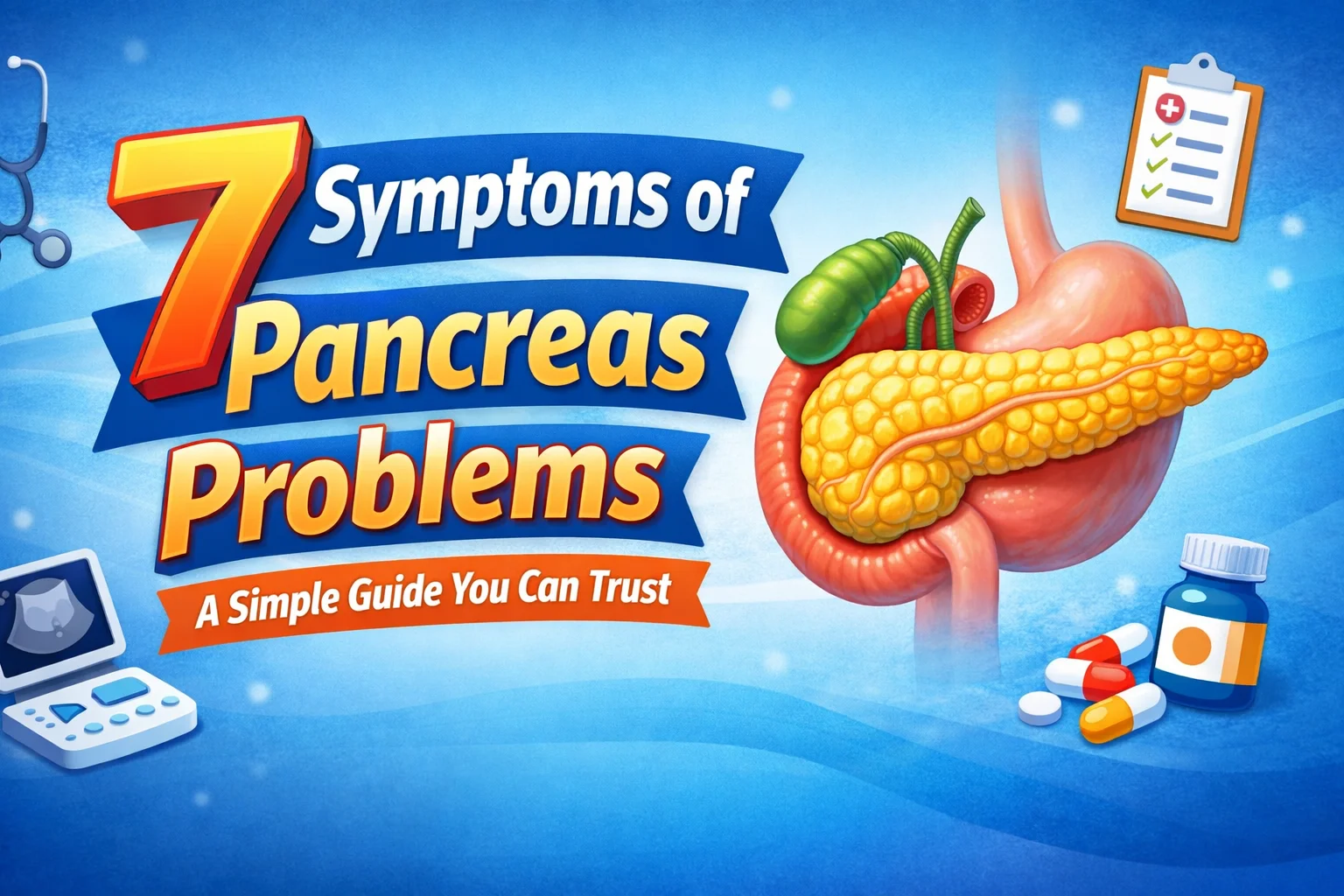
The pancreas is a small organ, but it does big work in your body. It helps you digest food and control blood sugar. When something goes wrong, your body often sends warning signs. Many people ignore these signs at first because they seem mild. But knowing the 7 symptoms of pancreas problems can help you act early and stay safe.
In this guide, I will explain everything in a clear and simple way. You will learn what to watch for, why these symptoms happen, and when to see a doctor. I will also share practical tips and real-life examples so you can understand better.
Let’s begin with the basics.
What Does the Pancreas Do?
The pancreas sits behind your stomach. It works quietly, but it is very important. It has two main jobs.
First, it helps digest food. It releases enzymes that break down fats, proteins, and carbs. Without these enzymes, your body cannot use nutrients properly.
Second, it controls blood sugar. It releases insulin and other hormones that keep your sugar levels balanced. If this balance breaks, it can lead to serious health problems.
When the pancreas is not working well, digestion and sugar control both suffer. This is why the 7 symptoms of pancreas problems can affect many parts of your body.
Why Pancreas Problems Happen
There are several reasons why the pancreas may not work properly. Some are mild, while others can be serious.
Common causes include inflammation (pancreatitis), infections, gallstones, and long-term alcohol use. In some cases, tumors or cancer may also affect the pancreas.
Lifestyle also plays a big role. Poor diet, smoking, and lack of exercise can increase the risk. I have seen people ignore small symptoms for months, only to face bigger issues later.
Understanding the causes helps you take better care of your health. It also makes it easier to spot the 7 symptoms of pancreas problems early.
1. Persistent Abdominal Pain
One of the most common signs is pain in the upper abdomen. This pain may spread to your back.
It often feels sharp or burning. Some people say it gets worse after eating. Others feel it all the time.
This pain happens because the pancreas becomes inflamed or irritated. It can press on nearby organs and nerves.
If you feel this kind of pain often, do not ignore it. It is one of the key 7 symptoms of pancreas problems and needs attention.
2. Unexplained Weight Loss
Losing weight without trying may sound good, but it can be a warning sign.
When your pancreas does not work well, your body cannot absorb nutrients properly. Food passes through your system without giving you enough energy.
This leads to weight loss, even if you are eating normally. I once knew someone who thought dieting was working, but it turned out to be a health issue.
Among the 7 symptoms of pancreas problems, this one is often missed because it feels positive at first.
3. Digestive Issues and Bloating
Digestive problems are very common with pancreas issues. You may feel bloated, gassy, or uncomfortable after meals.
This happens because your body lacks digestive enzymes. Food is not broken down properly.
You may also feel full quickly or have stomach cramps. These signs may seem small, but they add up over time.
If you notice frequent digestion problems, consider it one of the 7 symptoms of pancreas problems worth checking.
4. Oily or Greasy Stools
This is a very specific but important sign. Your stool may look oily, float, or have a strong smell.
It happens when fat is not digested properly. The body pushes it out instead.
Many people feel embarrassed to talk about this, but it is a clear signal. Doctors often use this symptom to identify pancreas issues.
Out of the 7 symptoms of pancreas problems, this one gives a strong clue about digestion problems.
5. Nausea and Vomiting
Feeling sick to your stomach can also be a sign. You may feel nausea often, especially after eating fatty foods.
In some cases, vomiting may occur. This happens because the pancreas struggles to handle digestion.
Your body reacts by trying to remove the discomfort.
If nausea becomes frequent, it should not be ignored. It is another key part of the 7 symptoms of pancreas problems.
6. Yellowing of Skin (Jaundice)
Jaundice causes your skin and eyes to turn yellow. It happens when bile builds up in the body.
This may occur if something blocks the bile duct, often linked to pancreas problems.
It is a serious sign and needs immediate medical attention.
Among the 7 symptoms of pancreas problems, jaundice is one of the most urgent warning signs.
7. Changes in Blood Sugar Levels
The pancreas controls blood sugar. If it is not working well, your sugar levels may rise or fall suddenly.
You may feel tired, thirsty, or dizzy. Some people even develop diabetes.
This symptom is often overlooked, but it is very important.
When combined with other signs, it clearly points to the 7 symptoms of pancreas problems.
Quick Summary Table
| Symptom | What It Feels Like | Why It Happens |
|---|---|---|
| Abdominal Pain | Sharp or burning pain | Inflammation |
| Weight Loss | Losing weight without trying | Poor nutrient absorption |
| Digestive Issues | Bloating, gas | Lack of enzymes |
| Oily Stools | Greasy, floating stool | Fat not digested |
| Nausea | Feeling sick after eating | Poor digestion |
| Jaundice | Yellow skin/eyes | Blocked bile flow |
| Blood Sugar Changes | Fatigue, thirst | Hormone imbalance |
Early vs Advanced Symptoms
| Stage | Symptoms |
|---|---|
| Early | Mild pain, bloating, nausea |
| Moderate | Weight loss, oily stools |
| Advanced | Jaundice, severe pain, diabetes |
Understanding stages helps you act early. Early signs are easier to manage.
When Should You See a Doctor?
You should see a doctor if symptoms last more than a few days. Do not wait for things to get worse.
If you have severe pain, jaundice, or vomiting, seek help immediately.
Early diagnosis can make a big difference. Many serious cases could be avoided with timely care.
The sooner you act on the 7 symptoms of pancreas problems, the better your chances of recovery.
How Doctors Diagnose Pancreas Problems
Doctors use several methods to find the issue.
| Test | Purpose |
|---|---|
| Blood Test | Check enzyme levels |
| Ultrasound | View pancreas structure |
| CT Scan | Detect inflammation or tumors |
| MRI | Detailed imaging |
| Stool Test | Check fat levels |
These tests help confirm the cause and guide treatment.
Treatment Options
Treatment depends on the cause. Some cases need simple care, while others need serious treatment.
| Condition | Treatment |
|---|---|
| Mild Pancreatitis | Rest, fluids, diet changes |
| Chronic Issues | Enzyme supplements |
| Diabetes | Insulin therapy |
| Tumors | Surgery or therapy |
Doctors choose the best plan based on your condition.
Lifestyle Tips to Protect Your Pancreas
Taking care of your pancreas is easier than treating problems later.
Eat a healthy diet with less fat and more fruits. Avoid smoking and limit alcohol.
Exercise regularly and stay active. Drink plenty of water.
I always tell people that small changes today can prevent big problems tomorrow.
These habits can reduce your risk of experiencing the 7 symptoms of pancreas problems.
Foods That Help Pancreas Health
| Good Foods | Why They Help |
|---|---|
| Fruits | Rich in vitamins |
| Vegetables | Improve digestion |
| Whole Grains | Provide fiber |
| Lean Protein | Easy to digest |
Healthy food supports better digestion and pancreas function.
Common Mistakes People Make
Many people ignore early signs. They think it is just gas or indigestion.
Some rely on home remedies for too long. Others avoid doctor visits out of fear.
These mistakes can delay diagnosis and worsen the condition.
Recognizing the 7 symptoms of pancreas problems early can help you avoid these risks.
FAQs
1. What are the early signs of pancreas problems?
Early signs include mild abdominal pain, bloating, and nausea. These may seem small but should not be ignored.
2. Can pancreas problems go away on their own?
Some mild cases improve with rest, but many need medical care. It is always best to consult a doctor.
3. Is weight loss always a sign of pancreas issues?
Not always, but unexplained weight loss is one of the 7 symptoms of pancreas problems and should be checked.
4. How serious are pancreas problems?
They can range from mild to life-threatening. Early detection makes a big difference.
5. Can diet improve pancreas health?
Yes, a healthy diet can support the pancreas and reduce risk.
6. When should I worry about symptoms?
If symptoms last more than a few days or become severe, seek medical help immediately.
Final Thoughts
Your body always gives signals when something is wrong. The key is to listen and act early.
The 7 symptoms of pancreas problems may seem simple at first, but they can point to serious issues. Paying attention to these signs can protect your health and even save your life.
Do not ignore persistent pain, weight loss, or digestion problems. Small steps today can prevent bigger problems tomorrow.
If you found this guide helpful, consider sharing it with others. You never know who might need this information.
