

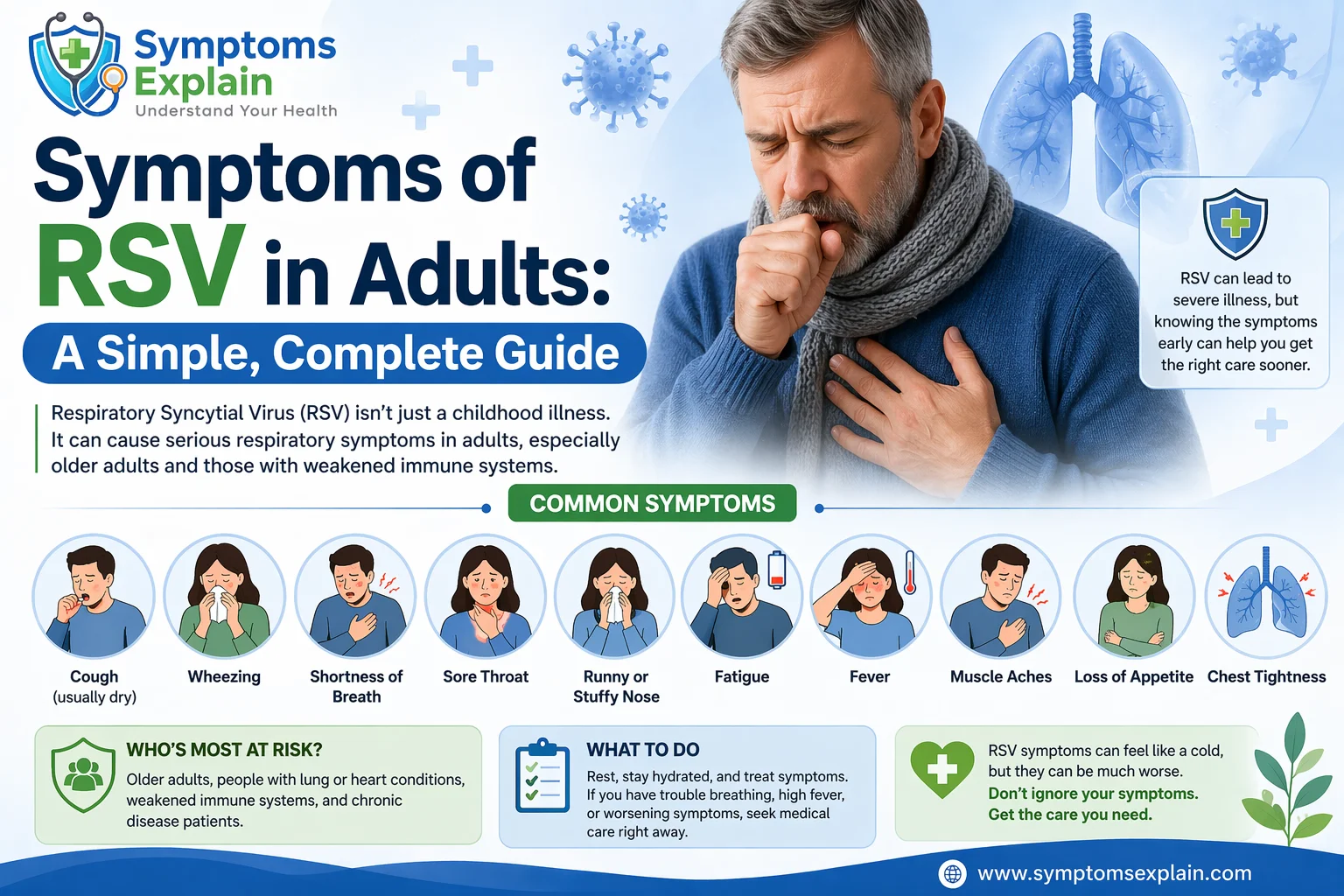
Respiratory infections can feel confusing, especially when symptoms overlap. One illness that often goes unnoticed in grown-ups is RSV. Many people think it only affects babies, but that is not true. The symptoms of RSV in adults can be mild or sometimes serious, especially in older people or those with weak immune systems.
In this guide, we will walk through everything you need to know. We will explain what RSV is, how it spreads, and what signs to watch for. You will also learn how to manage symptoms and when to see a doctor. This article is written in simple language, so anyone can understand it easily.
What Is RSV?
RSV stands for Respiratory Syncytial Virus. It is a common virus that affects the lungs and breathing passages. Most people get infected at least once in their life.
In adults, RSV often feels like a common cold. However, the symptoms of RSV virus in adults can become serious in some cases. This is especially true for older adults or people with health problems like asthma or heart disease.
The virus spreads through droplets when someone coughs or sneezes. You can also get it by touching infected surfaces and then touching your face.
Why RSV in Adults Is Often Overlooked
Many adults ignore RSV because it looks like a cold. They may not realize they are sick with RSV. This is why understanding what are the symptoms of RSV in adults is so important.
Doctors often do not test for RSV unless symptoms are severe. This means many cases go unreported. As a result, people may not take proper care or precautions.
Ignoring symptoms can lead to complications. These include bronchitis or pneumonia, especially in older adults.
Common Symptoms of RSV in Adults
The symptoms of RSV in adults usually start mild. They may appear within 4 to 6 days after infection.
Here are the most common signs:
- Runny nose
- Cough
- Sore throat
- Mild fever
- Headache
- Fatigue
At first, these symptoms feel like a cold. But they may worsen over time. Some people develop a strong cough or breathing trouble.
Table: Common RSV Symptoms vs Cold Symptoms
| Symptom | RSV in Adults | Common Cold |
|---|---|---|
| Runny nose | Yes | Yes |
| Fever | Sometimes | Rare |
| Severe cough | Common | Mild |
| Breathing issues | Possible | Rare |
| Fatigue | Moderate | Mild |
Severe Symptoms You Should Not Ignore
Sometimes, the what are symptoms of RSV in adults question becomes critical. This happens when symptoms get worse.
Watch for these warning signs:
- Shortness of breath
- Wheezing
- High fever
- Chest pain
- Blue lips or fingertips
These symptoms mean the infection is affecting your lungs. You should seek medical help right away.
Symptoms of RSV in Older Adults
The symptoms of RSV in older adults can be more serious. Aging weakens the immune system. This makes it harder to fight infections.
Older adults may experience:
- Severe coughing
- Difficulty breathing
- Loss of appetite
- Confusion
- Extreme tiredness
In some cases, RSV can lead to pneumonia. Hospital care may be needed.
Table: RSV Risk Levels by Age
| Age Group | Risk Level | Common Outcome |
|---|---|---|
| 18–40 years | Low | Mild symptoms |
| 40–65 years | Moderate | Cold-like illness |
| 65+ years | High | Severe complications |
How RSV Spreads in Adults
Understanding how RSV spreads helps prevent infection. The virus is highly contagious.
It spreads through:
- Coughing and sneezing
- Close contact
- Touching surfaces
For example, I once caught a similar viral infection after shaking hands at a crowded event. It reminded me how easy it is to pick up viruses without realizing it.
Good hygiene can reduce risk significantly.
How Long Do Symptoms Last?
The symptoms of RSV in adults usually last 1 to 2 weeks. Mild cases improve on their own.
However, some symptoms like cough may last longer. In severe cases, recovery can take several weeks.
Table: Typical RSV Timeline
| Stage | Duration | Symptoms |
|---|---|---|
| Early stage | Days 1–3 | Runny nose, mild cough |
| Peak stage | Days 4–7 | Strong cough, fatigue |
| Recovery stage | Days 8–14 | Gradual improvement |
RSV vs Flu vs COVID-19
It is easy to confuse RSV with other illnesses. Many symptoms overlap.
Table: RSV vs Flu vs COVID
| Symptom | RSV | Flu | COVID-19 |
|---|---|---|---|
| Fever | Mild | High | Common |
| Cough | Strong | Dry | Dry |
| Loss of smell | Rare | Rare | Common |
| Breathing issues | Possible | Rare | Common |
If unsure, testing is the best option.
Who Is Most at Risk?
Some people are more likely to develop severe illness.
High-risk groups include:
- Adults over 65
- People with heart disease
- Asthma patients
- Smokers
- Weak immune system
For these groups, the symptoms of RSV virus in adults can become dangerous quickly.
How RSV Is Diagnosed
Doctors diagnose RSV based on symptoms. In some cases, they may use lab tests.
These include:
- Nasal swab test
- Blood tests
- Chest X-ray
Testing is more common in hospitals or severe cases.
Treatment Options for RSV in Adults
There is no specific cure for RSV. Treatment focuses on relieving symptoms.
Common treatments include:
- Rest
- Fluids
- Fever medicine
- Cough relief
Severe cases may need oxygen therapy or hospital care.
Home Remedies That Can Help
Simple remedies can make you feel better faster.
Try these:
- Drink warm fluids
- Use a humidifier
- Take steam inhalation
- Get plenty of sleep
These methods helped me recover faster during respiratory infections.
How to Prevent RSV
Prevention is always better than treatment.
Follow these tips:
- Wash hands often
- Avoid close contact with sick people
- Clean surfaces regularly
- Wear a mask in crowded places
These steps reduce the risk of infection.
When to See a Doctor
You should see a doctor if:
- Symptoms worsen
- Breathing becomes difficult
- Fever stays high
- You belong to a high-risk group
Early care can prevent complications.
FAQs About Symptoms of RSV in Adults
1. What are the symptoms of RSV in adults?
The symptoms include cough, runny nose, fatigue, and mild fever. Severe cases may involve breathing issues.
2. How do I know if I have RSV or a cold?
RSV often causes a stronger cough and breathing problems compared to a cold.
3. Can RSV be serious in adults?
Yes, especially in older adults or those with health conditions.
4. How long do RSV symptoms last?
Most people recover in 1 to 2 weeks, but cough may last longer.
5. Is RSV contagious?
Yes, it spreads easily through droplets and contact.
6. Can RSV turn into pneumonia?
Yes, in severe cases, especially in high-risk individuals.
Final Thoughts
The symptoms of RSV in adults are often mild but should not be ignored. What starts as a simple cold can sometimes turn serious. This is especially true for older adults and those with weak immunity.
Understanding what are symptoms of RSV in adults helps you act early. Simple care at home works for mild cases, but knowing when to seek help is key. Pay attention to warning signs and take preventive steps seriously.
If you or a loved one shows symptoms, do not ignore them. Stay informed, stay safe, and take care of your health.
