

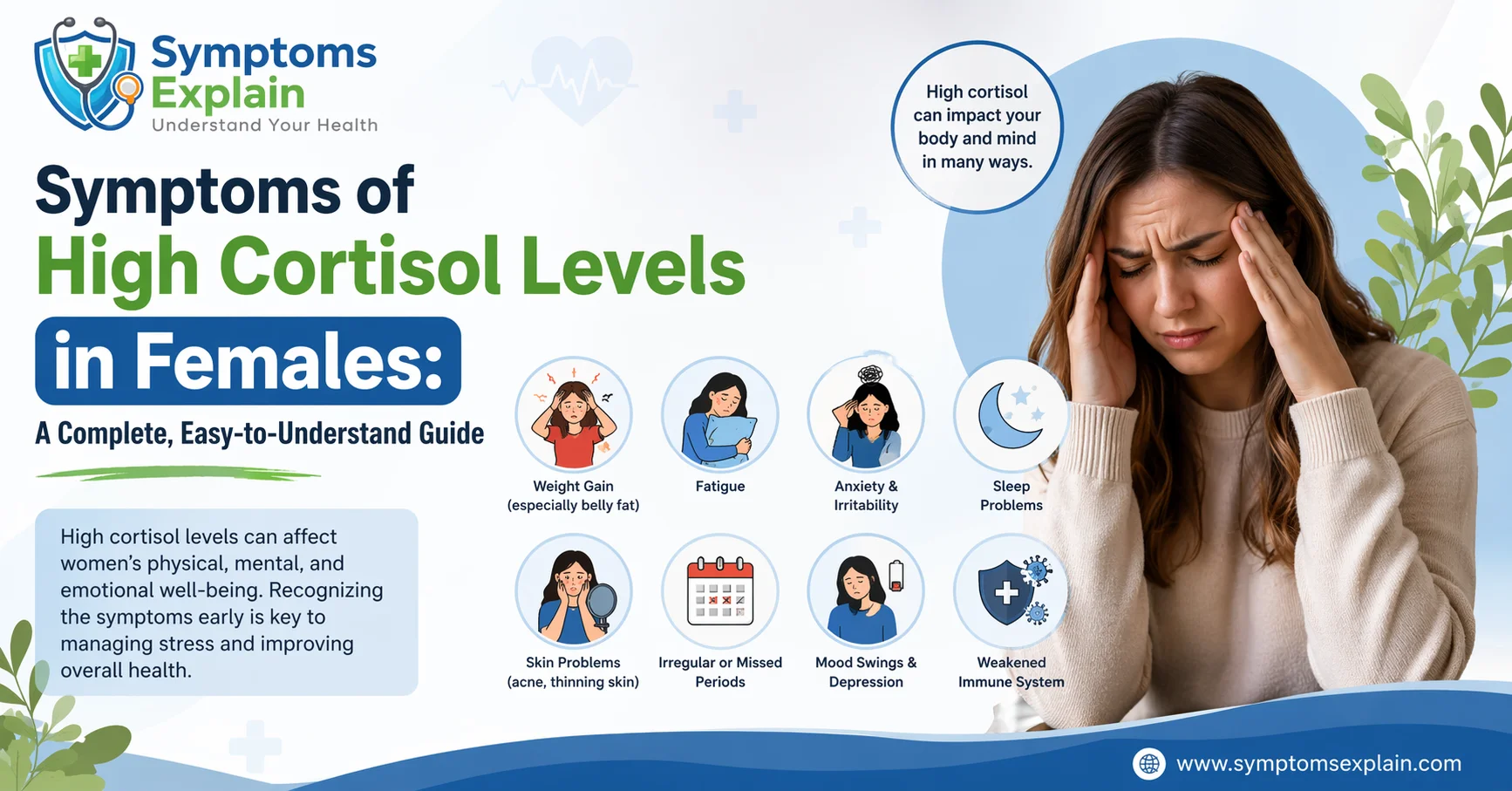
Stress is part of life. But when stress stays too long, your body reacts in ways you may not notice right away. One key player in this process is cortisol, often called the “stress hormone.” Understanding the symptoms of high cortisol levels in females can help you take control of your health early.
In this guide, we will break everything down in a simple, friendly way. You’ll learn what cortisol does, how it affects women, and what you can do to feel better again.
What Is Cortisol and Why Does It Matter?
Cortisol is a hormone made by your adrenal glands. These small glands sit above your kidneys. Cortisol helps your body respond to stress, control blood sugar, reduce inflammation, and manage metabolism.
In small amounts, cortisol is helpful. It gives you energy in the morning and helps you stay alert. But when cortisol stays high for too long, it can harm your body.
Women are especially sensitive to hormone changes. That’s why the symptoms of high cortisol levels in females can affect mood, weight, sleep, and even skin health.
Why High Cortisol Levels Happen in Females
High cortisol does not happen without a reason. It usually builds up over time due to stress or lifestyle habits.
Here are common causes:
| Cause | Explanation |
|---|---|
| Chronic stress | Work, family, or emotional pressure |
| Poor sleep | Less than 6–7 hours regularly |
| High sugar diet | Causes blood sugar spikes |
| Over-exercising | Too much intense workout without rest |
| Hormonal imbalance | PCOS or thyroid issues |
| Certain medications | Like steroids |
Women often juggle many roles. This can make stress constant, leading to long-term cortisol problems.
Early Symptoms of High Cortisol Levels in Females
The early signs are easy to miss. Many women ignore them or blame daily stress.
Here are some common early symptoms:
| Symptom | What It Feels Like |
|---|---|
| Constant tiredness | Even after sleeping |
| Mood swings | Feeling irritable or anxious |
| Brain fog | Trouble focusing |
| Sugar cravings | Especially at night |
| Mild weight gain | Around belly area |
These signs may seem small. But they are your body asking for help.
Physical Symptoms You Should Not Ignore
As cortisol stays high, physical changes become more visible.
The symptoms of high cortisol levels in females often include:
| Physical Sign | Description |
|---|---|
| Belly fat | Weight gathers around abdomen |
| Round face | “Moon face” appearance |
| Thin skin | Bruises easily |
| Acne | Especially on jawline |
| Hair thinning | Hair loss or weak strands |
These symptoms happen because cortisol affects fat storage and skin health.
Emotional and Mental Symptoms
High cortisol also impacts your mind. Many women feel this deeply.
Here are key emotional symptoms:
- Anxiety without clear reason
- Feeling overwhelmed easily
- Low motivation
- Depression-like feelings
- Trouble relaxing
I’ve seen many women mistake this for burnout. While burnout is real, cortisol imbalance often plays a role behind the scenes.
Sleep Problems Linked to High Cortisol
Sleep and cortisol are closely connected. When cortisol is high, sleep becomes poor.
| Sleep Issue | How It Shows |
|---|---|
| Trouble falling asleep | Mind stays active |
| Waking at night | Especially around 2–4 AM |
| Light sleep | Not feeling rested |
| Daytime fatigue | Low energy all day |
This creates a cycle. Poor sleep raises cortisol, and high cortisol ruins sleep.
Hormonal Imbalance in Women
Hormones in women are delicate. Cortisol can disrupt them easily.
The symptoms of high cortisol levels in females may include:
| Hormonal Issue | Result |
|---|---|
| Irregular periods | Missed or delayed cycles |
| PMS worsening | More mood swings |
| Low fertility | Difficulty conceiving |
| PCOS symptoms | Increased severity |
Cortisol can lower progesterone and affect estrogen balance. This leads to many reproductive issues.
Weight Gain and Metabolism Changes
One of the most frustrating symptoms is weight gain.
| Factor | Impact |
|---|---|
| Slower metabolism | Burn fewer calories |
| Increased appetite | Especially junk food cravings |
| Fat storage | More belly fat |
| Insulin resistance | Higher blood sugar levels |
Even with diet and exercise, weight may not drop. That’s because cortisol is working against your efforts.
Skin and Hair Changes
Your skin often reflects what’s happening inside your body.
| Change | Reason |
|---|---|
| Acne | Hormonal imbalance |
| Dry skin | Reduced hydration |
| Hair fall | Weak follicles |
| Dull appearance | Poor circulation |
Many women spend money on skincare without knowing the root cause is hormonal.
Long-Term Health Risks
If ignored, high cortisol can lead to serious health problems.
| Risk | Explanation |
|---|---|
| High blood pressure | Strains heart |
| Diabetes | Blood sugar imbalance |
| Weak bones | Reduced calcium absorption |
| Low immunity | Frequent illness |
That’s why recognizing the symptoms of high cortisol levels in females early is very important.
Symptoms of High Cortisol Levels in Females Treatment
Now comes the good part. You can manage and lower cortisol naturally.
1. Improve Sleep First
Sleep is your body’s reset button. Aim for 7–9 hours every night.
2. Eat Balanced Meals
Include protein, healthy fats, and fiber. Avoid too much sugar.
3. Manage Stress Daily
Try simple habits:
- Deep breathing
- Walking outside
- Journaling
4. Exercise Smartly
Avoid overtraining. Choose light workouts like yoga or walking.
5. Limit Caffeine
Too much coffee can raise cortisol levels.
6. Stay Connected
Talking to friends or family reduces stress naturally.
Natural Remedies That May Help
Some natural options can support your body:
| Remedy | Benefit |
|---|---|
| Ashwagandha | Helps reduce stress |
| Magnesium | Supports relaxation |
| Omega-3 | Reduces inflammation |
| Herbal teas | Calm the nervous system |
Always talk to a healthcare provider before starting supplements.
When to See a Doctor
Sometimes lifestyle changes are not enough.
See a doctor if you notice:
- Rapid weight gain
- Severe fatigue
- Missed periods
- Ongoing anxiety
- High blood pressure
Tests like blood, saliva, or urine can check cortisol levels.
Simple Daily Routine to Balance Cortisol
Here’s an easy routine you can follow:
| Time | Activity |
|---|---|
| Morning | Sunlight + healthy breakfast |
| Afternoon | Balanced meal + light movement |
| Evening | Relaxing activity |
| Night | No screens before bed |
Small changes can make a big difference over time.
FAQs About Symptoms of High Cortisol Levels in Females
1. What are the most common symptoms of high cortisol levels in females?
The most common signs include weight gain, fatigue, mood swings, and sleep problems.
2. Can stress alone cause high cortisol?
Yes, long-term stress is one of the biggest causes of high cortisol levels.
3. How long does it take to lower cortisol levels?
With lifestyle changes, improvements can start within a few weeks.
4. Can high cortisol affect periods?
Yes, it can cause irregular cycles or missed periods.
5. Is weight gain from cortisol reversible?
Yes, with proper diet, sleep, and stress management, it can improve.
6. What is the best treatment for high cortisol in females?
The best approach combines stress control, healthy eating, good sleep, and medical guidance if needed.
Final Thoughts
Understanding the symptoms of high cortisol levels in females is the first step toward better health. Your body sends signals when something is wrong. The key is to listen early.
You don’t need drastic changes. Start small. Sleep better. Eat well. Slow down when life feels overwhelming.
If you’ve been feeling “off” for a while, it might not just be stress. It could be your body asking for balance.
Take action today. Your future self will thank you.
