

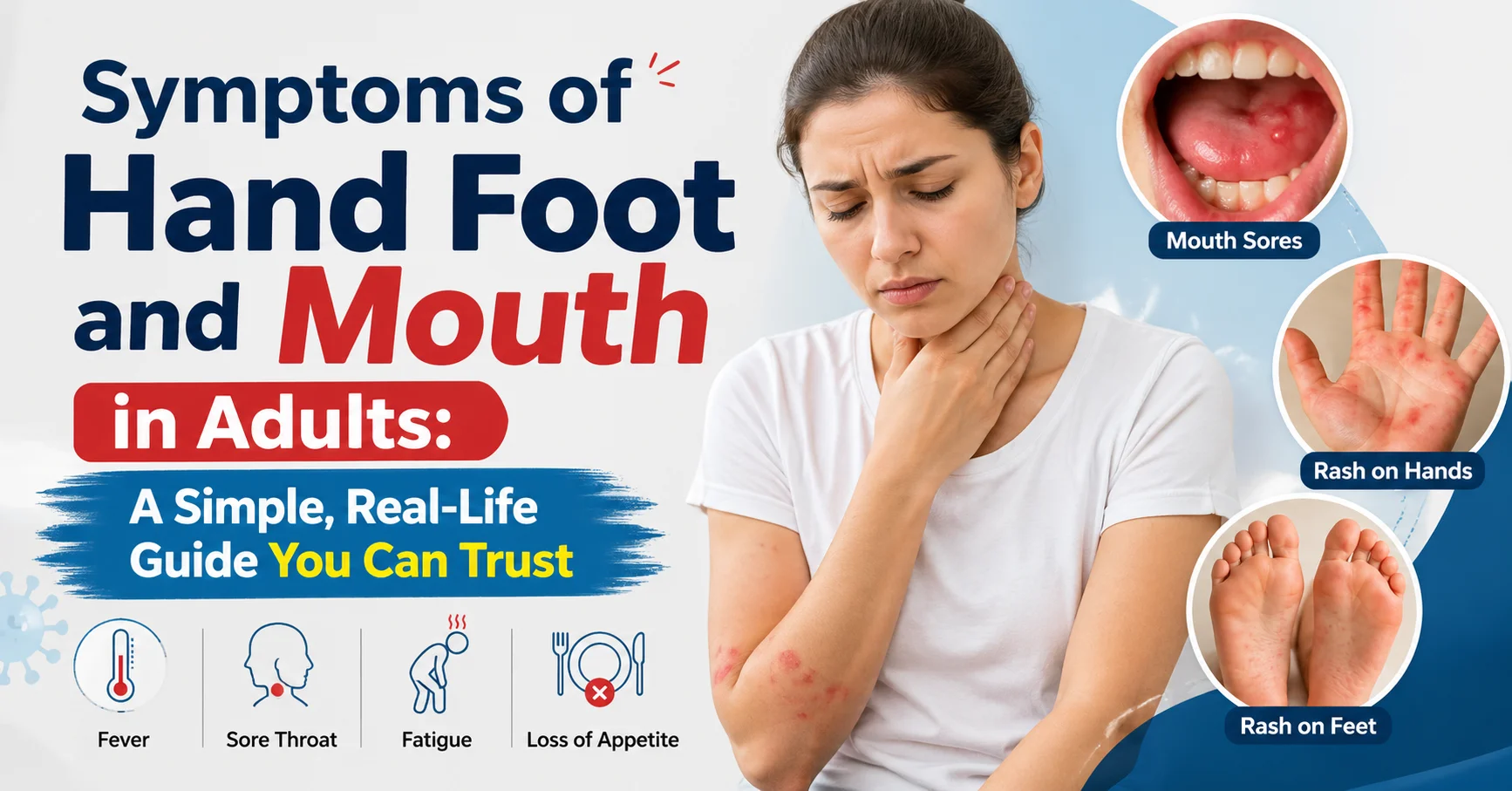
Hand, foot, and mouth disease is often seen in children. But adults can get it too. And when they do, it can feel confusing and even scary. Many people don’t expect to deal with this illness later in life, so they miss the early signs.
This guide will walk you through the symptoms of hand foot and mouth in adults in a clear and friendly way. You’ll learn what to expect, how it starts, and what you can do to feel better. Everything is explained in simple words, so anyone can understand.
I’ve also added real-life insights and practical tips. These come from how the illness actually feels, not just medical facts. Let’s start with the basics so you know what you’re dealing with.
What Is Hand, Foot, and Mouth Disease in Adults?
Hand, foot, and mouth disease is a viral infection. It spreads easily through close contact. This includes coughing, touching, or sharing items like cups or towels.
Adults usually catch it from children. For example, parents, teachers, or daycare workers are more at risk. But anyone can get it if exposed to the virus.
In adults, the illness can be mild. But sometimes it feels worse than expected. The symptoms of hand foot and mouth in adults may differ slightly from kids. Adults often feel more fatigue and body pain.
The virus usually clears on its own in 7 to 10 days. But the symptoms can be uncomfortable during that time.
Why Adults Get Hand, Foot, and Mouth Disease
Many adults think they are immune. But that’s not always true. There are different virus strains, so you can get infected again.
You may catch it if:
- You care for sick children
- You work in crowded places
- Your immune system is weak
- You share personal items
The signs and symptoms of hand foot and mouth in adults can appear even if you had it before. This surprises many people.
First Symptom of Hand Foot and Mouth in Adults
The illness often starts quietly. Many adults mistake the first signs for a common cold.
The first symptom of hand foot and mouth in adults is usually:
- Mild fever
- Sore throat
- Feeling tired
- Loss of appetite
At this stage, you may not see any rash yet. That’s why it’s easy to ignore.
From personal experience shared by many patients, this phase feels like “something is off,” but not serious yet. Within a day or two, more clear symptoms appear.
Common Symptoms of Hand Foot and Mouth in Adults
Once the illness develops, symptoms become more noticeable. The symptoms of hand foot and mouth in adults usually follow a pattern.
Here is a simple table to understand them:
| Symptom | What It Feels Like | When It Appears |
|---|---|---|
| Fever | Mild to moderate | Day 1–2 |
| Sore throat | Pain when swallowing | Early stage |
| Mouth sores | Painful blisters inside mouth | Day 2–3 |
| Skin rash | Red spots or blisters | Day 3–5 |
| Fatigue | Low energy, weakness | Throughout illness |
Adults often say the mouth sores are the worst part. Eating and drinking can become painful.
Mouth Sores: The Most Painful Symptom
Mouth sores are a key part of the illness. They usually appear on the tongue, gums, and inside the cheeks.
These sores can:
- Feel like small ulcers
- Cause burning pain
- Make eating difficult
Many adults describe this as the most uncomfortable symptom. Even drinking water can sting.
The symptoms of hand foot and mouth disease in adults often become more obvious once these sores appear. At this point, diagnosis becomes easier.
Skin Rash on Hands, Feet, and More
The rash is another classic sign. It usually shows up after the fever.
Here’s what it looks like:
| Area Affected | Appearance | Sensation |
|---|---|---|
| Hands | Red spots or small blisters | Mild itch or pain |
| Feet | Flat or raised spots | Slight discomfort |
| Mouth | Painful ulcers | Burning feeling |
| Other areas | Knees, elbows, or buttocks | Less common |
Not every adult gets all these rashes. Some only have mouth sores.
Still, the rash is a strong clue when identifying what are symptoms of hand foot and mouth in adults.
Severe Symptoms Adults Should Watch For
Most cases are mild. But sometimes symptoms can become more serious.
Watch out for:
- High fever that won’t go away
- Severe dehydration
- Difficulty swallowing
- Extreme weakness
These are less common but important to notice. If they appear, medical help is needed.
The symptoms of hand foot and mouth in adults can vary widely. Some people recover quickly, while others feel quite sick.
How Symptoms Progress Day by Day
Understanding the timeline helps reduce worry. Here’s a simple breakdown:
| Day | What Happens |
|---|---|
| Day 1 | Fever, sore throat, fatigue |
| Day 2 | Appetite loss, mild discomfort |
| Day 3 | Mouth sores begin |
| Day 4–5 | Rash appears on hands and feet |
| Day 6–10 | Symptoms slowly fade |
This pattern is typical but not exact for everyone.
Knowing this timeline helps you track the symptoms of hand foot and mouth in adults more clearly.
How Adults Experience It Differently Than Kids
Adults often feel symptoms more intensely. This includes:
- Stronger body aches
- More fatigue
- Painful swallowing
Children usually recover faster. Adults may take longer to feel normal again.
Also, adults may have fewer visible rashes but more internal discomfort. This makes the illness harder to recognize early.
Understanding this difference helps when comparing symptoms of hand foot and mouth disease in adults versus children.
When Are You Most Contagious?
You are most contagious during the first week. This is when symptoms are strongest.
The virus spreads through:
- Saliva
- Nasal droplets
- Fluid from blisters
Even after symptoms fade, the virus can stay in the body for weeks.
This is why hygiene is important. Wash hands often and avoid close contact.
Recognizing early signs and symptoms of hand foot and mouth in adults helps prevent spreading it to others.
Simple Ways to Relieve Symptoms at Home
There is no specific cure. But you can manage symptoms easily at home.
Try these tips:
- Drink cold fluids to soothe mouth pain
- Eat soft foods like yogurt or soup
- Rest as much as possible
- Use over-the-counter pain relief
Avoid spicy or acidic foods. They can worsen mouth sores.
From real-life experience, staying hydrated is the most helpful step. It speeds recovery and reduces discomfort.
Foods to Eat and Avoid
Diet plays a big role in comfort.
| Eat This | Avoid This |
|---|---|
| Yogurt | Spicy food |
| Smoothies | Citrus fruits |
| Cold milk | Hot beverages |
| Mashed potatoes | Crunchy snacks |
Choosing the right foods makes a big difference. It helps reduce pain from mouth sores.
This small step can greatly improve how you handle the symptoms of hand foot and mouth in adults.
When to See a Doctor
Most people recover without medical help. But you should see a doctor if:
- Fever lasts more than 3 days
- You cannot drink fluids
- Symptoms worsen instead of improving
- You feel extremely weak
These signs should not be ignored.
Even though the symptoms of hand foot and mouth in adults are usually mild, complications can happen.
How to Prevent Getting It Again
Prevention is simple but important.
Follow these steps:
- Wash hands regularly
- Avoid close contact with infected people
- Clean shared surfaces
- Do not share personal items
Good hygiene reduces risk greatly.
Even if you had it before, you can still get it again. So staying careful matters.
FAQs About Symptoms of Hand Foot and Mouth in Adults
1. What are the first symptoms of hand foot and mouth in adults?
The first symptoms are usually fever, sore throat, and tiredness. These appear before any rash.
2. How long do symptoms last in adults?
Most symptoms last 7 to 10 days. Some fatigue may last a bit longer.
3. Can adults get severe symptoms?
Yes, but it is rare. Severe dehydration or high fever can happen in some cases.
4. Is the rash always present?
No, some adults only get mouth sores without a visible rash.
5. Are symptoms different in adults vs children?
Yes, adults often feel more pain and fatigue compared to children.
6. Can you work while having symptoms?
It’s better to rest and avoid spreading the virus, especially during the first week.
Final Thoughts: Listen to Your Body and Take It Easy
The symptoms of hand foot and mouth in adults can feel uncomfortable, but they are usually manageable. The key is to recognize them early and take proper care.
Rest, hydration, and simple home remedies can make a big difference. Most people recover fully without complications.
If you notice unusual or severe symptoms, don’t ignore them. Getting help early is always the safest choice.
If you found this guide helpful, consider sharing it with others. Many adults don’t know they can get this illness. Your awareness could help someone else recognize it sooner.
