

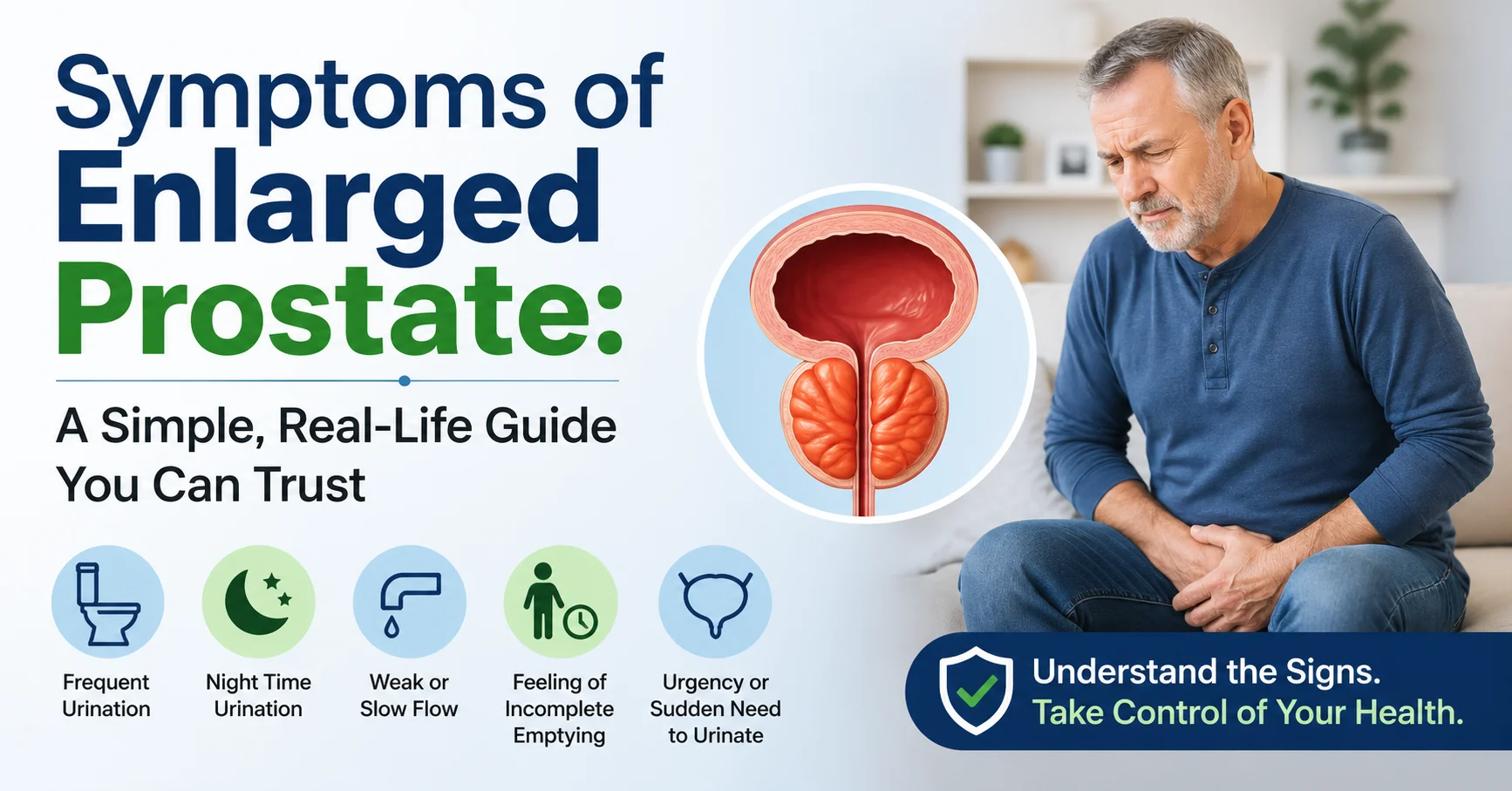
When men get older, their bodies change in many ways. One common change happens in the prostate. If you have started noticing changes in your urination, you might be wondering if it’s normal or something to check. Understanding the symptoms of enlarged prostate can help you take the right steps early and avoid discomfort later.
This guide explains everything in a simple, friendly way. You don’t need a medical background to understand it. We’ll walk through real-life signs, causes, and what you can do about it. Many men ignore early signs, thinking it’s just aging. But knowing what to watch for can make a big difference in your daily comfort and health.
What Is an Enlarged Prostate?
The prostate is a small gland found only in men. It sits just below the bladder. Its main job is to help make fluid for semen. When men age, this gland often grows bigger. This condition is called benign prostatic hyperplasia (BPH).
An enlarged prostate is not cancer. That’s important to know. But it can still cause problems, especially with urination. As the gland grows, it presses on the urethra. This is the tube that carries urine out of the body. That pressure leads to many of the common symptoms of enlarged prostate gland.
Most men over 50 will experience some level of prostate growth. Some feel mild symptoms, while others struggle daily. The key is understanding what your body is telling you.
Why Does the Prostate Get Bigger?
Doctors are not 100% sure why the prostate grows with age. But hormones play a big role. As men age, hormone levels shift. Testosterone decreases, while other hormones may increase or change.
These hormonal changes can cause prostate cells to grow more than usual. Over time, this leads to prostate enlargement. Genetics can also play a part. If your father had prostate problems, your risk may be higher.
Lifestyle factors matter too. Lack of exercise, poor diet, and obesity may increase the risk. That’s why staying active and eating healthy can help support prostate health. While you cannot fully stop the process, you can slow it down.
Early Symptoms You Should Not Ignore
The early symptoms of an enlarged prostate are often mild. Many men overlook them at first. But noticing these signs early can help you manage the condition better.
One of the first signs is needing to urinate more often. You may find yourself going to the bathroom more during the day. Some men also feel a sudden urge to urinate that is hard to control.
Another early symptom is a weak urine stream. Instead of a steady flow, the urine may come out slowly. You might also notice that it takes longer to start urinating. These are common symptoms of prostate enlargement that should not be ignored.
Common Urinary Problems Linked to BPH
As the prostate grows, urinary problems become more noticeable. These are the most common symptoms of BPH enlarged prostate.
Here is a simple table to understand them:
| Symptom | What It Feels Like |
|---|---|
| Frequent urination | Needing to go often, even after just going |
| Urgency | Sudden strong need to urinate |
| Weak stream | Urine flow is slow or stops |
| Dribbling | Urine leaks after finishing |
| Trouble starting | Takes effort to begin urinating |
These symptoms can affect daily life. They may disturb your work, travel, and sleep. If you notice more than one of these signs, it’s a good idea to pay attention.
Nighttime Urination (Nocturia)
One of the most frustrating symptoms of enlarged prostate is waking up at night to urinate. This is called nocturia. It can happen once or several times a night.
At first, it may not seem like a big problem. But over time, it can disturb your sleep. Poor sleep can lead to tiredness, mood changes, and low energy during the day.
Many men say this is the symptom that affects their quality of life the most. If you are waking up often at night, your prostate may be putting pressure on your bladder. This reduces how much urine your bladder can hold.
Difficulty Starting and Stopping Urine
Another common issue is trouble starting urination. You may stand in the bathroom and wait longer than usual before urine begins to flow. This can feel frustrating and uncomfortable.
Some men also experience stopping and starting while urinating. The flow may begin, stop, and then start again. This is a key sign among the symptoms of an enlarged prostate.
This happens because the enlarged gland blocks the urethra. The bladder has to work harder to push urine out. Over time, this can weaken the bladder muscles.
Feeling Like Your Bladder Is Not Empty
Have you ever finished urinating but still felt like your bladder wasn’t fully empty? This is another common symptom.
This feeling can make you go back to the bathroom again soon after. It can be annoying and time-consuming. It also increases the risk of infections because leftover urine stays in the bladder.
This symptom is often ignored, but it is one of the important symptoms of enlarged prostate gland that signals ongoing pressure in the urinary system.
Severe Symptoms That Need Attention
In some cases, symptoms can become serious. These should not be ignored at all. They may need quick medical care.
Here are some warning signs:
| Severe Symptom | What It Means |
|---|---|
| Inability to urinate | Complete blockage |
| Blood in urine | Possible irritation or damage |
| Painful urination | Infection or inflammation |
| Frequent infections | Urine not emptying properly |
If you notice any of these, you should seek medical help. Waiting too long can lead to complications like bladder damage or kidney problems.
How Symptoms Affect Daily Life
Living with these symptoms can be stressful. Simple activities like traveling, working, or sleeping become harder. You may always need to know where the nearest bathroom is.
Some men feel embarrassed talking about these issues. But it’s important to remember that this condition is very common. You are not alone.
Many men in their 50s and older experience similar problems. Talking about it openly can help you find solutions faster. Ignoring it can make things worse over time.
When Should You See a Doctor?
You don’t need to panic if you notice mild symptoms. But you should not ignore them either. If symptoms start affecting your daily life, it’s time to talk to a doctor.
You should seek help if:
- You urinate very often
- You wake up multiple times at night
- You feel pain or discomfort
- Your urine flow is very weak
Early diagnosis can help you manage the condition better. Doctors can suggest lifestyle changes, medicines, or other treatments.
Simple Ways to Manage Symptoms at Home
The good news is that mild symptoms can often be managed at home. Small lifestyle changes can make a big difference.
Here are some helpful tips:
| Tip | Benefit |
|---|---|
| Drink less at night | Reduces nighttime urination |
| Avoid caffeine | Prevents bladder irritation |
| Stay active | Improves overall health |
| Maintain healthy weight | Reduces pressure on bladder |
These simple steps can help reduce discomfort. They may not cure the condition, but they can improve your quality of life.
Medical Treatments You Should Know
If symptoms become worse, doctors may suggest treatment. There are different options based on how severe your condition is.
Medications can help relax prostate muscles or shrink the gland. In some cases, doctors may suggest procedures to remove or reduce prostate tissue.
Modern treatments are safer and more effective than ever. Many men find relief after proper treatment. The key is not to delay seeking help.
Enlarged Prostate vs Prostate Cancer
Many men worry that an enlarged prostate means cancer. But these are different conditions. An enlarged prostate is usually non-cancerous.
However, some symptoms can be similar. That’s why regular check-ups are important. Doctors may perform tests to rule out serious conditions.
Understanding the difference can reduce fear and help you make informed decisions about your health.
Can You Prevent Prostate Enlargement?
You cannot fully prevent it, especially as you age. But you can reduce your risk and slow its progress.
Eating a healthy diet, staying active, and avoiding smoking can help. Regular check-ups are also important.
Think of it like maintaining a car. You cannot stop wear and tear, but you can keep it running smoothly for longer.
Frequently Asked Questions (FAQs)
1. What are the first symptoms of enlarged prostate?
The first symptoms usually include frequent urination, urgency, and a weak urine stream.
2. Is an enlarged prostate dangerous?
It is not usually dangerous, but severe cases can lead to complications if untreated.
3. At what age do symptoms start?
Most men notice symptoms after age 50, but it can start earlier.
4. Can lifestyle changes help?
Yes, healthy habits can reduce symptoms and improve comfort.
5. Is surgery always needed?
No, many men manage symptoms with medication or lifestyle changes.
6. Can symptoms go away on their own?
They may improve slightly, but usually require management or treatment.
Final Thoughts: Take Control of Your Health
Understanding the symptoms of enlarged prostate is the first step toward better health. Many men live with these symptoms quietly, thinking it’s just part of aging. But you don’t have to suffer in silence.
Pay attention to your body. Small changes can be early warning signs. Acting early can help you avoid bigger problems later.
If something doesn’t feel right, trust your instincts and seek help. With the right care and simple lifestyle changes, you can live comfortably and confidently.
Your health matters. Take that first step today.
