

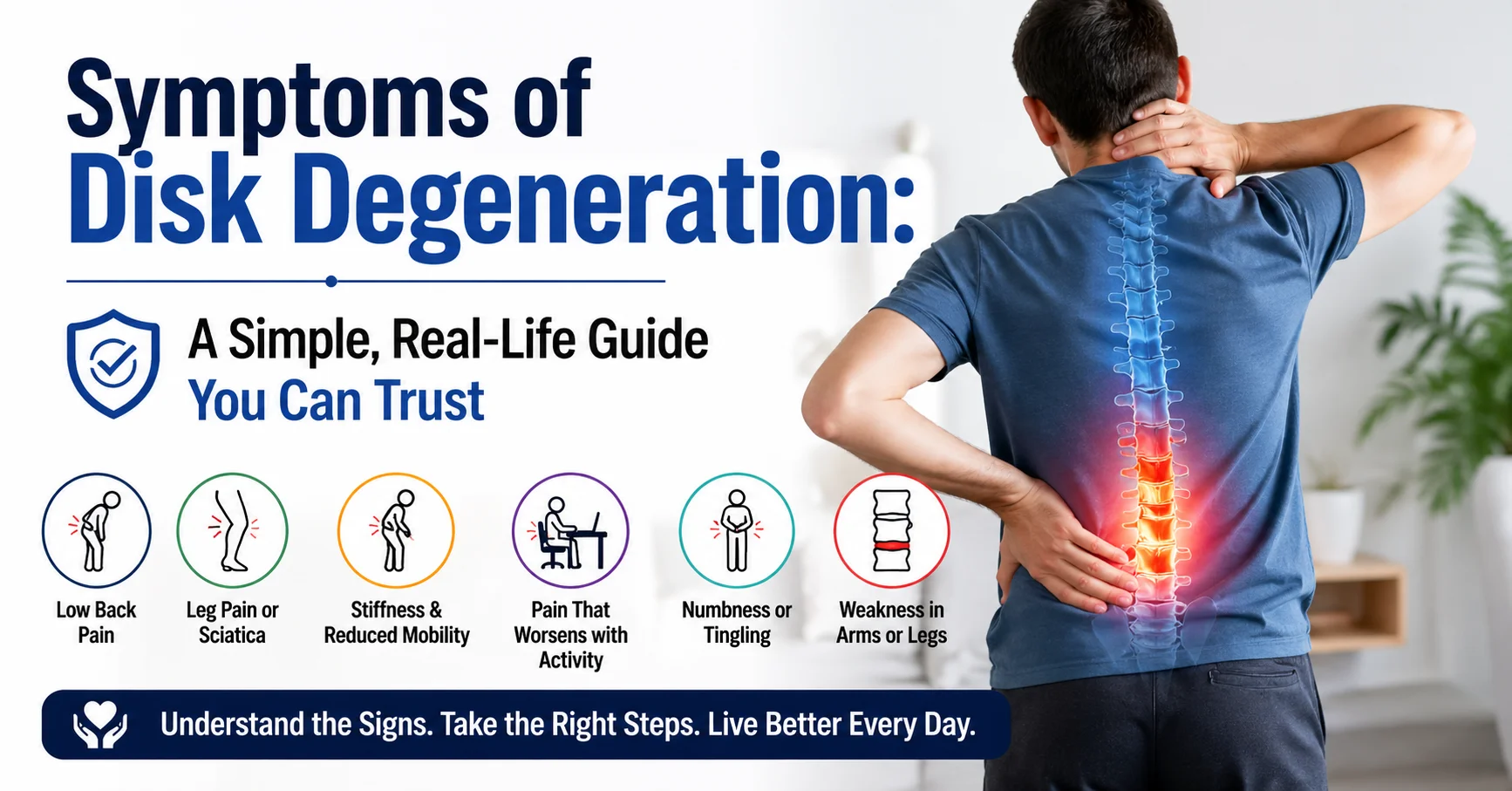
Back pain can feel scary, confusing, and frustrating. Many people worry when the pain doesn’t go away. One common reason is symptoms of disk degeneration. This condition happens when the soft cushions between your spine bones wear down over time.
If you’re reading this, you may be dealing with ongoing pain, stiffness, or strange sensations. You’re not alone. Millions of people face this issue every day. The good news? Understanding the symptoms of disk degeneration can help you take control early.
In this guide, I’ll explain everything in simple words. You’ll learn what to watch for, why it happens, and when to get help. I’ll also share real-life insights so it feels practical—not just medical talk.
What Is Disk Degeneration?
Your spine has small soft pads called discs. These discs act like cushions between bones. They help you bend, move, and stay flexible.
Over time, these discs lose water and strength. This natural wear is called degeneration. It’s a normal part of aging, but sometimes it causes pain.
The symptoms of disk degeneration appear when discs can’t absorb shock well anymore. This can lead to pressure on nerves or nearby tissues.
Think of it like an old cushion. At first, it feels fine. But after years, it becomes flat and less supportive. That’s what happens inside your spine.
Why Disk Degeneration Happens
There isn’t just one cause. Many factors can lead to this condition.
Age is the biggest reason. As you get older, discs dry out. This makes them weaker.
Other causes include:
- Poor posture
- Heavy lifting
- Injury or accidents
- Smoking
- Lack of exercise
In real life, I’ve seen people in their 30s already facing symptoms of disk degeneration because of desk jobs and bad posture.
Your daily habits matter more than you think.
Early Symptoms of Disk Degeneration
The early signs are often mild. Many people ignore them at first.
Here are common early symptoms of disk degeneration:
| Symptom | What It Feels Like |
|---|---|
| Mild back pain | Comes and goes |
| Stiffness | Hard to bend or twist |
| Discomfort after sitting | Worse after long hours |
| Occasional neck pain | Especially with screen use |
At this stage, pain may not feel serious. But it’s your body’s way of warning you.
Common Pain Patterns You Should Notice
Pain from this condition doesn’t feel the same for everyone.
Some people feel dull pain. Others feel sharp or burning pain.
Here’s a simple breakdown:
| Pain Type | Description |
|---|---|
| Dull ache | Constant and annoying |
| Sharp pain | Sudden and intense |
| Burning pain | Feels hot or electric |
| Radiating pain | Travels to arms or legs |
These patterns help doctors identify symptoms of disk degeneration more clearly.
Symptoms That Affect Daily Life
As the condition worsens, daily tasks become harder.
You may notice:
- Trouble sitting for long periods
- Pain when standing too long
- Difficulty bending or lifting
- Weakness in arms or legs
These symptoms of disk degeneration can slowly reduce your quality of life.
I once spoke to someone who couldn’t tie their shoes without pain. That’s how much it can affect simple tasks.
Nerve-Related Symptoms You Should Not Ignore
When discs press on nerves, symptoms become more serious.
Watch for these signs:
| Symptom | What It Means |
|---|---|
| Tingling | “Pins and needles” feeling |
| Numbness | Loss of sensation |
| Weakness | Muscles feel tired |
| Shooting pain | Pain travels down limbs |
These symptoms of disk degeneration often point to nerve involvement.
If you notice these, don’t wait too long to seek help.
Symptoms in Different Parts of the Spine
The spine has three main areas. Symptoms change depending on the location.
Neck (Cervical Spine)
- Neck pain
- Headaches
- Arm tingling
Upper Back (Thoracic Spine)
- Rare but possible pain
- Tightness in chest area
Lower Back (Lumbar Spine)
- Most common
- Leg pain (sciatica)
- Difficulty walking
The location of symptoms of disk degeneration helps doctors find the exact problem.
How Symptoms Change Over Time
This condition usually develops slowly.
At first, pain may come and go. Later, it becomes more frequent.
Here’s a simple progression:
| Stage | Symptoms |
|---|---|
| Early | Mild pain, stiffness |
| Mid | Regular discomfort, reduced movement |
| Advanced | Severe pain, nerve issues |
Understanding this timeline helps you act early.
When Symptoms Become Serious
Not all pain is dangerous, but some signs need quick attention.
Seek help if you notice:
- Loss of bladder control
- Severe weakness
- Sudden intense pain
- Difficulty walking
These severe symptoms of disk degeneration may signal serious nerve compression.
Don’t ignore these warning signs.
How Doctors Identify the Symptoms
Doctors usually start with simple questions.
They may ask:
- Where is the pain?
- When did it start?
- What makes it worse?
They may also use tests like:
- X-rays
- MRI scans
- Physical exams
These help confirm symptoms of disk degeneration and rule out other problems.
Simple Ways to Manage Symptoms at Home
Many people manage mild symptoms without surgery.
Here are helpful tips:
- Stay active with light exercise
- Use proper posture
- Avoid heavy lifting
- Apply heat or cold packs
- Stretch daily
I’ve seen people reduce their symptoms of disk degeneration just by fixing posture and walking daily.
Small changes can make a big difference.
Medical Treatments You May Need
If symptoms get worse, doctors may suggest treatments.
Options include:
| Treatment | Purpose |
|---|---|
| Pain medication | Reduce discomfort |
| Physical therapy | Improve strength |
| Injections | Reduce inflammation |
| Surgery | Fix severe damage |
Not everyone needs surgery. Most cases improve with simple care.
Lifestyle Changes That Help Long-Term
Your daily habits matter a lot.
To reduce symptoms of disk degeneration, focus on:
- Maintaining healthy weight
- Exercising regularly
- Sitting properly
- Avoiding smoking
- Sleeping on a supportive mattress
These changes protect your spine over time.
Emotional Impact of Chronic Pain
Chronic pain isn’t just physical. It affects your mood too.
People with ongoing symptoms of disk degeneration may feel:
- Frustrated
- Tired
- Stressed
It’s normal to feel this way.
Talking to someone or managing stress can help you cope better.
FAQs About Symptoms of Disk Degeneration
1. What are the first symptoms of disk degeneration?
Early signs include mild pain, stiffness, and discomfort after sitting long.
2. Can symptoms come and go?
Yes, symptoms of disk degeneration often appear and disappear in early stages.
3. Is this condition serious?
It can be mild or severe. Early care helps prevent serious problems.
4. Can young people have this condition?
Yes, especially with poor posture or injuries.
5. When should I see a doctor?
If pain lasts weeks or includes numbness, get checked.
6. Can symptoms improve without surgery?
Yes, many people recover with exercise and lifestyle changes.
Final Thoughts: Take Control of Your Spine Health
Living with symptoms of disk degeneration can feel overwhelming at first. But knowledge gives you power.
The earlier you notice symptoms, the better your chances of managing them. Small steps like improving posture, staying active, and listening to your body can go a long way.
Don’t ignore ongoing pain. It’s your body asking for attention.
If something feels off, take action today. Whether it’s simple exercises or a doctor visit, every step counts.
Your spine supports your entire life—take care of it, and it will take care of you.
