

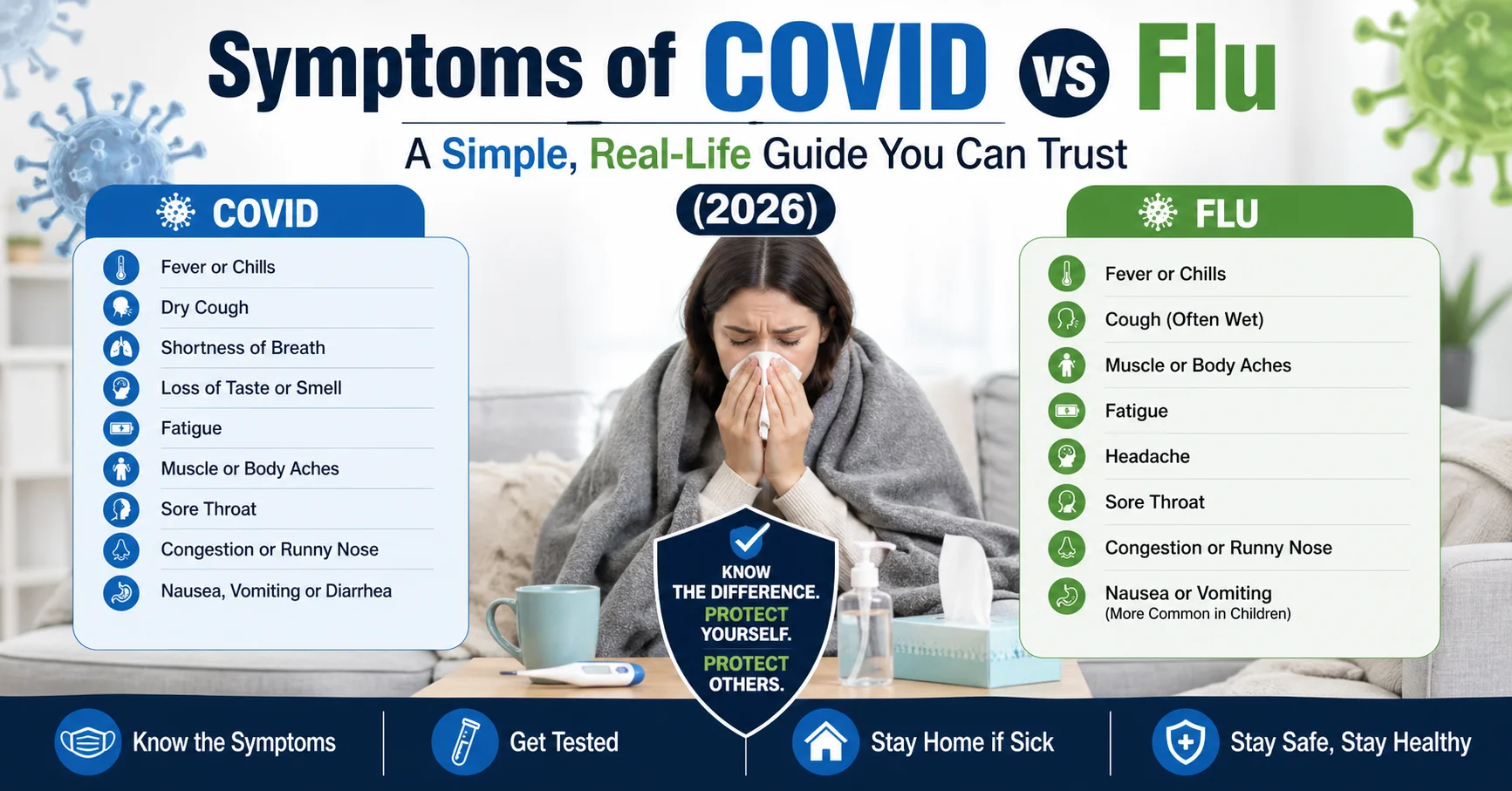
Feeling sick can be confusing, especially when symptoms seem similar. Many people ask the same question: Is it COVID, the flu, or just a cold? Understanding the symptoms of covid vs flu in 2026 is more important than ever because viruses keep changing and spreading in new ways.
In real life, most people don’t rush to a doctor for mild symptoms. They try to guess what’s going on. That’s where confusion begins. COVID, flu, and even the common cold can start with similar signs like fever, cough, or tiredness.
This guide will help you clearly understand the symptoms of flu vs covid, compare them with the common cold, and learn what steps to take. Everything is explained in simple language, so anyone can understand it easily.
What Are COVID-19, Flu, and the Common Cold?
COVID-19 is a viral illness that affects the lungs and sometimes other parts of the body. It spreads quickly through air droplets and close contact.
Influenza, known as the flu, is also a respiratory infection. It usually spreads during certain seasons and can make you feel very weak.
The Common Cold is milder than both. It mainly affects the nose and throat.
Understanding these basics helps you compare the symptoms of covid vs flu vs cold more easily in daily life.
Why It’s Still Confusing in 2026
Even in 2026, people struggle to tell these illnesses apart. That’s because symptoms overlap a lot. Fever, cough, and fatigue appear in both COVID and flu.
New variants of COVID have also changed how symptoms show up. Some people now get mild symptoms, while others still feel very sick.
This makes the symptoms of covid vs flu 2026 harder to identify without testing. Many people say COVID now feels like a mix of flu and cold.
Because of this, doctors recommend looking at the full pattern of symptoms instead of just one sign.
Key Symptoms of COVID vs Flu
Here’s a simple comparison to help you understand the main differences.
| Symptom | COVID-19 | Flu (Influenza) |
|---|---|---|
| Fever | Common | Very common |
| Dry cough | Very common | Common |
| Fatigue | Strong | Strong |
| Loss of taste/smell | Often present | Rare |
| Body aches | Sometimes | Very common |
| Breathing issues | Sometimes | Rare |
A key highlight in the symptoms of covid vs flu is the loss of taste or smell. This symptom still appears more often in COVID cases.
Symptoms of Cold vs Flu vs COVID
Let’s compare all three illnesses together for better clarity.
| Symptom | Cold | Flu | COVID-19 |
|---|---|---|---|
| Sneezing | Very common | Rare | Sometimes |
| Fever | Rare | Common | Common |
| Sore throat | Common | Sometimes | Common |
| Fatigue | Mild | Severe | Moderate to severe |
| Headache | Rare | Common | Sometimes |
This table gives a quick overview of the symptoms of cold vs flu vs covid, making it easier to spot differences.
How Symptoms Begin: Sudden or Gradual?
One useful clue is how fast symptoms appear.
Flu symptoms usually come suddenly. You may feel fine one moment and very sick the next.
COVID symptoms often start slowly. You might feel mild tiredness first, then develop cough or fever.
Colds usually begin gently, often with sneezing or a runny nose.
This timing difference is very helpful when comparing the symptoms of covid vs flu in real situations.
Fever, Fatigue, and Body Pain
Fever is common in both COVID and flu, but there are slight differences.
Flu often causes high fever and strong body aches. Many people describe it as feeling extremely weak.
COVID can also cause fever, but sometimes it is mild or even absent.
Fatigue is strong in both illnesses. However, COVID fatigue may last longer.
Understanding these patterns helps you better identify the symptoms of flu vs covid.
Unique Signs That Point to COVID
Some symptoms are more linked to COVID than flu.
Loss of taste or smell is still one of the biggest clues. It can happen suddenly without a blocked nose.
Some people also report brain fog or trouble concentrating.
Shortness of breath is another warning sign that may appear after a few days.
These features help separate COVID when comparing the symptoms of covid vs flu vs cold.
When It’s Likely Just a Cold
If your symptoms are mild, it may just be a cold.
Common signs include a runny nose, sneezing, and mild sore throat. Fever is rare in colds.
Most people recover quickly from a cold without serious problems.
In many cases, people panic and think it’s COVID. But if symptoms stay mild, it’s usually not.
This understanding reduces confusion around the symptoms of covid vs flu.
How Long Do These Illnesses Last?
Duration can give you another clue.
| Illness | Typical Duration |
|---|---|
| Cold | 3–7 days |
| Flu | 5–10 days |
| COVID-19 | 7–14 days or more |
COVID symptoms may last longer, especially tiredness and cough.
Flu usually improves faster but can still be serious.
Tracking how long you feel sick helps in understanding the symptoms of covid vs flu 2026.
Warning Signs You Should Never Ignore
Some symptoms need urgent medical care.
Watch out for:
- Difficulty breathing
- Chest pain
- Confusion
- Blue lips or face
These can happen in both COVID and flu cases, especially in high-risk people.
Many real-life cases show people ignoring these signs and delaying treatment. That can be dangerous.
Always take severe symptoms seriously when dealing with the symptoms of flu vs covid.
Who Is at Higher Risk?
Some people are more likely to get seriously ill.
These include older adults, pregnant women, and people with chronic diseases.
COVID has shown higher risks for lung and heart complications.
Flu can also lead to pneumonia and other serious issues.
Knowing your risk level helps you act faster when you notice the symptoms of covid vs flu.
Testing: The Only Clear Answer
Even experts cannot always tell the difference just by symptoms.
Testing is the most reliable way to confirm whether it’s COVID or flu.
In 2026, home test kits are widely available and easy to use.
Many people assume they have flu and continue normal life. This can spread infection to others.
Testing removes confusion when dealing with the symptoms of covid vs flu vs cold.
Simple Prevention Tips That Work
Prevention is still the best protection.
- Wash your hands regularly
- Avoid crowded places when possible
- Wear a mask if needed
- Stay home when sick
Vaccination also helps reduce severe illness from both COVID and flu.
From real-life experience, people who follow these steps often stay healthier.
Prevention plays a key role in avoiding the symptoms of covid vs flu.
Real-Life Example to Understand Better
Let’s simplify this with real-life examples.
A flu patient might say:
“I suddenly got fever and body pain overnight.”
A COVID patient might say:
“I felt tired first, then slowly developed more symptoms.”
A cold patient might say:
“I had sneezing and a runny nose for a few days.”
These simple stories help you understand the symptoms of flu vs covid more clearly.
FAQs About Symptoms of COVID vs Flu
1. Can COVID feel like the flu in 2026?
Yes, many cases feel very similar, especially mild ones.
2. Is loss of smell still common?
Yes, but not in every case. It still points more toward COVID.
3. Which spreads faster?
COVID generally spreads more easily than flu.
4. Can I have both at the same time?
Yes, though it is uncommon.
5. How do I know if it’s just a cold?
If symptoms are mild and no fever, it is likely a cold.
6. Should I isolate with mild symptoms?
Yes, to prevent spreading illness to others.
Final Thoughts: Stay Aware and Act Early
Understanding the symptoms of covid vs flu helps you make better health decisions. While these illnesses share many signs, small differences can guide your actions.
Always listen to your body. If symptoms worsen or feel unusual, seek medical advice.
From real-life experience, early action makes a big difference. Waiting too long can lead to complications.
Stay informed, stay careful, and share this guide with others. It might help someone recognize symptoms early and stay safe.
