

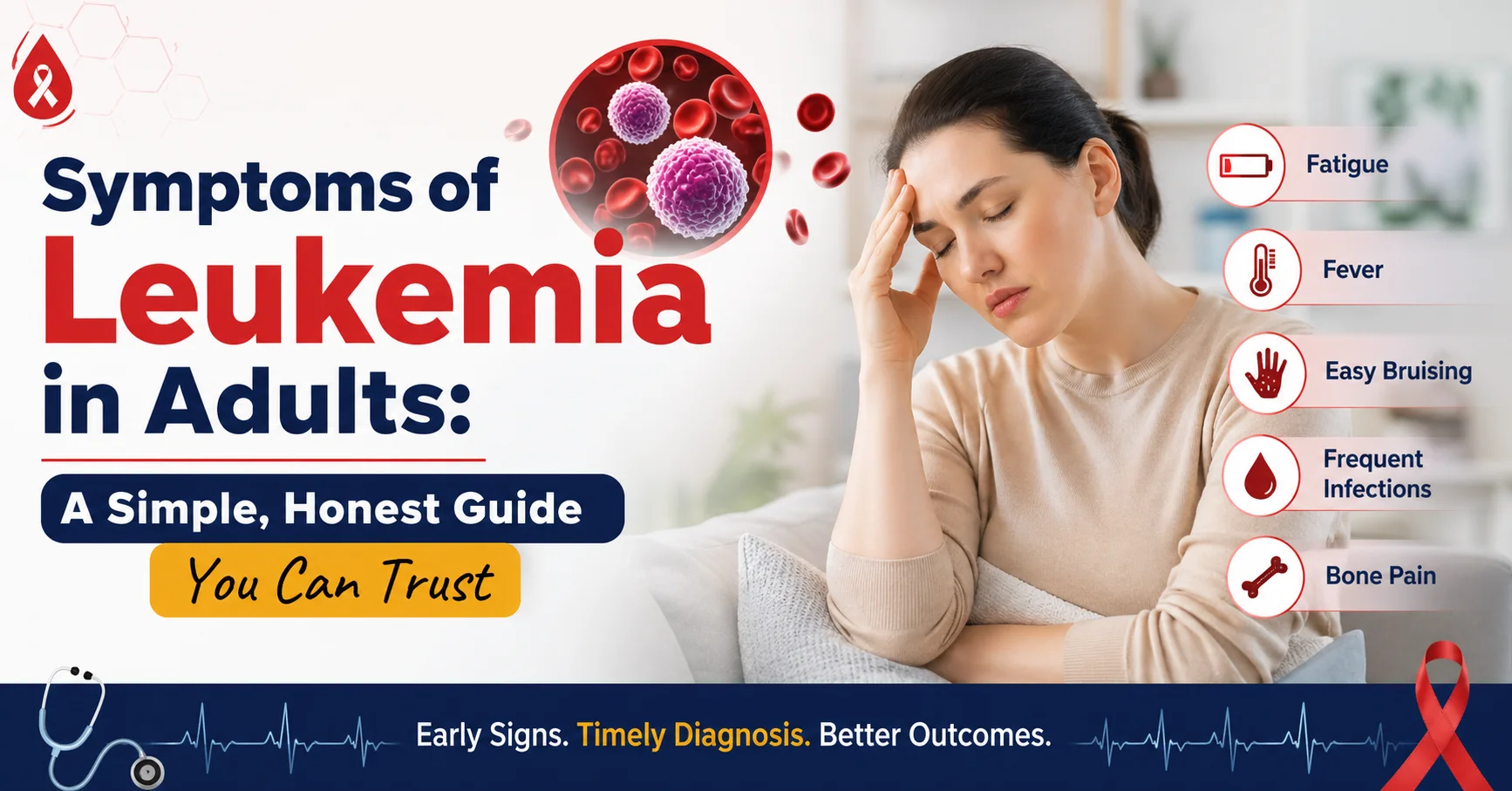
Leukemia is a type of blood cancer that many people don’t fully understand. It often starts quietly, with small changes in the body that are easy to ignore. That’s why learning the symptoms of leukemia in adults is so important. Early awareness can help people seek medical care sooner, which may improve outcomes.
This guide is written in a simple and clear way. You don’t need medical knowledge to understand it. We’ll walk through early warning signs, common symptoms, and when to take action. You’ll also find real-life insights and practical advice that can help you or someone you care about.
Let’s start by understanding what leukemia is and how it affects the body.
What Is Leukemia? A Simple Explanation
Leukemia is a cancer of the blood and bone marrow. The bone marrow is where blood cells are made. In leukemia, the body produces abnormal white blood cells. These cells don’t work properly.
Instead of fighting infection, these faulty cells crowd out healthy ones. This leads to problems with immunity, oxygen flow, and clotting.
There are different types of leukemia. Some grow quickly (acute), while others develop slowly (chronic). Adults can get both types.
Because leukemia affects the blood, its symptoms can show up in many ways. That’s why the signs and symptoms of leukemia in adults can feel confusing at first.
Why Recognizing Symptoms Early Matters
Catching leukemia early can make a big difference. Early diagnosis may lead to better treatment options and improved survival rates.
The challenge is that the early signs and symptoms of leukemia in adults often look like common illnesses. Many people think it’s just fatigue or a mild infection.
For example, someone might feel tired for weeks and assume it’s stress. Others may notice bruises but blame minor injuries.
Ignoring these signs can delay diagnosis. That’s why it’s important to listen to your body. If something feels off for a long time, it’s worth checking.
Early Signs and Symptoms of Leukemia in Adults
The early stage of leukemia can be subtle. Symptoms may come and go, making them easy to overlook.
Here are some early warning signs:
- Constant tiredness, even after rest
- Frequent infections
- Mild fever or chills
- Unexplained weight loss
- Pale skin
These early signs and symptoms of leukemia in adults often build slowly. They may not seem serious at first.
A person might think, “I’m just tired,” or “I must have caught a virus.” But if symptoms last for weeks, it’s important to take them seriously.
Common Symptoms of Leukemia in Adults
As leukemia progresses, symptoms become more noticeable. These are the more common symptoms of leukemia in adults:
| Symptom | What It Feels Like | Why It Happens |
|---|---|---|
| Fatigue | Extreme tiredness | Low red blood cells |
| Fever | Ongoing or recurring | Weak immune system |
| Bruising | Easy bruising | Low platelets |
| Bleeding | Nose or gums bleed | Poor clotting |
| Bone pain | Deep aches | Bone marrow pressure |
These symptoms can affect daily life. Simple tasks may feel harder than usual.
Unusual or Less Known Symptoms
Some symptoms are less obvious. They don’t always point directly to leukemia.
These include:
- Night sweats
- Swollen lymph nodes
- Full feeling in the stomach
- Shortness of breath
- Headaches
These signs are part of the broader what are the signs and symptoms of leukemia in adults question. They may appear alongside more common symptoms.
For example, someone might feel full quickly while eating. This can happen if the spleen is enlarged.
Symptoms of Leukemia in Adult Women
While leukemia affects both men and women, some symptoms may show differently in women.
The symptoms of leukemia in adult women can include:
- Heavy or irregular periods
- Increased fatigue during menstruation
- Frequent infections
- Pale skin
Hormonal changes can sometimes mask these symptoms. Women may think it’s related to their cycle or stress.
That’s why it’s important not to ignore ongoing changes in the body.
How Symptoms Change Over Time
Leukemia symptoms often worsen gradually. Early signs may be mild, but they can become more serious.
Here’s a simple progression:
| Stage | Symptoms |
|---|---|
| Early | Fatigue, mild fever |
| Mid | Bruising, infections |
| Advanced | Bone pain, bleeding |
Understanding this pattern helps people recognize when symptoms are getting worse.
Real-Life Example: When Symptoms Are Missed
A common story involves someone feeling tired for months. They might visit a doctor and be told it’s stress.
Later, they notice bruises that don’t heal. Then infections become frequent. Only after several visits do tests reveal leukemia.
This shows how the symptoms of leukemia in adults can be misleading.
Listening to your body and seeking a second opinion can be life-saving.
When Should You See a Doctor?
Not every symptom means leukemia. But some signs should not be ignored.
See a doctor if you notice:
- Fatigue lasting more than two weeks
- Frequent infections
- Unexplained bruising
- Ongoing fever
If multiple symptoms appear together, it’s even more important to get checked.
How Leukemia Is Diagnosed
Doctors use simple tests to check for leukemia.
These include:
| Test | Purpose |
|---|---|
| Blood test | Check abnormal cells |
| Bone marrow test | Confirm diagnosis |
| Imaging | Check organ swelling |
Diagnosis may sound scary, but early detection can improve treatment success.
Risk Factors You Should Know
Certain factors may increase the risk of leukemia:
- Smoking
- Radiation exposure
- Family history
- Previous cancer treatment
Having these risk factors doesn’t mean you will get leukemia. But it makes awareness more important.
Can Leukemia Symptoms Be Prevented?
There is no sure way to prevent leukemia. However, you can lower risk by:
- Avoiding smoking
- Limiting chemical exposure
- Maintaining a healthy lifestyle
Most importantly, pay attention to your body. Early action matters.
Emotional Impact of Symptoms
Dealing with symptoms can be stressful. Many people feel anxious or confused.
They may wonder, “Is this serious?” or “Am I overthinking?”
These feelings are normal. Talking to a doctor can bring clarity and peace of mind.
How to Support Someone With Symptoms
If someone you know shows signs, support them by:
- Encouraging medical checkups
- Listening without judgment
- Helping with daily tasks
Small actions can make a big difference.
FAQs About Symptoms of Leukemia in Adults
1. What are the earliest symptoms of leukemia?
The earliest symptoms include fatigue, mild fever, and frequent infections. These can seem harmless at first.
2. Are leukemia symptoms sudden or gradual?
They can be both. Acute leukemia appears quickly, while chronic types develop slowly.
3. Can leukemia symptoms come and go?
Yes, especially in early stages. This makes them easy to ignore.
4. Do all adults experience the same symptoms?
No. Symptoms vary based on the type of leukemia and overall health.
5. Is fatigue always a sign of leukemia?
No. Fatigue is common in many conditions. But persistent fatigue should be checked.
6. How long should symptoms last before seeing a doctor?
If symptoms last more than two weeks, it’s wise to consult a doctor.
Final Thoughts: Listen to Your Body
The symptoms of leukemia in adults are not always obvious. They often start small and grow over time.
That’s why awareness is key. Pay attention to changes in your body. Don’t ignore signs that last longer than expected.
If something feels wrong, trust your instincts and seek medical advice. Early action can make a real difference.
Your health matters. Stay informed, stay aware, and take care of yourself.
