

Introduction
Symptoms of high potassium can be confusing because they often look like common health problems. Many people ignore early warning signs, thinking it is just tiredness or stress. But when potassium becomes too high in the blood, it can affect muscles, nerves, and especially the heart. This condition is also known as hyperkalemia, and it needs attention before it becomes serious.
In this guide, we will explain everything in very simple words. You will learn what symptoms of high potassium levels look like, why they happen, and how they may appear in different people like CKD patients and females. We will also cover real-life examples, warning signs, and easy-to-understand tables. The goal is to help you recognize the symptoms of high potassium early so you can stay safe and informed.
What Is High Potassium in Simple Words?
High potassium means there is too much potassium in your blood. Potassium is a mineral your body needs for muscles and nerves. It helps your heart beat normally. But when levels go too high, it becomes dangerous instead of helpful.
The medical term for this is hyperkalemia. Many people search for what are the symptoms of high potassium levels because they don’t realize how quickly it can affect the body. Normally, kidneys remove extra potassium. But when kidneys are weak or damaged, potassium builds up.
This is why symptoms of high potassium are often seen in people with kidney disease, dehydration, or certain medicines. Understanding this condition in simple terms helps you react early and avoid complications.
Why Potassium Levels Become High in the Body
There are many reasons why potassium increases. One of the most common causes is kidney disease. When kidneys are not working properly, they cannot remove extra potassium. This leads to a buildup in the blood.
Other causes include certain medicines, too much potassium in food, or uncontrolled diabetes. People often search for what are symptoms of high potassium without knowing the root cause is important too. Muscle injury or severe infections can also release potassium into the bloodstream.
Understanding the cause helps you understand the symptoms of high potassium in CKD patients and other groups more clearly. Once the cause is known, doctors can plan better treatment and prevent dangerous complications.
General Symptoms of High Potassium
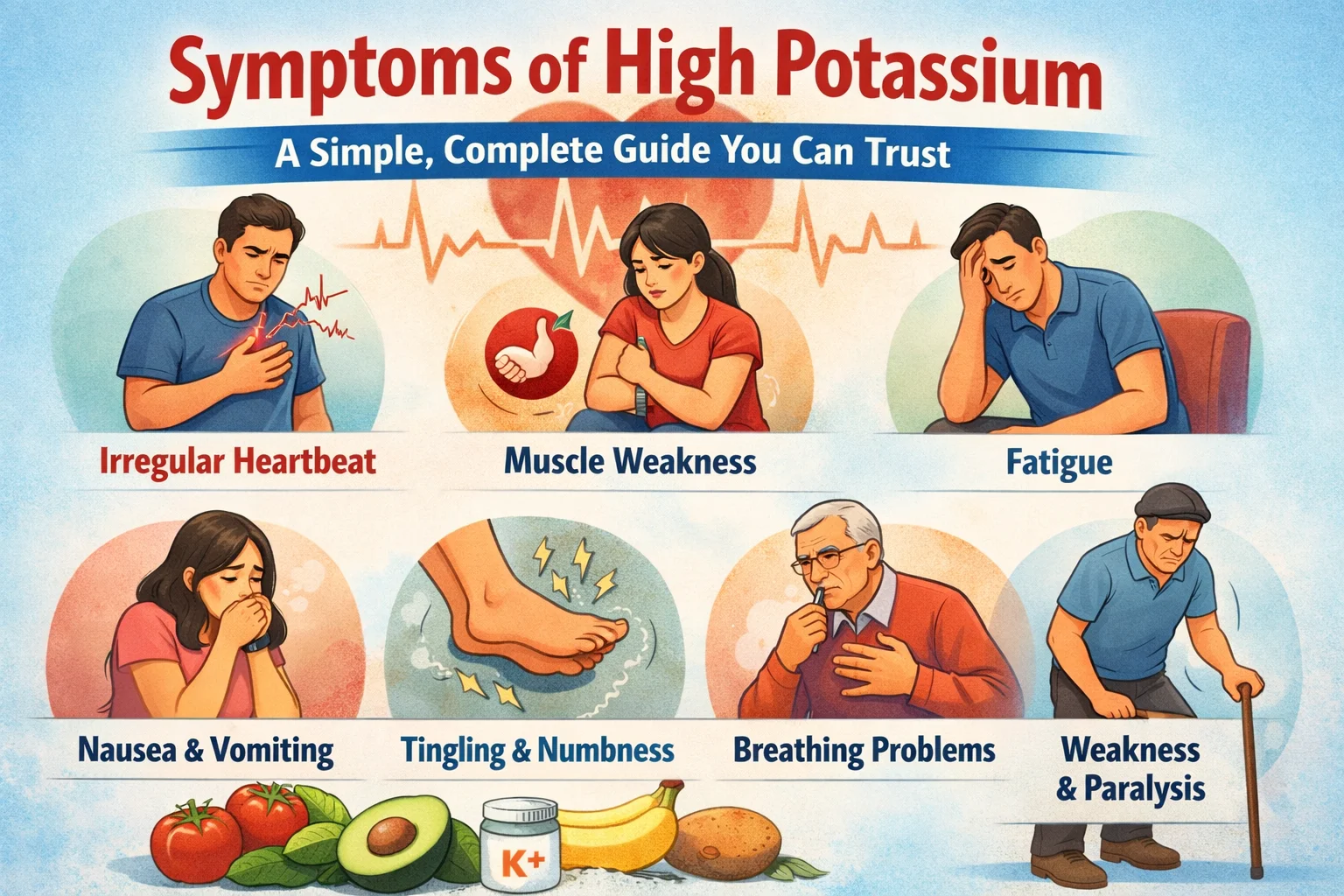
The symptoms of high potassium can be mild at first but may become serious quickly. Many people do not notice them until the condition gets worse. Early signs often include weakness, tiredness, or a feeling of heaviness in the body.
Some people also feel tingling or numbness in their hands and feet. These are common signs and symptoms of high potassium that should not be ignored. In more serious cases, people may experience irregular heartbeat or chest discomfort.
Here is a simple table to help you understand better:
Table 1: Common Symptoms of High Potassium
| Category | Symptoms |
|---|---|
| Muscle | Weakness, fatigue, heaviness |
| Nerves | Tingling, numbness |
| Heart | Irregular heartbeat |
| General | Tiredness, nausea |
These symptoms of high potassium levels may start small but can become dangerous if untreated.
Symptoms of High Blood Potassium and Heart Effects
When potassium rises too much, the heart is affected first. This is why doctors take this condition very seriously. The heart depends on potassium for a steady rhythm, but too much disturbs it.
People may feel their heart beating too fast or too slow. Some even feel skipped beats. These are important symptoms of high blood potassium that need quick attention.
In severe cases, the heart may stop working properly, which is life-threatening. That is why understanding symptoms of high potassium early is very important. Even small changes in heartbeat should never be ignored, especially if other symptoms are present.
Signs and Symptoms of High Potassium in Muscles and Nerves
The muscles and nerves are also strongly affected. Many people feel sudden weakness in their arms or legs. It may become hard to walk or hold objects.
Numbness or tingling is also common. These are clear signs and symptoms of high potassium that often appear early. Some people also experience muscle cramps or twitching.
Here is another helpful table:
Table 2: Nervous and Muscle Effects
| System | Symptoms |
|---|---|
| Muscles | Weakness, cramps |
| Nerves | Tingling, numbness |
| Movement | Difficulty walking |
These symptoms of high potassium levels can make daily tasks difficult if not treated.
What Are Symptoms of High Potassium Levels in the Digestive System?
High potassium can also affect digestion. Some people feel nausea or stomach discomfort. In some cases, vomiting or loss of appetite may happen.
These are less known but still important what are symptoms of high potassium levels that many people ignore. Because they seem like normal stomach issues, people often delay treatment.
Fatigue may also increase after eating or during the day. When combined with other signs, these digestive issues may point toward symptoms of high potassium in the body.
Symptoms of High Potassium in CKD Patients
People with chronic kidney disease (CKD) are at higher risk. Their kidneys cannot remove potassium properly. This makes them more likely to develop serious symptoms.
In CKD patients, symptoms of high potassium in CKD patients can appear faster and stronger. They may feel extreme tiredness, muscle weakness, or heart rhythm problems.
Doctors often monitor these patients closely. Even small changes in potassium levels can become dangerous. That is why regular blood tests are very important for CKD patients.
Symptoms of High Potassium in Females
Women can also experience unique signs. Hormonal changes, pregnancy, or certain medications may increase potassium levels.
The symptoms of high potassium in females often include fatigue, muscle weakness, and dizziness. Some women may also feel heart palpitations or nausea.
These symptoms are often mistaken for stress or hormonal imbalance. That is why awareness is important. If these signs continue, checking potassium levels is a smart step.
Risk Groups for High Potassium
Some people are more likely to develop this condition. These include kidney patients, diabetics, and elderly individuals.
Here is a simple table:
Table 3: High-Risk Groups
| Group | Reason |
|---|---|
| CKD patients | Weak kidney function |
| Diabetics | Body imbalance |
| Elderly | Slower kidney function |
| Medication users | Drug side effects |
These groups should watch for symptoms of high potassium more carefully than others.
How Doctors Detect High Potassium
Doctors use a blood test to check potassium levels. This test is simple and quick. It shows whether potassium is too high.
Sometimes an ECG (heart test) is also done. It helps detect heart rhythm changes caused by symptoms of high blood potassium.
Early detection is very important because symptoms alone are not always clear. Many people only find out through testing.
Mild vs Severe Symptoms of High Potassium
The condition can be mild or severe depending on potassium levels. Mild cases may have no clear symptoms. Severe cases can affect the heart and muscles badly.
Table 4: Mild vs Severe Symptoms
| Level | Symptoms |
|---|---|
| Mild | Weakness, tiredness |
| Moderate | Tingling, cramps |
| Severe | Irregular heartbeat |
These differences show why what are symptoms of high potassium levels must always be taken seriously.
How to Manage High Potassium Safely
Treatment depends on the cause. Doctors may suggest diet changes or medicines. In serious cases, hospital treatment may be needed.
Avoiding high-potassium foods can help control symptoms of high potassium levels. Drinking enough water also supports kidney function.
Always follow medical advice instead of self-treatment. Proper care can reduce risks and improve health.
Prevention Tips for High Potassium
Prevention is always better than treatment. Eating a balanced diet helps maintain normal potassium levels. Avoiding excess bananas, oranges, and processed foods is helpful.
Regular checkups are important for people at risk. Monitoring kidney health reduces the chances of symptoms of high potassium in CKD patients.
Simple lifestyle habits can make a big difference in preventing complications.
Complications of High Potassium
If not treated, high potassium can become dangerous. It may cause serious heart problems or muscle paralysis.
That is why recognizing symptoms of high potassium early is very important. Delayed treatment can lead to emergency situations.
Timely care helps avoid life-threatening complications and keeps the body stable.
Frequently Asked Questions (FAQs)
1. What are early symptoms of high potassium?
Early signs include tiredness, muscle weakness, and mild tingling in hands or feet.
2. Are symptoms of high potassium dangerous?
Yes, if ignored, they can affect the heart and become life-threatening.
3. Can diet cause high potassium?
Yes, eating too many high-potassium foods may increase levels in some people.
4. Who is most at risk of high potassium?
Kidney patients, diabetics, and elderly people are most at risk.
5. How is high potassium confirmed?
A simple blood test is used to check potassium levels in the body.
6. Can high potassium be treated at home?
No, it should always be managed under medical supervision.
Conclusion
Understanding symptoms of high potassium is very important for early safety. This condition may start silently but can become serious quickly. Learning the warning signs like weakness, irregular heartbeat, and fatigue helps you act early.
Whether it is symptoms of high blood potassium, symptoms of high potassium in females, or symptoms of high potassium in CKD patients, awareness is the key. Regular checkups, healthy diet choices, and timely medical advice can protect your health.
If you notice any signs, do not ignore them. Early action can make a big difference in staying safe and healthy.
