

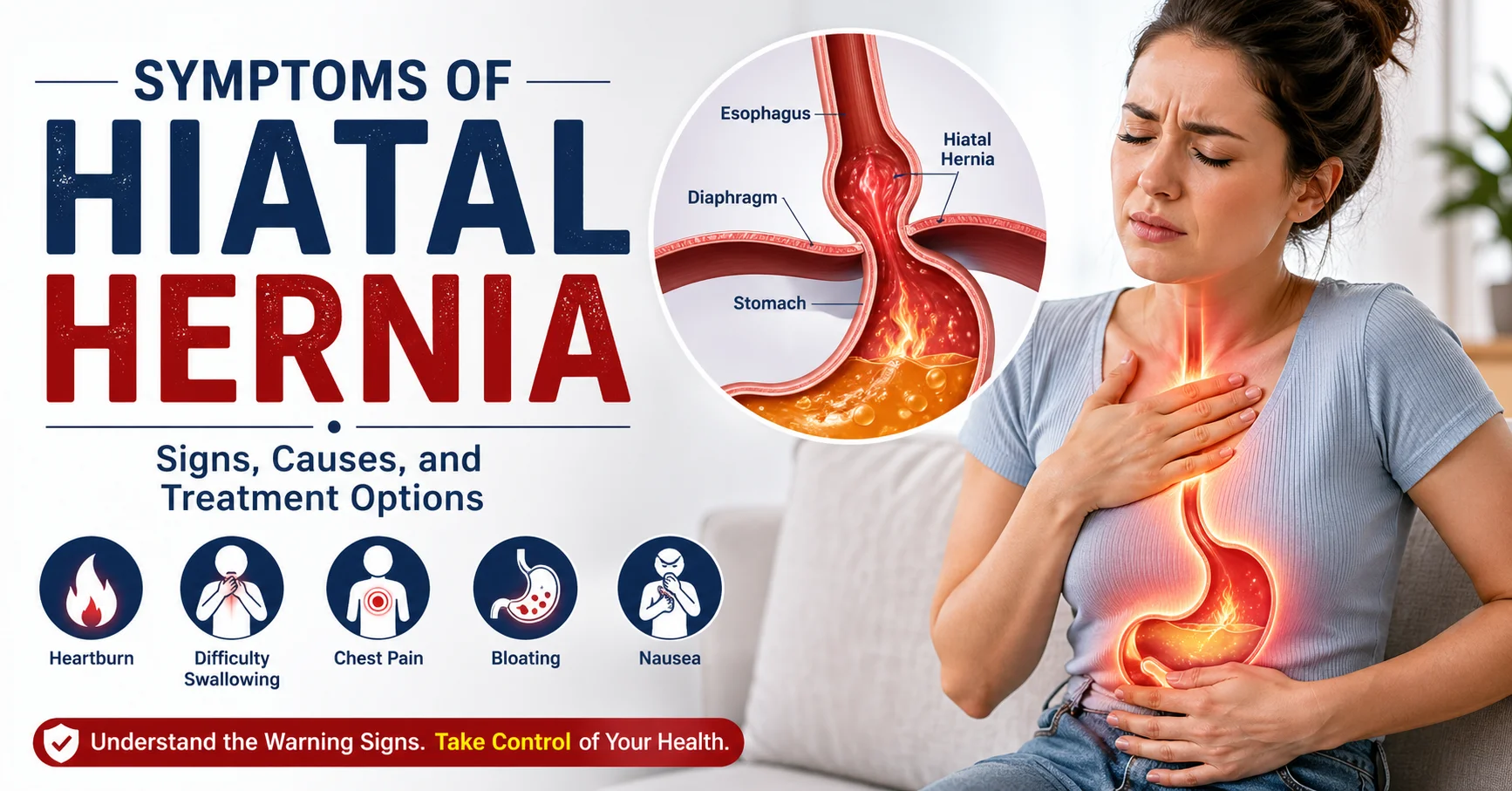
A hiatal hernia is more common than many people think. Yet, most people don’t realize they have one until symptoms start to bother them. If you’ve been feeling chest discomfort, heartburn, or strange stomach pressure, your body may be trying to tell you something.
This guide will walk you through the symptoms of hiatal hernia in a clear, simple way. You’ll learn what to watch for, when symptoms get worse, and how to manage them. I’ll also share real-life style insights so you can relate better and feel more in control.
What Is a Hiatal Hernia?
A hiatal hernia happens when part of your stomach pushes up into your chest through a small opening in your diaphragm. This opening is called the hiatus.
In normal cases, your stomach stays below the diaphragm. But when a hernia forms, it moves upward. This can affect how food and acid behave in your body.
There are two main types:
- Sliding hiatal hernia (most common)
- Paraesophageal hiatal hernia (less common but more serious)
Many people live with it without knowing. But others feel clear symptoms of a hiatal hernia that affect daily life.
Why Do Symptoms of Hiatal Hernia Happen?
Symptoms usually occur because stomach acid moves up into the esophagus. This is often called acid reflux.
When the stomach shifts upward, the valve between your stomach and esophagus becomes weak. This allows acid to escape.
That’s why the symptoms of hiatal hernia often feel similar to heartburn or indigestion.
Common Symptoms of Hiatal Hernia
Most people notice mild symptoms at first. These can come and go.
Here are the most common signs:
| Symptom | What It Feels Like |
|---|---|
| Heartburn | Burning feeling in chest |
| Acid reflux | Sour taste in mouth |
| Chest pain | Pressure or discomfort |
| Difficulty swallowing | Food feels stuck |
| Burping | Frequent belching |
These what are the symptoms of a hiatal hernia questions often come from people dealing with these exact issues.
Symptoms of Hiatal Hernia in Women
The symptoms of hiatal hernia in women can sometimes feel different or more noticeable.
Women often report:
- More frequent bloating
- Stronger heartburn after meals
- Chest tightness during stress
- Nausea or discomfort after eating
Hormonal changes may also affect digestion. This is why symptoms of hiatal hernia women may appear more during pregnancy or menopause.
Real-life insight:
Many women think it’s just “gas” or stress. But when symptoms keep coming back, it’s worth checking further.
Symptoms of Hiatal Hernia Getting Worse
Sometimes symptoms become more intense over time. This is when people search for symptoms of hiatal hernia getting worse.
Watch for these signs:
| Warning Sign | What It Means |
|---|---|
| Severe chest pain | Could mimic heart issues |
| Constant acid reflux | Not improving with diet |
| Trouble swallowing | Food blockage feeling |
| Vomiting | Possible complication |
If symptoms interfere with daily life, it’s time to take action.
What Are the Symptoms of Strangulated Hiatal Hernia?
A strangulated hiatal hernia is rare but serious. It happens when blood flow to part of the stomach gets cut off.
Here are what are the symptoms of strangulated hiatal hernia:
- Sudden, sharp chest or stomach pain
- Difficulty swallowing
- Vomiting or nausea
- Rapid heartbeat
- Feeling very weak
| Emergency Symptom | Action Needed |
|---|---|
| Severe pain | Go to hospital |
| Vomiting blood | Immediate care |
| Black stools | Urgent attention |
If you notice these, don’t wait. Seek medical help right away.
Mild vs Severe Symptoms Comparison
Understanding the difference helps you act early.
| Mild Symptoms | Severe Symptoms |
|---|---|
| Occasional heartburn | Constant pain |
| Light bloating | Trouble swallowing |
| Mild reflux | Vomiting |
| Burping | Chest pressure |
This table helps answer what are symptoms of a hiatal hernia at different stages.
What Triggers Hiatal Hernia Symptoms?
Certain habits can make symptoms worse.
Common triggers include:
- Large meals
- Spicy or oily food
- Lying down after eating
- Smoking
- Stress
| Trigger | Effect |
|---|---|
| Spicy food | Increases acid |
| Late-night meals | Causes reflux |
| Stress | Worsens digestion |
Avoiding these can reduce symptoms of hiatal hernia quickly.
How Hiatal Hernia Feels Day to Day
Living with a hiatal hernia can feel unpredictable.
One day you may feel fine. The next day, heartburn returns after a simple meal.
Some people feel:
- A heavy chest after eating
- A burning throat at night
- Sudden bloating
Personal insight:
Many people say the worst part is not knowing when symptoms will hit. Keeping a food diary can really help.
Treatment of Hiatal Hernia Symptoms
The treatment of hiatal hernia symptoms depends on severity.
Lifestyle changes:
- Eat smaller meals
- Avoid lying down after eating
- Lose extra weight
- Raise your head while sleeping
Medications:
- Antacids
- Acid blockers
- Proton pump inhibitors
| Treatment Type | Purpose |
|---|---|
| Antacids | Quick relief |
| PPIs | Reduce acid production |
| Lifestyle changes | Long-term control |
Most people improve without surgery.
When Do You Need Surgery?
Surgery is not common. But it may be needed if:
- Symptoms don’t improve
- You have severe reflux
- A strangulated hernia occurs
Doctors repair the hernia and tighten the opening.
How to Prevent Symptoms from Getting Worse
Prevention is simple but powerful.
Follow these tips:
- Eat slowly
- Avoid tight clothing
- Stay upright after meals
- Manage stress
| Habit | Benefit |
|---|---|
| Eating slowly | Better digestion |
| Smaller meals | Less pressure |
| Good posture | Reduced reflux |
These steps help control symptoms of hiatal hernia getting worse.
Foods That Help and Harm
Diet plays a huge role.
Foods to avoid:
- Fried foods
- Chocolate
- Coffee
- Citrus
Foods that help:
- Oatmeal
- Bananas
- Lean proteins
- Vegetables
| Good Foods | Bad Foods |
|---|---|
| Oats | Fried snacks |
| Vegetables | Spicy dishes |
| Lean meat | Caffeine |
FAQs About Symptoms of Hiatal Hernia
1. What are the symptoms of a hiatal hernia?
Common symptoms include heartburn, chest pain, and acid reflux. Some people also feel bloated or have trouble swallowing.
2. Can hiatal hernia symptoms come and go?
Yes, symptoms can appear suddenly and disappear. They often depend on diet and lifestyle.
3. Are symptoms of hiatal hernia in women different?
They can be. Women may feel more bloating, nausea, or discomfort due to hormonal changes.
4. What are the symptoms of a strangulated hiatal hernia?
Severe pain, vomiting, and weakness are warning signs. This is a medical emergency.
5. How do I know if symptoms are getting worse?
If symptoms become constant or painful, or affect eating, they may be worsening.
6. What is the best treatment of hiatal hernia symptoms?
Lifestyle changes and medications work for most people. Surgery is only needed in severe cases.
Final Thoughts: Listen to Your Body
The symptoms of hiatal hernia can be mild or serious. The key is paying attention to your body.
Small signs like heartburn or bloating may seem harmless. But if they keep returning, they deserve attention.
The good news is that most people manage symptoms easily with simple changes. Better eating habits, less stress, and proper care can make a big difference.
If something feels off, don’t ignore it. Getting help early can prevent bigger problems later.
Your health is worth it.
