

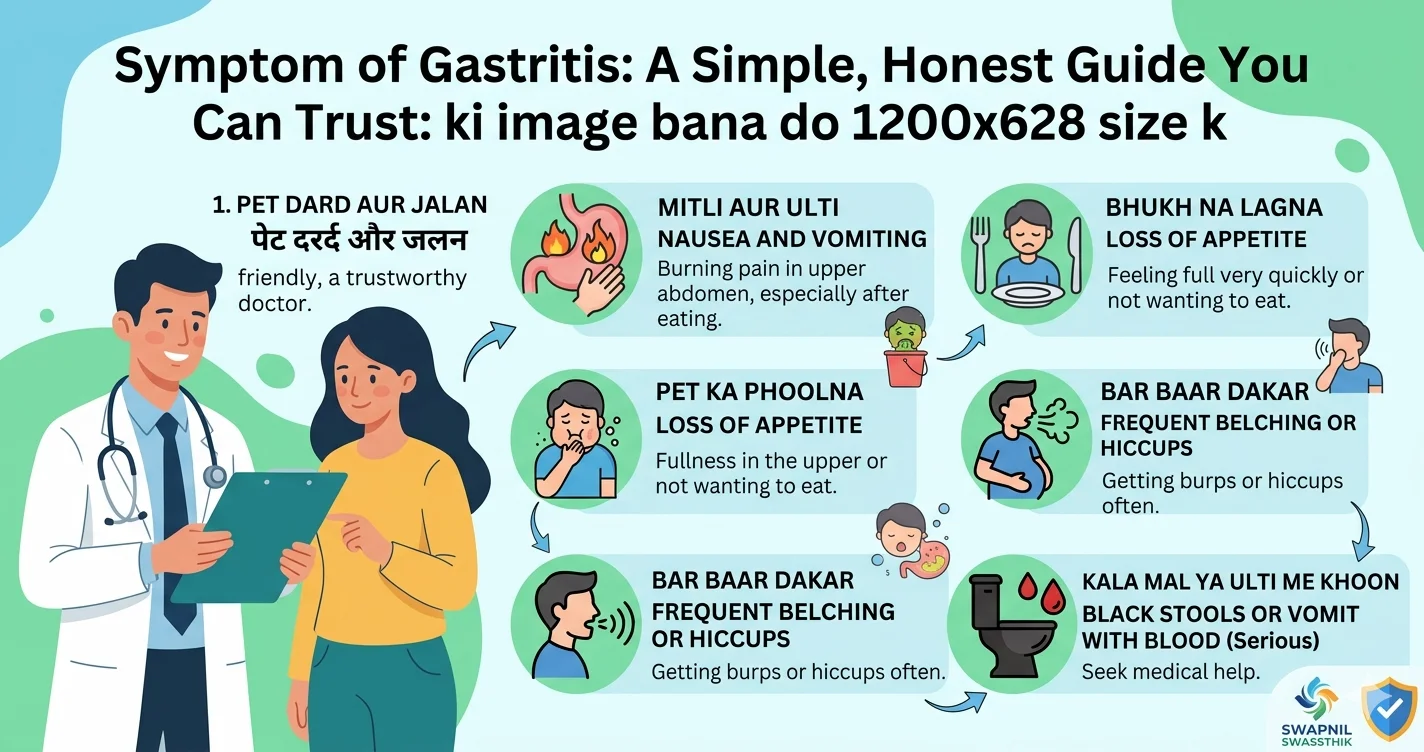
Gastritis is a common stomach problem. Many people feel it but do not understand it. If you often have stomach pain, burning, or nausea, your body may be trying to tell you something important.
In this guide, we will clearly explain the symptoms of gastritis in a simple way. You will learn what to watch for, why it happens, and when to take it seriously. This article is written in plain language so anyone can understand it—even if you have no medical background.
What Is Gastritis in Simple Words?
Gastritis means your stomach lining is irritated or inflamed. Think of your stomach lining like a soft protective layer. When it gets damaged, it becomes sensitive and painful.
This can happen slowly over time or suddenly. Some people feel mild discomfort, while others feel sharp pain. The symptoms of stomach gastritis can vary from person to person.
Why Do People Get Gastritis?
There are many reasons why gastritis happens. Some are common and easy to fix. Others may need medical care.
Here are some major causes:
- Infection by bacteria (like Helicobacter pylori)
- Drinking too much alcohol
- Long-term use of painkillers
- Stress and anxiety
- Spicy or acidic foods
- Smoking
These causes can lead to different types, like symptoms of alcohol gastritis or symptoms of helicobacter gastritis.
Most Common Symptoms of Gastritis
The symptoms of gastritis are often easy to notice. However, some people ignore them at first.
Here are the most common signs:
| Symptom | What It Feels Like |
|---|---|
| Stomach pain | Burning or aching in upper belly |
| Nausea | Feeling like you may vomit |
| Bloating | Tight or full stomach |
| Loss of appetite | Not feeling hungry |
| Indigestion | Trouble digesting food |
| Vomiting | Sometimes with sour taste |
These are the basic sign symptoms of gastritis. They can come and go.
What Are the Symptoms of Gastritis After Eating?
Many people notice pain after meals. This is because the stomach produces acid to digest food.
When the lining is inflamed, acid causes irritation.
Common signs after eating:
- Burning sensation in the stomach
- Feeling too full quickly
- Burping or gas
- Mild nausea
If you feel worse after spicy or oily food, it may be a clear sign.
Symptoms of Gastritis in Females
Women may experience some unique patterns. Hormones, stress, and diet changes can affect the stomach.
The symptoms of gastritis in females may include:
- Strong bloating during periods
- Nausea more often than men
- Sensitivity to certain foods
- Fatigue along with stomach pain
Many women mistake gastritis for general digestive problems. That’s why awareness is important.
Symptoms of Alcohol Gastritis
Alcohol can damage the stomach lining quickly. Even a few days of heavy drinking can cause irritation.
Here are the symptoms of alcohol gastritis:
| Symptom | Description |
|---|---|
| Burning pain | Strong discomfort in upper stomach |
| Vomiting | Sometimes after drinking |
| Nausea | Especially in the morning |
| Acid reflux | Sour taste in mouth |
| Loss of appetite | No desire to eat |
If these symptoms appear after drinking, reducing alcohol is very important.
Symptoms of Helicobacter Gastritis
This type is caused by bacteria. It is very common worldwide.
The symptoms of helicobacter gastritis include:
- Constant stomach pain
- Frequent burping
- Nausea after meals
- Unexplained weight loss
- Bad breath
Sometimes, people have no symptoms at all. That’s why testing is important if pain continues.
Symptoms of Erosive Gastritis
Erosive gastritis is more serious. It causes damage or sores in the stomach lining.
The symptoms of erosive gastritis may include:
- Sharp stomach pain
- Vomiting blood (in severe cases)
- Black or tarry stools
- Weakness or dizziness
This condition needs urgent medical care. Do not ignore these signs.
Symptoms of Atrophic Gastritis
This is a long-term condition. It slowly damages the stomach lining.
The symptoms of atrophic gastritis may feel mild at first:
- Slow digestion
- Feeling full quickly
- Vitamin deficiencies
- Fatigue
- Pale skin
Over time, it can affect nutrient absorption. That’s why early care matters.
Mild vs Severe Gastritis Symptoms
Not all cases are the same. Some are mild, while others are serious.
| Type | Symptoms |
|---|---|
| Mild Gastritis | Light discomfort, occasional bloating |
| Moderate Gastritis | Frequent pain, nausea, indigestion |
| Severe Gastritis | Bleeding, vomiting, intense pain |
Understanding the difference helps you decide when to see a doctor.
When Should You Worry About Gastritis?
Some symptoms should never be ignored. They may point to serious problems.
Watch out for:
- Vomiting blood
- Black stools
- Severe stomach pain
- Sudden weight loss
- Constant vomiting
If you notice these, seek medical help immediately.
How Gastritis Symptoms Affect Daily Life
Living with gastritis can be frustrating. It affects your eating, sleep, and mood.
People often say:
- “I feel full even without eating much.”
- “I avoid food because it hurts.”
- “My stomach burns at night.”
These daily struggles show how important it is to manage symptoms early.
Foods That Can Make Symptoms Worse
Certain foods can trigger or worsen the symptoms of gastritis.
Avoid these if possible:
| Food Type | Effect |
|---|---|
| Spicy food | Irritates stomach lining |
| Fried food | Hard to digest |
| Coffee | Increases acid |
| Soda | Causes gas and bloating |
| Alcohol | Damages stomach lining |
Choosing the right foods can make a big difference.
Foods That May Help Calm Gastritis
Good food choices can soothe your stomach.
Try these:
- Bananas
- Rice
- Boiled vegetables
- Yogurt
- Oatmeal
Simple foods are easier to digest and reduce irritation.
Simple Tips to Manage Gastritis Symptoms
You can control many symptoms with small lifestyle changes.
- Eat smaller meals
- Avoid late-night eating
- Reduce stress
- Drink more water
- Stop smoking
- Limit painkiller use
These steps help reduce inflammation and improve comfort.
How Doctors Diagnose Gastritis
If symptoms last long, a doctor may suggest tests.
Common methods include:
- Blood tests
- Breath tests (for bacteria)
- Endoscopy (to see inside the stomach)
- Stool tests
These help find the exact cause and guide treatment.
Treatment Options for Gastritis
Treatment depends on the cause.
Doctors may suggest:
- Antacids to reduce acid
- Antibiotics for bacterial infection
- Proton pump inhibitors (PPIs)
- Lifestyle changes
Most people feel better within weeks with proper care.
FAQs About Symptoms of Gastritis
1. What are the symptoms of gastritis in early stages?
Early signs include mild stomach pain, bloating, and nausea. Many people ignore these symptoms.
2. Can gastritis go away on its own?
Yes, mild gastritis can improve with diet changes and rest. But persistent cases need treatment.
3. Is gastritis very painful?
It can range from mild discomfort to severe burning pain, depending on the type.
4. How long do gastritis symptoms last?
It may last a few days or several weeks. Chronic cases can last longer.
5. Can stress cause gastritis symptoms?
Yes, stress can increase stomach acid and worsen symptoms.
6. Is gastritis dangerous?
Most cases are not dangerous. However, untreated severe gastritis can lead to complications.
Final Thoughts: Listen to Your Stomach
The symptoms of gastritis are your body’s way of asking for care. Ignoring them can make things worse over time.
The good news is that most cases are manageable. With the right food, habits, and treatment, you can feel better and live comfortably.
If your symptoms are frequent or severe, do not wait. Talk to a doctor and take action early.
Your stomach health matters more than you think.
