

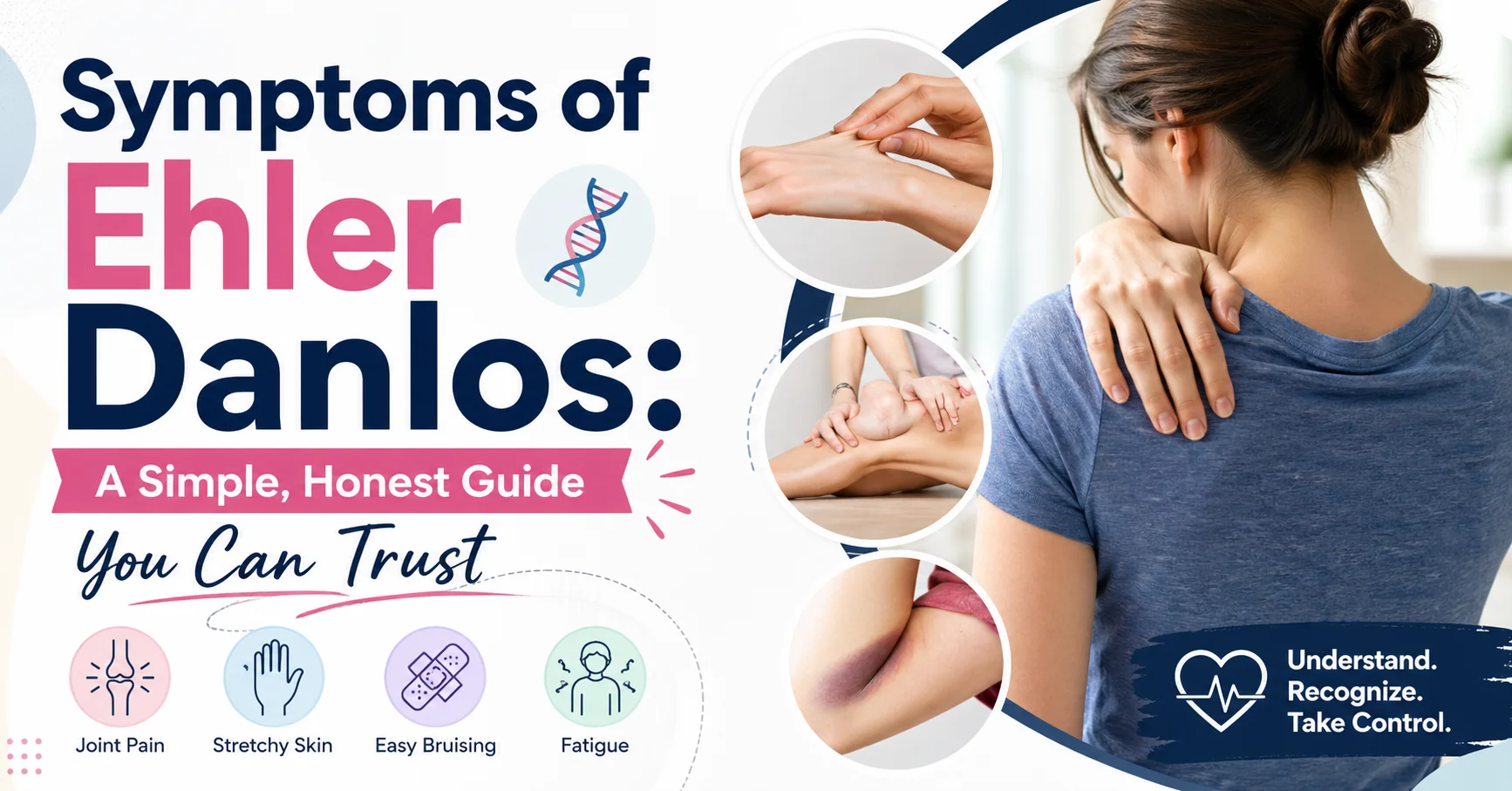
Living with a condition that affects your body in many ways can feel confusing. That’s especially true for Ehlers-Danlos syndrome, often called EDS. Many people search for symptoms of ehler danlos but struggle to find clear, easy answers.
This guide breaks everything down in plain language. You’ll learn what to look for, what feels normal, and when to seek help. Whether you’re worried about yourself, your child, or someone you love, this article is here to help.
What Is Ehler Danlos Syndrome?
Ehler Danlos refers to a group of genetic conditions that affect connective tissues. These tissues support your skin, joints, and blood vessels. When they are weak, the body becomes more flexible—but also more fragile.
There are several types of EDS. Some are mild, while others can be serious. The symptoms of ehler danlos vary depending on the type, but many people share common signs.
Think of connective tissue like glue. If the glue is weak, things don’t hold together well. That’s what happens in EDS.
Why Do Symptoms of Ehler Danlos Happen?
EDS is caused by changes in genes. These genes affect collagen. Collagen is a protein that gives strength to your skin, joints, and organs.
When collagen doesn’t work properly, the body becomes too stretchy or fragile. This leads to many symptoms of ehler danlos, including loose joints and soft skin.
These changes are usually inherited. That means they can run in families.
Common Symptoms of Ehler Danlos
Many people with EDS notice similar signs. These are often the first clues.
Key symptoms include:
- Very flexible or “double-jointed” joints
- Soft, smooth, or stretchy skin
- Easy bruising
- Frequent joint pain
- Slow wound healing
Some people may only have mild symptoms. Others may have daily discomfort.
Table: Common Signs at a Glance
| Symptom | What It Feels Like |
|---|---|
| Joint hypermobility | Joints bend more than normal |
| Skin stretchiness | Skin pulls and snaps back easily |
| Easy bruising | Bruises appear with little cause |
| Chronic pain | Ongoing aches in joints/muscles |
Symptoms of Ehlers Danlos in Women
Women often report certain symptoms more strongly. Hormones can affect joint stability and pain levels.
Common symptoms of ehlers danlos in women include:
- Increased joint pain during periods
- Fatigue that worsens over time
- Pelvic pain or instability
- Frequent headaches or migraines
Pregnancy can also increase symptoms. Some women notice more joint looseness or back pain.
Symptoms of Ehlers Danlos in Adults
Adults may experience more long-term effects. The body has had more time to wear down.
Typical symptoms of ehlers danlos in adults include:
- Chronic joint pain
- Frequent dislocations
- Early arthritis
- Fatigue that doesn’t improve with rest
Many adults also struggle with daily tasks. Simple actions like walking or lifting can feel harder.
Symptoms of Ehlers Danlos in Kids
Children may show early signs, but they are often missed.
Common symptoms of ehlers danlos in kids include:
- Being very flexible compared to other kids
- Frequent falls or clumsiness
- Joint pain after playing
- Soft, stretchy skin
Some children are called “double-jointed.” While this may seem harmless, it can be an early sign.
Table: Kids vs Adults Symptoms
| Feature | Kids | Adults |
|---|---|---|
| Flexibility | Very high | May decrease over time |
| Pain | Mild or occasional | Chronic and ongoing |
| Injuries | Frequent minor injuries | Serious joint problems |
Uncommon Symptoms of Ehlers-Danlos
Not all symptoms are obvious. Some are less common but still important.
Uncommon symptoms of ehlers-danlos include:
- Digestive problems like bloating or constipation
- Dizziness or fainting
- Heart-related concerns
- Gum issues or fragile teeth
These symptoms can confuse people. They may not seem connected at first.
How Symptoms Change Over Time
EDS symptoms are not always the same. They can change with age.
In younger years, flexibility is more noticeable. As time passes, pain and stiffness may increase.
This means the symptoms of ehler danlos often shift from “too flexible” to “too painful.”
Understanding this helps people prepare and manage better.
When Should You See a Doctor?
You should talk to a doctor if:
- You have frequent joint pain
- Your joints dislocate easily
- You bruise without reason
- Your skin feels unusually stretchy
Early diagnosis can help manage symptoms better. It also reduces the risk of complications.
How Is Ehler Danlos Diagnosed?
Doctors usually start with a physical exam. They check joint flexibility and skin features.
They may also:
- Ask about family history
- Use scoring systems for joint movement
- Recommend genetic testing
There is no single test for all types. Diagnosis can take time.
Living With Ehler Danlos
Living with EDS requires care and awareness. Small changes can make a big difference.
Helpful tips:
- Avoid over-stretching joints
- Use supportive shoes
- Try gentle exercises like swimming
- Get enough rest
Many people find ways to live full, active lives. Support and knowledge are key.
Treatment Options for Managing Symptoms
There is no cure, but treatment can help manage the symptoms of ehler danlos.
Common treatments:
- Physical therapy
- Pain management
- Bracing for joints
- Lifestyle changes
Table: Treatment Overview
| Treatment Type | Purpose |
|---|---|
| Physical therapy | Strengthens muscles |
| Pain relief | Reduces discomfort |
| Braces | Supports weak joints |
| Lifestyle care | Prevents injuries |
Emotional Impact of Ehler Danlos
EDS doesn’t just affect the body. It can also impact mental health.
Living with pain or uncertainty can feel overwhelming. Some people feel frustrated or misunderstood.
Talking to others helps. Support groups and counseling can make a big difference.
FAQs About Symptoms of Ehler Danlos
1. What are symptoms of Ehlers-Danlos syndrome?
They include flexible joints, stretchy skin, easy bruising, and chronic pain.
2. Can symptoms be mild?
Yes, some people have very mild symptoms and may not notice them early.
3. Do symptoms get worse with age?
Often yes. Pain and joint issues may increase over time.
4. Is EDS common in women?
It affects both genders, but women often report stronger symptoms.
5. Can children outgrow symptoms?
No, but symptoms may change as they grow.
6. Is EDS life-threatening?
Most types are not, but some rare types can affect blood vessels.
Final Thoughts
Understanding the symptoms of ehler danlos can change lives. It helps people get the right care and avoid injury.
If something feels off in your body, don’t ignore it. Trust your instincts. Seek medical advice and ask questions.
EDS may not have a cure, but with the right knowledge, it becomes manageable. You are not alone—and support is always available.
