

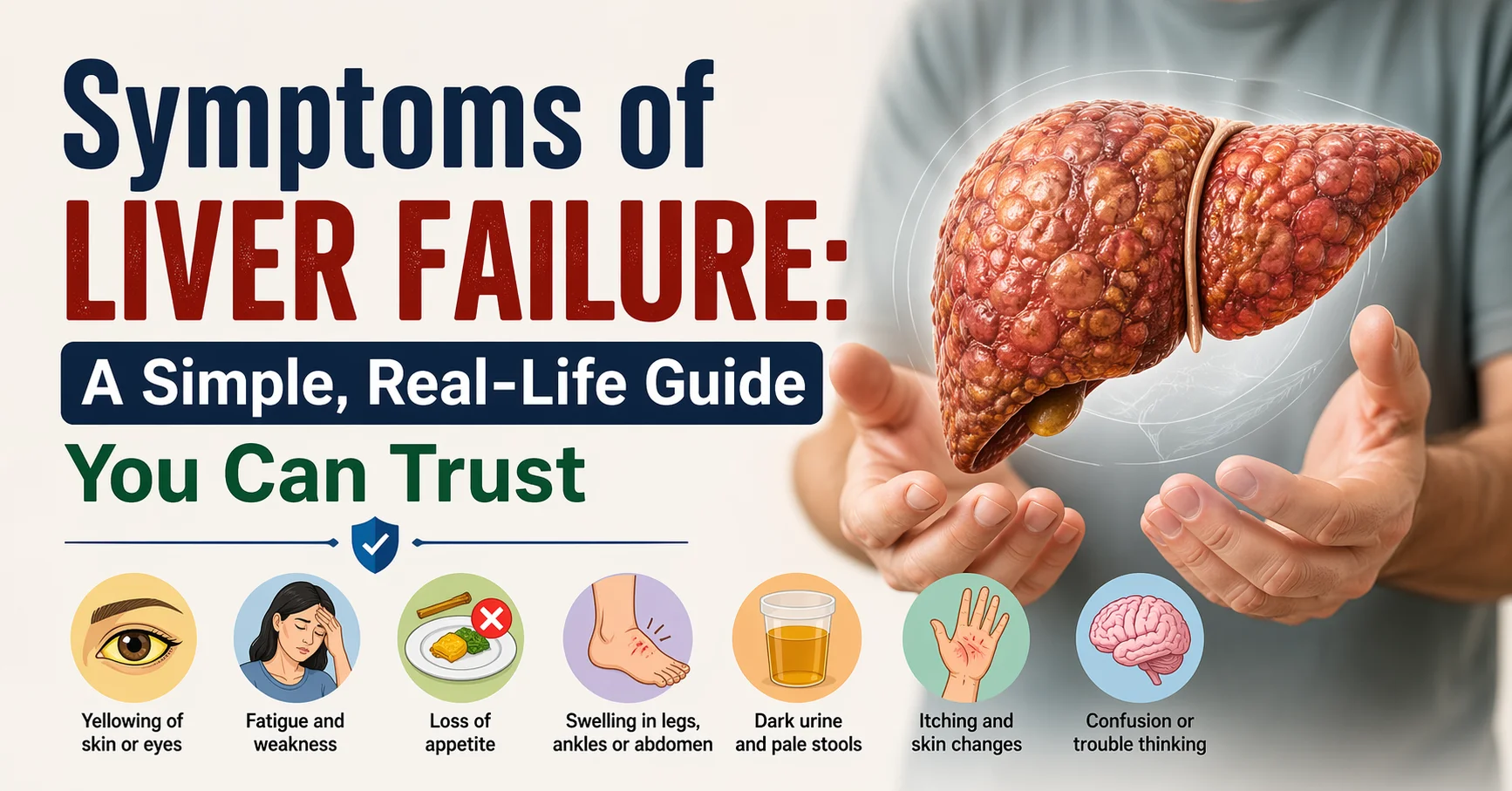
Liver failure is a serious condition. It can develop slowly or happen suddenly. Many people miss early warning signs because they seem small. But knowing the symptoms of liver failure can help you act early and save a life.
Your liver works like a filter. It removes toxins, helps digestion, and stores energy. When it stops working, your whole body feels the impact. In this guide, you will learn what to watch for, how symptoms change over time, and when to get help.
This article is written in a simple, clear way. It is based on medical knowledge and real-life observations. If you or someone you love feels unwell, this guide can help you understand what might be happening.
What Is Liver Failure?
Liver failure happens when the liver stops doing its job. It can be sudden (acute) or slow (chronic). Both types are dangerous but show different signs.
In acute cases, symptoms appear quickly. A person may feel fine one day and very sick the next. In chronic cases, damage builds over time. Many people do not notice it until it becomes serious.
The liver has many roles. It cleans blood, makes proteins, and helps digest food. When it fails, toxins build up in the body. This causes many physical and mental symptoms.
Understanding the what are the symptoms of liver failure question is important. It helps you act early and avoid complications. Early care can sometimes stop or slow the damage.
Early Symptoms of Liver Failure You Should Not Ignore
The early symptoms of liver failure are often mild. Many people ignore them. But these signs are the body asking for help.
You may feel tired all the time. This is not normal tiredness. It feels deep and hard to fix. Loss of appetite is also common. Food may not taste good anymore.
Another early sign is nausea. You may feel like vomiting after eating. Some people also notice mild abdominal discomfort. This pain is often on the upper right side.
Dark urine and pale stools can also appear. These changes are easy to miss. But they can signal liver trouble.
These early signs may seem small. But together, they can point to a serious issue. Listening to your body is the first step toward recovery.
Advanced Symptoms of Liver Failure
As the condition worsens, symptoms become more clear and severe. These advanced symptoms of liver failure need urgent attention.
One major sign is jaundice. This causes yellow skin and eyes. It happens when bilirubin builds up in the blood.
Swelling in the legs and abdomen is also common. This happens due to fluid buildup. The belly may feel tight and heavy.
Confusion or memory problems can occur. This is due to toxins affecting the brain. Some people feel sleepy or act differently.
Easy bruising and bleeding are also warning signs. The liver makes clotting proteins. When it fails, bleeding becomes more likely.
At this stage, medical care is critical. Ignoring these signs can lead to life-threatening problems.
Symptoms of Chronic Liver Failure
Chronic liver failure develops slowly. The body adapts at first, which makes it harder to notice.
Common symptoms of chronic liver failure include long-term fatigue. You may feel weak every day. Weight loss without trying is another warning sign.
Skin changes may appear. Some people develop itchy skin. Others notice spider-like blood vessels on their chest or face.
Hormonal changes can also happen. Men may experience reduced strength. Women may have irregular periods.
Digestive issues are also common. Bloating, gas, and discomfort after meals can occur.
Because these symptoms develop slowly, many people delay seeking help. But early diagnosis can make a big difference.
Symptoms of Dying From Liver Failure
In the final stages, symptoms become more severe. Understanding the symptoms of dying from liver failure can help families prepare and seek support.
Extreme weakness is common. The person may struggle to move or speak. Appetite usually disappears completely.
Severe confusion or unconsciousness may occur. This is due to toxin buildup affecting the brain.
Breathing patterns may change. Some people breathe irregularly or slowly.
The skin may become very yellow or pale. Swelling in the body increases.
These signs mean the body is shutting down. At this stage, comfort care and medical support are essential.
Table: Early vs Advanced Symptoms
| Stage | Common Symptoms | Severity |
|---|---|---|
| Early Stage | Fatigue, nausea, loss of appetite | Mild |
| Mid Stage | Jaundice, swelling, confusion | Moderate |
| Advanced Stage | Bleeding, severe confusion, weakness | Severe |
What Causes Liver Failure?
Liver failure has many causes. Understanding them helps prevent the condition.
Alcohol abuse is a major cause. Drinking heavily over time damages liver cells. Viral infections like hepatitis also play a role.
Certain medications can harm the liver. Taking too much can lead to acute failure. Fatty liver disease is another growing cause.
Genetic conditions can also affect liver health. Some people are born with liver issues.
In many cases, multiple factors are involved. Knowing the cause helps doctors choose the right treatment.
How Symptoms Affect Daily Life
The symptoms of liver failure can disrupt daily routines. Even simple tasks become difficult.
Fatigue makes it hard to work or study. You may feel tired even after rest. This affects productivity and mood.
Digestive issues can make eating unpleasant. People may avoid food, leading to weight loss.
Mental changes can impact relationships. Confusion or mood swings can be hard for loved ones.
Physical changes like swelling or jaundice affect confidence. Many people feel uncomfortable in social settings.
These effects show how serious liver failure can be. Early treatment can help improve quality of life.
Symptoms of Liver Failure in Cats
Liver failure does not only affect humans. Pets can also suffer from it. Recognizing symptoms of liver failure in cats is important for pet owners.
Cats may stop eating suddenly. This is often the first sign. Weight loss can happen quickly.
Vomiting and diarrhea are also common. Some cats become very tired and hide more than usual.
Yellowing of the eyes or gums is a key sign. This shows jaundice, just like in humans.
Behavior changes may also occur. A friendly cat may become withdrawn or aggressive.
If you notice these signs, take your pet to a vet immediately. Early care can save your cat’s life.
Table: Symptoms in Humans vs Cats
| Symptom Type | Humans | Cats |
|---|---|---|
| Appetite | Loss of appetite | Refusal to eat |
| Energy | Fatigue | Lethargy |
| Skin Changes | Yellow skin | Yellow gums/eyes |
| Behavior | Confusion | Hiding or aggression |
When Should You See a Doctor?
Many people wait too long before seeking help. This can be dangerous.
If you notice early symptoms of liver failure, talk to a doctor. Do not ignore ongoing fatigue or appetite loss.
Seek urgent care if you see jaundice, confusion, or swelling. These are serious warning signs.
If symptoms worsen quickly, go to the hospital. Acute liver failure is an emergency.
Trust your instincts. If something feels wrong, it is better to check early.
How Doctors Diagnose Liver Failure
Doctors use several tests to confirm liver failure. These tests help find the cause and severity.
Blood tests check liver function. They measure enzymes and proteins. High levels can indicate damage.
Imaging tests like ultrasound help view the liver. They show size, shape, and abnormalities.
In some cases, a biopsy is needed. A small tissue sample is taken for analysis.
Doctors may also ask about symptoms and lifestyle. This helps them understand the full picture.
Early diagnosis improves treatment outcomes. It gives more options for recovery.
Treatment Options and What to Expect
Treatment depends on the cause and stage. Some cases can improve with proper care.
Medications may help control symptoms. They can reduce swelling and manage infections.
Lifestyle changes are important. Avoiding alcohol and eating a healthy diet can help.
In severe cases, a liver transplant may be needed. This replaces the damaged liver with a healthy one.
Supportive care is also key. This includes rest, hydration, and monitoring.
Each case is different. A doctor will create a plan based on your condition.
Table: Treatment Overview
| Stage | Treatment Approach |
|---|---|
| Early | Lifestyle changes, medication |
| Moderate | Medical monitoring, therapy |
| Severe | Hospital care, transplant |
Can Liver Failure Be Prevented?
Prevention is possible in many cases. Small steps can protect your liver.
Avoid excessive alcohol. Drink in moderation or not at all. This is one of the best ways to stay safe.
Maintain a healthy weight. Obesity increases the risk of fatty liver disease.
Be careful with medications. Always follow dosage instructions.
Vaccination can protect against hepatitis. This reduces the risk of liver damage.
Regular check-ups can catch problems early. Prevention is always better than treatment.
FAQs About Symptoms of Liver Failure
1. What are the symptoms of liver failure in early stages?
Early signs include fatigue, nausea, and loss of appetite. These symptoms are often mild but important.
2. Can liver failure happen suddenly?
Yes, acute liver failure can develop quickly. It may happen within days due to infection or overdose.
3. Is liver failure always fatal?
No, early treatment can improve outcomes. Some people recover fully with proper care.
4. How do I know if my symptoms are serious?
If you notice jaundice, confusion, or swelling, seek medical help immediately.
5. Are symptoms of chronic liver failure different?
Yes, they develop slowly. Fatigue, weight loss, and skin changes are common.
6. Can pets recover from liver failure?
Yes, with early treatment. Recognizing symptoms of liver failure in cats can save their lives.
Conclusion: Listen to Your Body and Act Early
The symptoms of liver failure can start small but become serious quickly. Paying attention to your body can make a huge difference.
If you notice changes like fatigue, appetite loss, or yellow skin, do not ignore them. These signs are your body asking for help.
Early action can prevent complications. It can even save a life. Whether it is you or a loved one, getting medical advice is always the right step.
Your liver works hard every day. Taking care of it should be a priority. Stay informed, stay aware, and never hesitate to seek help.
