

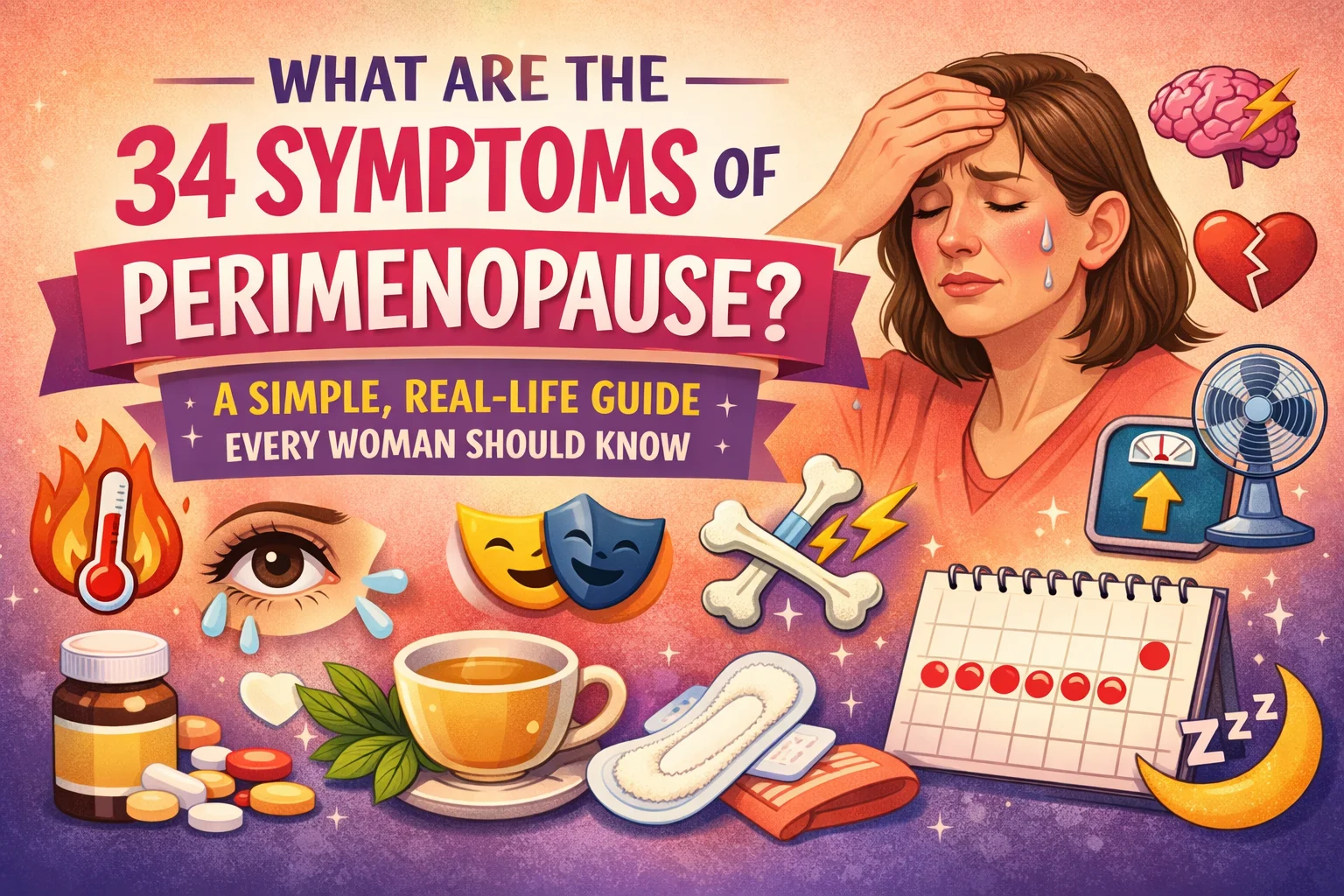
Perimenopause can feel confusing. Your body starts to change, but it’s not always clear why. Many women search for what are the 34 symptoms of perimenopause because the signs can be wide-ranging and unexpected.
This guide will walk you through everything in a simple, friendly way. You’ll learn what’s happening, why it happens, and how to manage it.
Understanding Perimenopause in Simple Words
Perimenopause is the time before menopause. It usually starts in your 40s, but sometimes earlier. During this phase, hormone levels—especially estrogen—go up and down.
This causes many changes in your body and mind. That’s why people often ask, what are the 34 symptoms of perimenopause uk or nhs lists mention? The truth is, symptoms vary from person to person.
Some women notice small changes. Others feel big shifts in their health and emotions.
Why Do So Many Symptoms Happen?
Hormones control many parts of your body. When estrogen changes, it affects:
- Brain function
- Mood
- Sleep
- Skin
- Heart
- Reproductive system
That’s why what are the 34 symptoms of perimenopause is such a common question. These symptoms are not random—they’re connected.
Complete List: What Are the 34 Symptoms of Perimenopause
Here’s a clear and organized list of the 34 most reported symptoms.
Physical Symptoms
| No. | Symptom |
|---|---|
| 1 | Hot flashes |
| 2 | Night sweats |
| 3 | Irregular periods |
| 4 | Heavy periods |
| 5 | Breast tenderness |
| 6 | Headaches |
| 7 | Joint pain |
| 8 | Muscle aches |
| 9 | Weight gain |
| 10 | Bloating |
| 11 | Hair thinning |
| 12 | Dry skin |
| 13 | Fatigue |
| 14 | Dizziness |
| 15 | Heart palpitations |
Emotional & Mental Symptoms
| No. | Symptom |
|---|---|
| 16 | Mood swings |
| 17 | Anxiety |
| 18 | Depression |
| 19 | Irritability |
| 20 | Brain fog |
| 21 | Memory problems |
| 22 | Lack of focus |
Sleep & Energy Symptoms
| No. | Symptom |
|---|---|
| 23 | Insomnia |
| 24 | Poor sleep quality |
| 25 | Low energy |
Reproductive & Hormonal Symptoms
| No. | Symptom |
|---|---|
| 26 | Low libido |
| 27 | Vaginal dryness |
| 28 | Pain during intimacy |
| 29 | Urinary urgency |
| 30 | Frequent UTIs |
Other Common Symptoms
| No. | Symptom |
|---|---|
| 31 | Tingling sensations |
| 32 | Burning mouth |
| 33 | Allergies worsening |
| 34 | Changes in body odor |
How Early Do These Symptoms Start?
Many women expect symptoms in their late 40s. But perimenopause can begin in your mid-30s.
You might notice:
- Periods becoming irregular
- Sleep getting worse
- Mood changes without reason
If you’re wondering what are the 34 symptoms of perimenopause nhs, remember that early signs are often subtle. They can be easy to ignore at first.
What Do Hot Flashes Feel Like?
Hot flashes are one of the most common symptoms. They can feel like:
- Sudden heat in your chest and face
- Sweating, even in cool weather
- A racing heart
They may last seconds or minutes. Some women get them daily. Others rarely do.
Why Mood Swings Feel So Intense
Hormones affect your brain chemicals. This can cause:
- Sudden sadness
- Anger without warning
- Feeling overwhelmed
It’s not “just in your head.” It’s a real physical change. Understanding this helps you feel more in control.
Sleep Problems During Perimenopause
Sleep issues are very common. Many women wake up:
- In the middle of the night
- Feeling too hot
- Unable to fall back asleep
This leads to tiredness during the day. Over time, it can affect mood and focus.
Weight Gain and Body Changes
You may notice weight gain, especially around your belly. This happens because:
- Metabolism slows down
- Hormones change how fat is stored
Even if your diet stays the same, your body may look different.
Brain Fog: Why You Feel Forgetful
Brain fog is one of the most frustrating symptoms. It includes:
- Forgetting simple things
- Losing focus easily
- Trouble finding words
Many women searching what are the 34 symptoms of perimenopause uk are surprised by this symptom.
Skin, Hair, and Beauty Changes
Hormones also affect your appearance. You might notice:
- Dry skin
- More wrinkles
- Hair thinning or falling
These changes can feel upsetting, but they are normal.
Intimacy and Relationship Changes
Perimenopause can affect your sex life. Symptoms include:
- Low desire
- Vaginal dryness
- Pain during intimacy
These issues are common but often not talked about. Open communication helps.
When Should You See a Doctor?
You should talk to a doctor if:
- Symptoms affect daily life
- Periods are extremely heavy
- You feel severe depression
Doctors can confirm if you’re in perimenopause and suggest treatments.
Simple Ways to Manage Symptoms
Here are practical tips that help many women:
Lifestyle Changes Table
| Area | What Helps |
|---|---|
| Diet | Eat more fruits, vegetables, protein |
| Exercise | Walk daily or do light workouts |
| Sleep | Keep a regular sleep routine |
| Stress | Try meditation or deep breathing |
Natural Remedies That May Help
Some women find relief with:
- Herbal teas
- Magnesium supplements
- Omega-3 fatty acids
Always check with a doctor before trying new supplements.
Medical Treatments Available
Doctors may recommend:
- Hormone Replacement Therapy (HRT)
- Antidepressants for mood
- Sleep aids
Treatment depends on your symptoms and health history.
Real-Life Experience: What It Feels Like
Many women describe perimenopause as “unpredictable.” One day feels normal. The next feels overwhelming.
Understanding what are the 34 symptoms of perimenopause helps you feel prepared instead of confused.
How Long Does Perimenopause Last?
Perimenopause usually lasts:
- 4 to 10 years
It ends when you haven’t had a period for 12 months.
Key Differences: Perimenopause vs Menopause
| Feature | Perimenopause | Menopause |
|---|---|---|
| Periods | Irregular | Stopped |
| Hormones | Fluctuating | Low |
| Duration | Several years | Permanent stage |
FAQs
1. What are the 34 symptoms of perimenopause nhs mentions?
The NHS recognizes many symptoms like hot flashes, mood swings, and sleep issues. The full list varies by person.
2. Can perimenopause start in your 30s?
Yes, some women experience early perimenopause in their mid-30s.
3. Are all 34 symptoms experienced by everyone?
No, most women only experience a few of them.
4. How do I know it’s perimenopause and not something else?
A doctor can confirm with symptoms, history, and sometimes tests.
5. Can lifestyle changes really help?
Yes, healthy habits can reduce many symptoms significantly.
6. Is perimenopause dangerous?
No, it’s a natural phase, but some symptoms need medical care.
Final Thoughts: You’re Not Alone
Understanding what are the 34 symptoms of perimenopause gives you power. These changes are real, common, and manageable.
Listen to your body. Take care of your health. And don’t hesitate to ask for help.
Perimenopause is not the end of something—it’s the start of a new phase of life.
