

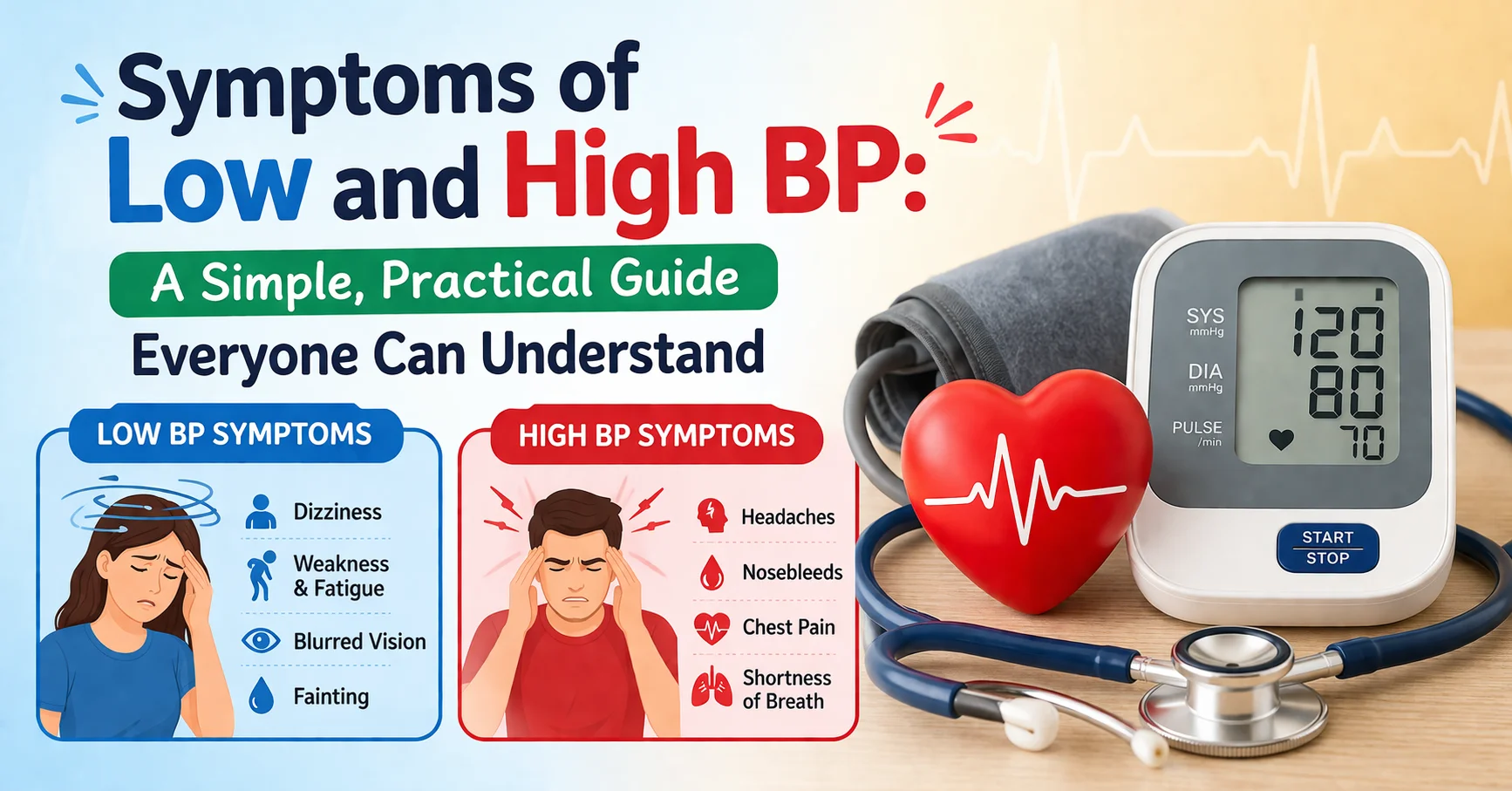
Blood pressure problems are more common than most people think. Some people deal with low blood pressure. Others struggle with high blood pressure. Many don’t even know they have it. That’s why learning the symptoms of low and high bp can truly protect your health.
Your blood pressure shows how strongly blood pushes through your arteries. When it is too low or too high, your body sends warning signs. These signs can be mild at first. But if ignored, they can become serious.
In this guide, we will break everything down in a simple way. You will learn what to watch for, when to worry, and what actions to take. I’ll also share real-life insights so you can relate better and act faster if needed.
What Is Blood Pressure and Why It Matters
Blood pressure is the force of blood moving through your blood vessels. It is measured using two numbers. The top number is systolic pressure. The bottom number is diastolic pressure.
Normal blood pressure is around 120/80 mmHg. When it goes above or below this range, problems can begin. High blood pressure is called hypertension. Low blood pressure is called hypotension.
Both conditions affect your body in different ways. High BP can damage organs slowly. Low BP can reduce blood flow suddenly. Knowing the symptoms of high bp and low bp helps you act early and stay safe.
Key Difference Between Low BP and High BP
Understanding the difference is very important. Each condition has its own risks and signs.
| Condition | Blood Pressure Level | Main Risk |
|---|---|---|
| Low BP | Below 90/60 mmHg | Poor blood flow to organs |
| High BP | Above 140/90 mmHg | Damage to heart and arteries |
Low BP often causes sudden symptoms like dizziness. High BP is more silent and develops slowly. That’s why many people ignore it until it becomes dangerous.
When people ask, what are the symptoms of bp high and low, they are really asking how their body reacts differently. Let’s explore that next.
Common Symptoms of Low Blood Pressure
Low blood pressure can make you feel weak and unsteady. It often shows symptoms quickly.
Some common signs include:
- Dizziness or lightheadedness
- Fainting or feeling like you might faint
- Blurred vision
- Cold, clammy skin
- Fatigue or weakness
These symptoms happen because your brain is not getting enough blood. I once saw someone faint after standing up too fast. It looked sudden, but it was due to low BP.
If you notice these signs often, don’t ignore them. These are clear symptoms of bp low and high imbalance, especially on the low side.
Common Symptoms of High Blood Pressure
High blood pressure is often called the “silent killer.” Many people feel normal for years.
However, some symptoms can appear:
- Headaches, especially in the morning
- Nosebleeds
- Chest pain
- Shortness of breath
- Irregular heartbeat
These signs usually show up when BP becomes very high. That’s why regular checks are important.
If you are wondering what are the symptoms of low bp and high bp, remember this: high BP may not show clear signs early, making it more dangerous.
Warning Signs You Should Never Ignore
Some symptoms need immediate attention. They can signal a serious problem.
| Symptom | Possible Cause |
|---|---|
| Severe chest pain | High BP crisis |
| Sudden fainting | Very low BP |
| Confusion | Brain not getting enough oxygen |
| Severe headache | High BP spike |
| Blurred vision | Blood flow issue |
These are not normal signs. If you experience them, seek medical help quickly.
Recognizing these early warning signs can prevent major complications.
Causes of Low Blood Pressure
Low BP can happen for many reasons. Sometimes it is temporary. Other times it needs treatment.
Common causes include:
- Dehydration
- Blood loss
- Heart problems
- Lack of nutrients like vitamin B12
- Certain medications
For example, skipping meals or not drinking enough water can cause sudden drops. I’ve seen people feel dizzy during fasting due to this.
Understanding the cause helps manage the symptoms of low and high bp more effectively.
Causes of High Blood Pressure
High BP usually develops over time. Lifestyle plays a big role.
Common causes include:
- Too much salt in diet
- Stress and anxiety
- Lack of physical activity
- Smoking
- Obesity
Sometimes, genetics also play a part. If your family has a history of hypertension, your risk is higher.
Many people ignore early signs. That’s why learning the symptoms of high bp and low bp is so important for prevention.
How Your Body Feels During BP Changes
Your body reacts differently to high and low BP. These reactions can help you identify the problem.
| Feeling | Likely Condition |
|---|---|
| Spinning sensation | Low BP |
| Pressure in head | High BP |
| Weakness | Low BP |
| Tight chest | High BP |
Pay attention to how you feel. Your body often gives clues before things get worse.
Who Is at Risk?
Anyone can develop BP problems. But some people are at higher risk.
- Older adults
- Pregnant women
- People with chronic illness
- Overweight individuals
- People with poor diet habits
Young people are not immune either. Stress and poor lifestyle are increasing BP issues in younger age groups.
That’s why knowing the symptoms of bp low and high is important for everyone.
When Should You See a Doctor?
Not every symptom is an emergency. But some require medical attention.
See a doctor if you:
- Feel dizzy often
- Have frequent headaches
- Experience chest discomfort
- Notice sudden weakness
Regular check-ups can help detect problems early. Don’t wait for severe symptoms.
Simple Ways to Manage Blood Pressure
Managing BP is easier than most people think. Small changes can make a big difference.
For low BP:
- Drink more water
- Eat small, frequent meals
- Avoid standing up too quickly
For high BP:
- Reduce salt intake
- Exercise regularly
- Manage stress
These habits help control the symptoms of low and high bp and improve overall health.
Daily Habits That Protect Your Heart
Healthy habits are your best defense.
- Eat fruits and vegetables daily
- Stay active for at least 30 minutes
- Get enough sleep
- Avoid smoking and alcohol
Consistency matters more than perfection. Even small improvements can lead to big results over time.
FAQs About Symptoms of Low and High BP
1. What are the symptoms of bp high and low?
Low BP causes dizziness and fainting. High BP may cause headaches or no symptoms at all.
2. Can you have both high and low BP?
Yes, some people experience fluctuations. This needs medical evaluation.
3. Is low BP dangerous?
It can be if it causes fainting or shock. Mild cases are often manageable.
4. Why is high BP called a silent killer?
Because it often shows no symptoms until serious damage occurs.
5. How can I check my BP at home?
Use a digital BP monitor. Check at the same time daily for accuracy.
6. Can stress cause BP problems?
Yes, stress can raise BP and sometimes lead to sudden drops as well.
Final Thoughts: Listen to Your Body Early
Your body always gives signals. The key is to notice them and act early. The symptoms of low and high bp may seem small at first. But they can lead to serious health issues if ignored.
Take time to understand your body. Check your blood pressure regularly. Make simple lifestyle changes. And most importantly, don’t ignore warning signs.
If something feels off, trust that feeling. It’s always better to check early than regret later.
Your health is in your hands—start paying attention today.
