

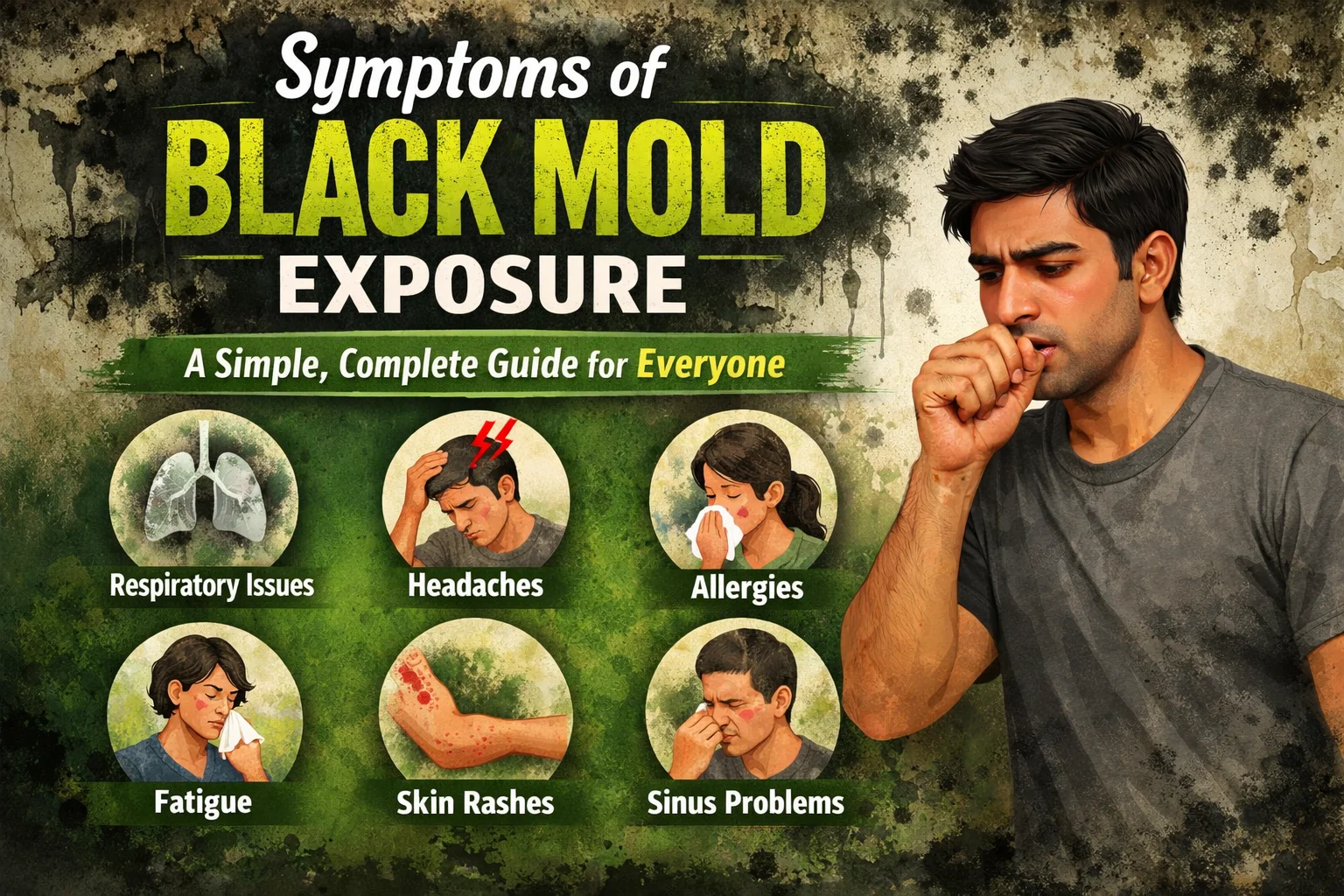
Black mold is something many people worry about, especially in damp homes. It can grow quietly and affect your health over time. If you live in a place with moisture problems, learning about the symptoms of black mold exposure can help you stay safe.
This guide explains everything in a simple way. You will learn what black mold is, how it affects your body, and what signs to watch for. I will also share practical tips and real-life insights to help you understand the risks better.
What Is Black Mold and Why It Matters
Black mold is a type of fungus that grows in wet and humid areas. It often appears as dark green or black patches on walls, ceilings, or carpets. It spreads through tiny spores in the air. When you breathe these spores, they can affect your health.
Many people think mold is harmless, but long exposure can cause problems. The symptoms of exposure to black mold can be mild at first. Over time, they may become more serious if not addressed.
From experience, people often ignore small mold spots. They think it is just dirt. But mold can grow behind walls or under floors, making it harder to see. That is why early awareness is important.
How Black Mold Affects the Body
When mold spores enter your body, they can irritate your system. Your immune system reacts to these particles as if they are harmful. This can lead to allergy-like symptoms.
The signs and symptoms of black mold exposure vary from person to person. Some people feel sick quickly, while others notice changes slowly. Children, older adults, and people with weak immune systems are more at risk.
In my observation, people often confuse mold symptoms with a common cold. This delays proper action. Understanding the effects helps you take the right steps early.
Common Symptoms of Black Mold Exposure
The most common symptoms of black mold exposure are similar to allergies. These symptoms can come and go depending on your environment.
| Symptom | Description | Severity |
|---|---|---|
| Sneezing | Frequent sneezing indoors | Mild |
| Runny nose | Constant nasal discharge | Mild |
| Coughing | Dry or persistent cough | Moderate |
| Itchy eyes | Red, watery eyes | Mild |
| Headaches | Pressure or dull pain | Moderate |
These symptoms often get worse when you are at home and improve when you leave. That is a key sign mold may be present.
Respiratory Symptoms to Watch For
Breathing problems are among the most serious symptoms of black mold exposure in adults. Mold spores can irritate your lungs and airways.
You may notice shortness of breath or tightness in your chest. Some people develop wheezing or asthma-like symptoms. If you already have asthma, mold can make it worse.
I have seen cases where people thought they had seasonal allergies. Later, they discovered mold in their homes. Once the mold was removed, their breathing improved.
If breathing issues continue, it is important to seek medical advice.
Skin Reactions and Irritation
Your skin can also react to mold exposure. This is often overlooked but is a key part of the symptoms of exposure to black mold.
Common skin symptoms include:
| Skin Issue | What It Looks Like | Feeling |
|---|---|---|
| Rashes | Red patches | Itchy |
| Dry skin | Flaky areas | Irritated |
| Hives | Raised bumps | Burning or itching |
These reactions happen when your skin comes into contact with mold spores. Some people are more sensitive than others.
If you notice skin issues that do not improve, mold exposure could be a reason.
Neurological Symptoms You Should Not Ignore
In some cases, mold exposure may affect your brain and nerves. These are less common but still important.
The what are the symptoms of black mold exposure question often includes these signs:
- Memory problems
- Trouble focusing
- Dizziness
- Mood changes
These symptoms can feel confusing. Many people do not connect them to mold. But long-term exposure may play a role.
If you feel mentally foggy at home but better outside, it may be a sign worth checking.
Symptoms in Adults vs Children
The symptoms of black mold exposure in adults can differ from those in children. Adults often report headaches and breathing issues. Children may show more allergy-like symptoms.
| Group | Common Symptoms |
|---|---|
| Adults | Headaches, fatigue, coughing |
| Children | Sneezing, runny nose, skin rashes |
| Elderly | Weakness, breathing issues |
Children are more sensitive because their immune systems are still developing. This makes early detection very important.
Long-Term Health Effects
If exposure continues, symptoms may become more serious. Long-term symptoms of black mold exposure can affect daily life.
These may include:
- Chronic fatigue
- Ongoing sinus infections
- Persistent cough
- Worsening asthma
From experience, people living in moldy homes for years often feel tired all the time. They may not realize mold is the cause.
Fixing the mold problem often leads to better health over time.
Who Is Most at Risk?
Not everyone reacts the same way to mold. Some groups are more sensitive.
High-risk groups include:
- People with allergies
- Asthma patients
- Elderly individuals
- Young children
These groups may experience stronger signs and symptoms of black mold exposure. Even small amounts of mold can affect them.
If you fall into one of these groups, it is important to act quickly if you notice symptoms.
How to Identify Mold in Your Home
Finding mold early can prevent health problems. Mold usually grows in damp places.
Common areas include:
- Bathrooms
- Basements
- Kitchens
- Around windows
Look for dark spots or a musty smell. That smell is often the first clue.
In many homes, mold hides behind furniture or inside walls. If symptoms appear without a clear cause, checking your home is a good step.
When to See a Doctor
If your symptoms continue or worsen, it is time to seek help. A doctor can help identify if mold is affecting your health.
You should see a doctor if you have:
- Trouble breathing
- Severe headaches
- Ongoing fatigue
- Skin reactions that do not heal
Doctors may suggest tests or treatments based on your symptoms. They can also guide you on reducing exposure.
How to Reduce Exposure and Stay Safe
The best way to avoid the symptoms of black mold exposure is to remove mold and prevent it from growing.
Here are simple steps:
- Fix leaks quickly
- Keep rooms dry
- Use ventilation fans
- Clean visible mold safely
Keeping humidity low is key. Mold thrives in moisture, so dry spaces are safer.
From personal insight, even small changes like opening windows can make a big difference.
Simple Home Prevention Checklist
| Action | Benefit |
|---|---|
| Fix water leaks | Stops mold growth |
| Use dehumidifiers | Reduces moisture |
| Clean regularly | Removes spores |
| Improve airflow | Keeps areas dry |
Following these steps can protect your home and health.
FAQs About Black Mold Exposure
1. What are the symptoms of black mold exposure?
Common symptoms include sneezing, coughing, headaches, and itchy eyes. Some people also experience fatigue and breathing issues.
2. Can black mold make you seriously sick?
Yes, long-term exposure can lead to serious health problems, especially for sensitive individuals.
3. How quickly do symptoms appear?
Symptoms can appear within hours or take days, depending on sensitivity and exposure level.
4. Are symptoms reversible?
In many cases, yes. Removing mold and reducing exposure often improves symptoms.
5. How do I test for mold exposure?
Doctors may use allergy tests or review your symptoms and environment.
6. Is black mold always visible?
No, mold can hide behind walls or under floors, making it harder to detect.
Final Thoughts
Understanding the symptoms of black mold exposure can help you protect your health and your home. Many symptoms are easy to ignore at first. But paying attention early can prevent bigger problems later.
If you notice signs like coughing, headaches, or skin irritation that do not go away, take a closer look at your environment. Mold is often the hidden cause.
Simple actions like keeping your home dry and clean can make a big difference. If needed, seek professional help to remove mold safely.
Your health matters. Staying aware and taking action today can help you feel better tomorrow.
