

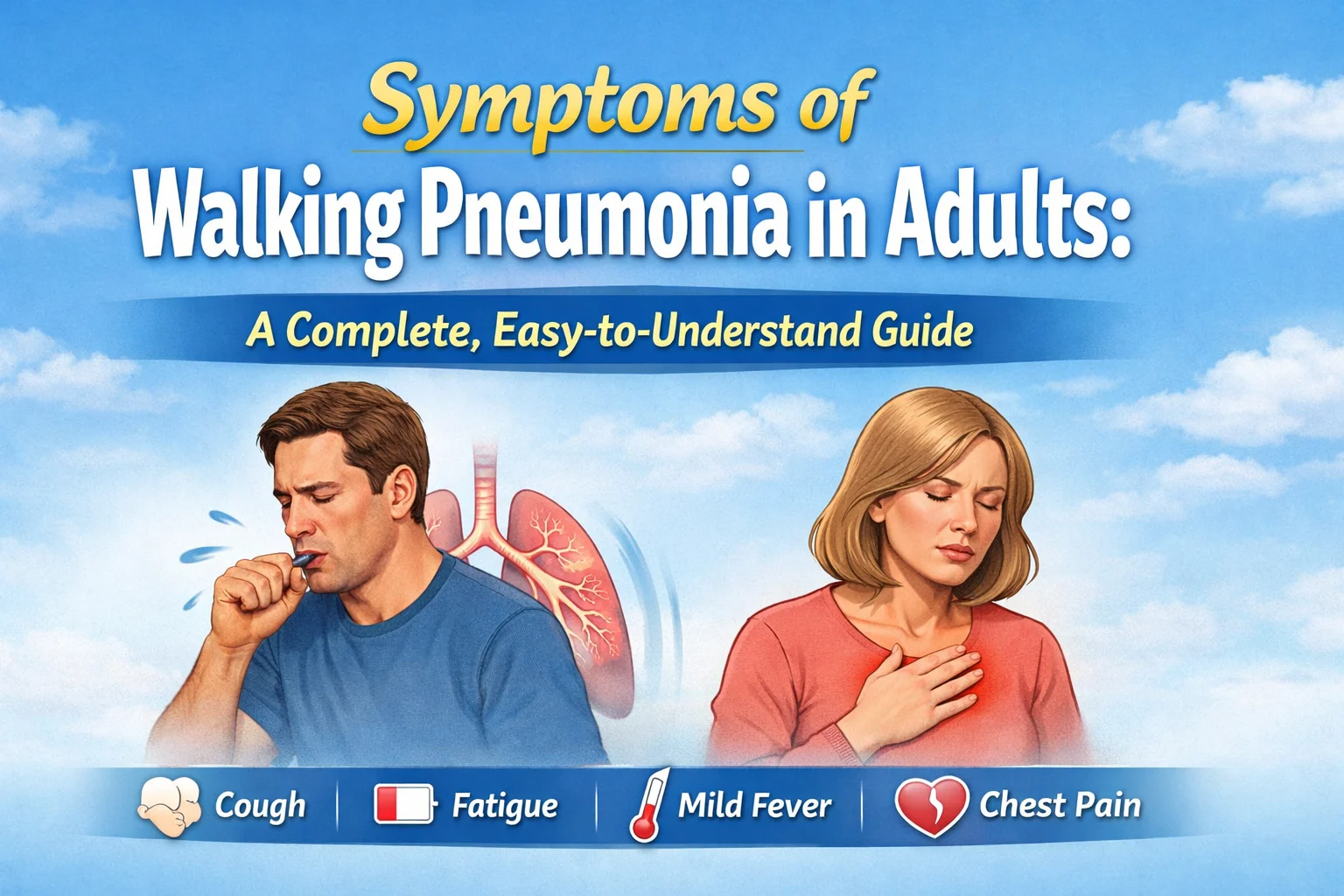
Walking pneumonia sounds scary, but it is often mild. Many people do not even know they have it at first. Still, it should not be ignored. Understanding the symptoms of walking pneumonia in adults can help you catch it early and recover faster.
In this guide, I will explain everything in a simple way. You will learn what to look for, how it feels, and when to see a doctor. I’ll also share practical tips based on real-life experiences.
What Is Walking Pneumonia?
Walking pneumonia is a mild type of lung infection. Doctors call it atypical pneumonia. It is usually caused by bacteria like Mycoplasma pneumoniae.
Unlike regular pneumonia, it does not always make you very sick. You may still go to work or school. That is why it is called “walking.”
Many people mistake it for a cold. But the symptom of walking pneumonia in adults can last longer and feel different.
Why Adults Should Pay Attention
Adults often ignore mild symptoms. They think it is just fatigue or a seasonal cold. This can delay proper care.
The symptoms of walking pneumonia in adults may stay for weeks if untreated. This can affect your daily life and energy levels.
Older adults or those with weak immunity are at higher risk. Early attention helps avoid complications.
Early Symptoms of Walking Pneumonia in Adults
The early stage can be confusing. Symptoms start slowly and feel mild.
Here are some early signs:
| Symptom | What It Feels Like |
|---|---|
| Dry cough | Constant, irritating cough |
| Mild fever | Low-grade temperature |
| Fatigue | Feeling tired without reason |
| Headache | Light but persistent pain |
At this stage, many people continue their normal routine. The what are the symptoms of walking pneumonia in adults question often comes up later, when symptoms linger.
Common Symptoms You Should Not Ignore
As the infection grows, symptoms become clearer. The symptoms of walking pneumonia in adults often include:
- Persistent dry cough
- Chest discomfort
- Low fever and chills
- Shortness of breath
- Sore throat
The cough is usually the most noticeable sign. It can last for weeks.
Some people say it feels like “a cough that never leaves.” This is a key clue.
How Walking Pneumonia Feels Different From a Cold
A cold comes and goes quickly. Walking pneumonia does not.
| Feature | Cold | Walking Pneumonia |
|---|---|---|
| Duration | 5–7 days | Weeks |
| Cough | Mild | Persistent |
| Energy | Slight tiredness | Deep fatigue |
| Fever | Rare | Common |
If your symptoms last longer than a week, consider checking for symptoms of walking pneumonia in adults.
Symptoms of Walking Pneumonia in Adults Over 50
Older adults may experience different or stronger symptoms.
The symptoms of walking pneumonia in adults over 50 often include:
- Increased weakness
- Confusion or dizziness
- Stronger chest pain
- Loss of appetite
Recovery may also take longer.
From experience, many older patients think they are “just aging.” But these signs should not be ignored.
How the Cough Develops Over Time
The cough usually starts dry. Later, it may produce mucus.
Here is how it progresses:
| Stage | Cough Type | Duration |
|---|---|---|
| Early | Dry | Few days |
| Middle | Frequent | 1–2 weeks |
| Late | Wet or deep | 2–4 weeks |
The what are symptoms of walking pneumonia in adults question often arises when the cough refuses to go away.
Other Less Common Symptoms
Not everyone has the same experience. Some adults may notice unusual signs.
These include:
- Skin rash
- Ear pain
- Nausea
- Mild joint pain
These symptoms are less common but still part of the symptoms of walking pneumonia in adults.
When Symptoms Become Serious
Walking pneumonia is usually mild, but it can worsen.
Watch for these warning signs:
- Difficulty breathing
- High fever
- Sharp chest pain
- Severe weakness
If you notice these, seek medical care immediately.
The symptoms of walking pneumonia in adults should never be ignored when they get worse.
How Doctors Diagnose Walking Pneumonia
Doctors usually start with simple steps:
- Ask about symptoms
- Listen to your lungs
- Check oxygen levels
Sometimes they may order:
| Test | Purpose |
|---|---|
| Chest X-ray | Check lung infection |
| Blood test | Detect bacteria |
| Swab test | Identify cause |
Diagnosis helps confirm the symptom of walking pneumonia in adults and rule out other conditions.
Treatment Options for Faster Recovery
Most people recover with simple treatment.
Common options include:
- Antibiotics (if bacterial)
- Rest
- Fluids
- Pain relievers
Doctors may not always prescribe antibiotics immediately.
From experience, rest plays a huge role. Many people recover faster when they slow down.
Home Care Tips That Really Help
You can manage symptoms at home with small changes.
Here are helpful tips:
- Drink warm fluids
- Use a humidifier
- Avoid smoke
- Sleep well
These steps ease the symptoms of walking pneumonia in adults and improve comfort.
How Long Do Symptoms Last?
Walking pneumonia lasts longer than expected.
| Symptom | Duration |
|---|---|
| Fever | Few days |
| Fatigue | 2–3 weeks |
| Cough | Up to 4 weeks |
Many people feel tired even after recovery.
The what are the symptoms of walking pneumonia in adults concern often continues due to this long recovery.
Can Walking Pneumonia Spread?
Yes, it is contagious.
It spreads through:
- Coughing
- Sneezing
- Close contact
However, it spreads more slowly than regular pneumonia.
Knowing the symptoms of walking pneumonia in adults helps prevent spreading it to others.
Who Is Most at Risk?
Some adults are more likely to get it:
- Smokers
- People with weak immunity
- Older adults
- Those with chronic illness
Understanding risk helps identify the symptoms of walking pneumonia in adults over 50 early.
Real-Life Example for Better Understanding
A friend of mine had a cough for three weeks. He thought it was just weather change.
Later, he felt very tired and had mild chest pain. A doctor diagnosed walking pneumonia.
He said the worst part was not the pain—it was the constant tiredness.
This shows how the symptoms of walking pneumonia in adults can sneak up slowly.
Prevention Tips You Should Follow
Prevention is simple but important.
- Wash hands often
- Avoid close contact with sick people
- Maintain a strong immune system
- Get enough sleep
These habits reduce the chances of getting symptoms.
FAQs About Walking Pneumonia
1. What are the symptoms of walking pneumonia in adults?
The most common signs include dry cough, fatigue, mild fever, and chest discomfort.
2. How is walking pneumonia different from regular pneumonia?
It is milder and develops slowly. Many people can still walk and work.
3. How long does walking pneumonia last?
Symptoms can last from 2 to 4 weeks, especially the cough.
4. Is walking pneumonia dangerous?
It is usually mild but can become serious if untreated.
5. Can I treat it at home?
Yes, mild cases improve with rest, fluids, and basic care.
6. When should I see a doctor?
If symptoms worsen or last more than a week, seek medical advice.
Final Thoughts
The symptoms of walking pneumonia in adults can be easy to miss. They often feel like a simple cold at first. But they last longer and affect your energy deeply.
Pay attention to your body. A persistent cough, fatigue, or mild fever should not be ignored.
Early care leads to faster recovery. Rest, hydration, and awareness make a big difference.
If something feels off, trust your instincts and consult a doctor.
Your health matters—and sometimes, even a “mild” illness deserves serious attention.
