

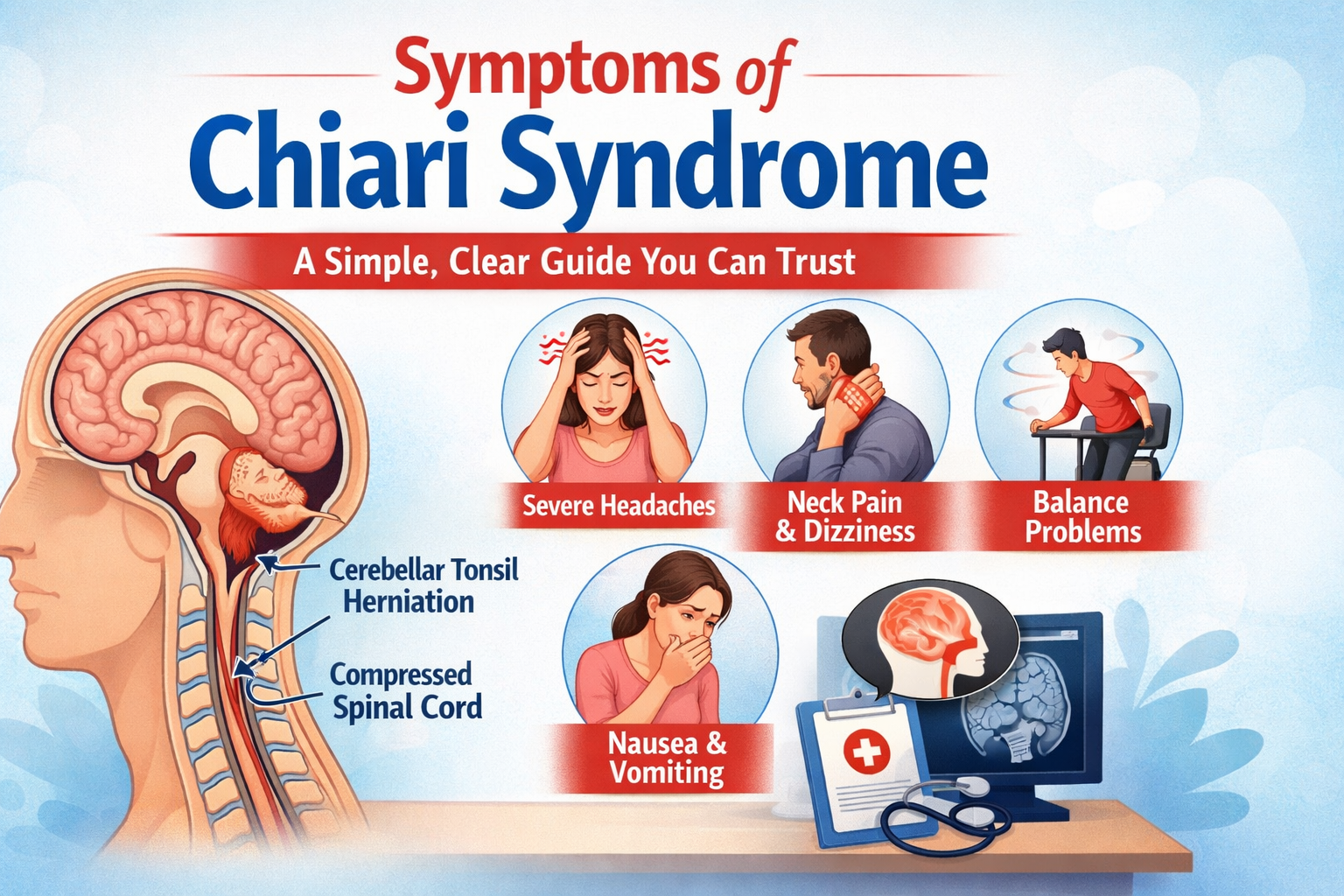
Understanding the symptoms of chiari syndrome can feel confusing at first. Many people hear the term and don’t know what it really means. Others may notice strange symptoms but cannot connect the dots. This guide will help you understand everything in a simple and friendly way.
Chiari syndrome, often called Budd-Chiari syndrome, is a rare condition. It affects how blood flows out of your liver. When veins get blocked, pressure builds up. This can lead to pain, swelling, and other serious problems.
In this article, we will walk step-by-step through the symptoms of chiari syndrome, what causes them, and when to seek help. You will also learn from real-life examples and easy explanations. Whether you are worried about your health or helping someone else, this guide is here for you.
What Is Chiari Syndrome?
Chiari syndrome happens when blood cannot leave the liver properly. This is usually due to a blockage in the liver veins. These veins are called hepatic veins.
When blood flow slows or stops, the liver becomes swollen. Over time, this can damage the liver. That is why recognizing the symptoms of chiari syndrome early is very important.
Some people develop symptoms suddenly. Others may have mild signs that grow slowly over months or years. This makes the condition tricky to spot.
Why Do Symptoms of Chiari Syndrome Happen?
The symptoms happen because of pressure. When blood cannot flow out, it builds up inside the liver. This causes swelling and pain.
The liver also struggles to do its normal work. It cannot clean toxins or store nutrients properly. As a result, the whole body may feel unwell.
In some cases, blood may also clot. This makes the blockage worse. That is why the symptoms of budd chiari syndrome can become severe if not treated.
Early Symptoms of Chiari Syndrome
Early signs are often mild. Many people ignore them at first. But these small signs can be important clues.
Common early symptoms include:
- Mild pain in the upper abdomen
- Feeling tired all the time
- Slight swelling in the belly
- Loss of appetite
These symptoms may come and go. Because they are not strong, people often think it is just indigestion or stress.
Still, recognizing these early symptoms of chiari syndrome can help you get care before things worsen.
Common Symptoms of Chiari Syndrome
As the condition grows, symptoms become clearer. The body starts reacting more strongly.
Here are the most common symptoms:
| Symptom | What It Feels Like | Why It Happens |
|---|---|---|
| Abdominal pain | Sharp or dull pain in upper right belly | Liver swelling |
| Ascites (fluid buildup) | Belly feels tight and swollen | Fluid leaks into abdomen |
| Enlarged liver | Full feeling under ribs | Pressure inside liver |
| Fatigue | Low energy | Liver not working well |
These are key symptoms of budd chiari syndrome that doctors look for during diagnosis.
Severe Symptoms You Should Not Ignore
If untreated, symptoms can become serious. This stage needs urgent care.
Severe symptoms include:
- Yellowing of skin (jaundice)
- Severe abdominal pain
- Vomiting blood
- Confusion or difficulty thinking
- Rapid swelling of the abdomen
These signs mean the liver is struggling badly. At this point, the symptoms of chiari syndrome can become life-threatening.
Symptoms of Budd Chiari Syndrome vs Other Liver Problems
Many liver diseases share similar signs. This can make diagnosis confusing.
Here is a simple comparison:
| Condition | Key Symptoms | Difference |
|---|---|---|
| Budd-Chiari Syndrome | Pain + swelling + fluid buildup | Caused by vein blockage |
| Hepatitis | Fatigue + jaundice | Caused by infection |
| Cirrhosis | Scarring + swelling | Long-term liver damage |
The budd-chiari syndrome review of symptoms often highlights this difference: blockage is the main cause.
What Causes Chiari Syndrome Symptoms?
Several things can lead to this condition. Most are related to blood clotting.
Common causes include:
- Blood clotting disorders
- Cancer
- Pregnancy-related changes
- Certain medications
- Infections
These factors can block veins. Once blocked, the symptoms of chiari syndrome begin to appear.
Who Is at Risk?
Anyone can develop this condition, but some people have a higher risk.
Risk factors include:
- History of blood clots
- Liver disease
- Autoimmune disorders
- Use of birth control pills
- Pregnancy
Understanding your risk can help you watch for early symptoms of budd chiari syndrome.
How Symptoms Progress Over Time
The symptoms may appear in three patterns:
| Type | Description | Speed |
|---|---|---|
| Acute | Sudden severe symptoms | Fast (days) |
| Subacute | Gradual symptoms | Weeks |
| Chronic | Long-term mild symptoms | Months to years |
In chronic cases, the symptoms of chiari syndrome may be subtle at first. Over time, they become more noticeable.
Real-Life Example for Better Understanding
Let’s consider a simple example.
A 35-year-old woman felt tired for months. She ignored it. Later, she noticed her belly swelling. She thought it was weight gain.
One day, she had severe abdominal pain. She went to the hospital. Doctors found blocked liver veins. It was Budd-Chiari syndrome.
Her early symptoms of chiari syndrome were mild. But ignoring them delayed treatment.
This shows why awareness matters.
How Doctors Identify the Symptoms
Doctors use a mix of methods:
- Physical exam
- Blood tests
- Ultrasound
- CT scan or MRI
They look for swelling, fluid, and blood flow problems. A proper diagnosis confirms the symptoms of budd chiari syndrome.
When Should You See a Doctor?
You should not wait too long. Early care can save your life.
See a doctor if you notice:
- Ongoing abdominal pain
- Unexplained swelling
- Yellowing of skin
- Constant fatigue
These could be early symptoms of chiari syndrome.
Lifestyle Tips to Manage Symptoms
While medical care is important, lifestyle changes can help.
Try these tips:
- Eat a low-salt diet
- Drink enough water
- Avoid alcohol
- Stay active with light exercise
These steps can reduce swelling and improve liver health. They also help manage the symptoms of budd chiari syndrome better.
Emotional Impact of Chiari Syndrome
Living with this condition can feel stressful. Many people feel anxious or scared.
It is normal to worry about your health. Talking to family or a doctor can help. Support groups are also useful.
Understanding the symptoms of chiari syndrome gives you control. It helps reduce fear and builds confidence.
Frequently Asked Questions (FAQs)
1. What are the first symptoms of chiari syndrome?
Early signs include mild abdominal pain, fatigue, and slight swelling. These symptoms are easy to miss.
2. Is Budd-Chiari syndrome serious?
Yes, it can be serious if untreated. Early detection of symptoms of chiari syndrome improves outcomes.
3. Can symptoms come and go?
Yes, especially in chronic cases. Some people have mild symptoms for months.
4. What causes the symptoms?
Blocked liver veins cause pressure buildup. This leads to the symptoms of budd chiari syndrome.
5. Can it be treated?
Yes, treatment depends on the cause. Doctors may use medication or procedures to restore blood flow.
6. When should I worry about symptoms?
If symptoms are severe or sudden, seek medical help immediately. Do not ignore warning signs.
Conclusion
The symptoms of chiari syndrome may seem confusing at first, but they follow a clear pattern. Most start with mild signs like fatigue and pain. Over time, they can become serious if ignored.
Understanding these symptoms is the first step toward better health. Early action can prevent complications and improve your quality of life.
If you or someone you know shows signs of this condition, do not wait. Talk to a doctor. Your health is worth it.
