

Introduction
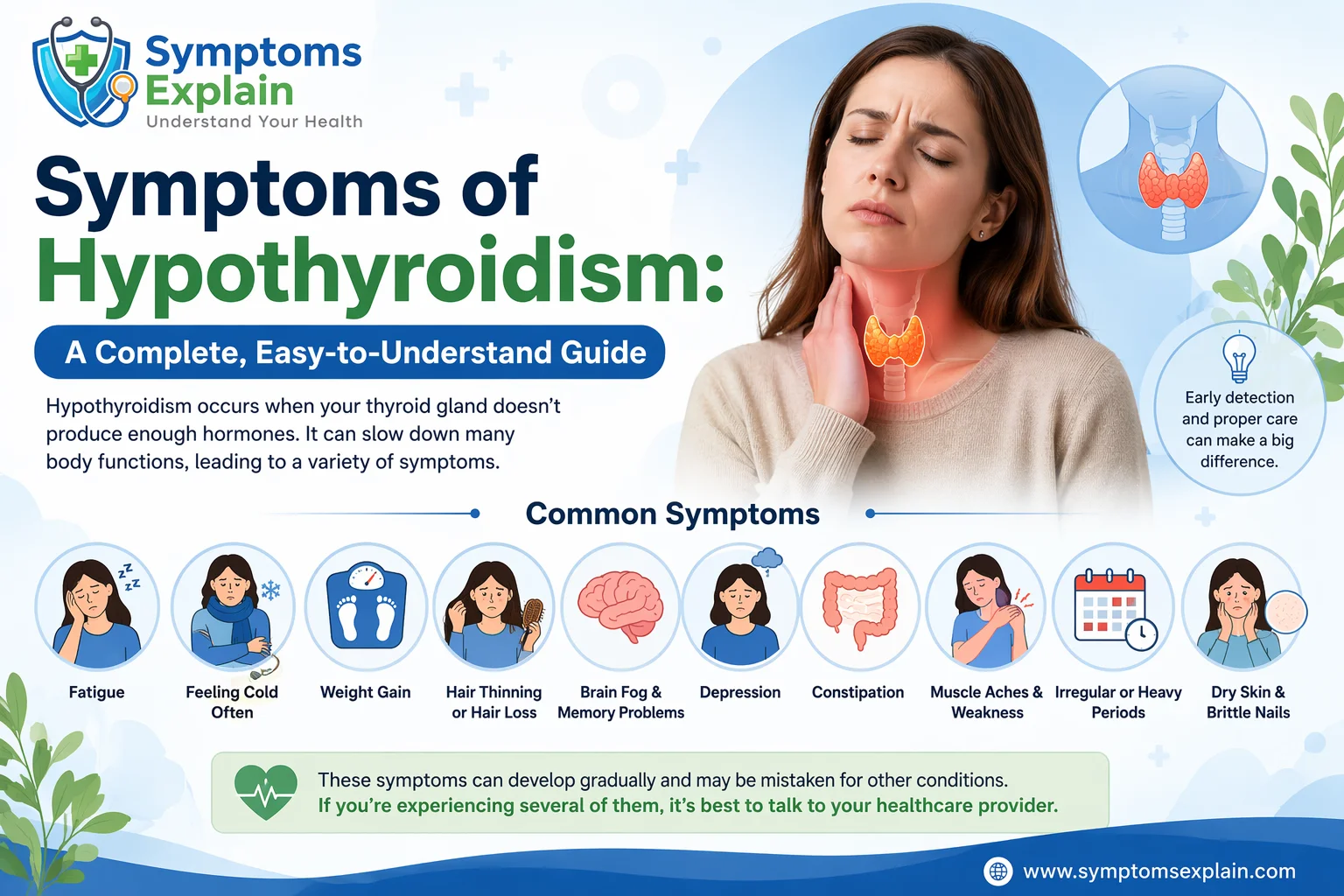
Do you often feel tired, cold, or mentally slow without a clear reason? Many people ignore these signs, thinking they are just part of daily stress or aging. But sometimes, these can be early symptoms of hypothyroidism—a condition where your thyroid gland does not produce enough hormones.
The thyroid is a small, butterfly-shaped gland in your neck. Even though it is small, it controls many important functions in your body. It helps manage your energy, weight, mood, and even how your heart beats.
When your thyroid slows down, your whole body slows down too. This is why recognizing the symptoms of hypothyroidism early is very important. In this guide, you will learn everything in simple words—what to watch for, why it happens, and what you can do about it.
What Is Hypothyroidism?
Hypothyroidism is a medical condition where the thyroid gland does not make enough hormones. These hormones are important for your metabolism, which is how your body uses energy.
When hormone levels drop, your body processes slow down. This leads to many physical and mental changes.
Key Functions of Thyroid Hormones
| Function | What It Does |
|---|---|
| Metabolism | Controls how fast your body burns energy |
| Body Temperature | Keeps you warm |
| Heart Rate | Maintains a steady heartbeat |
| Brain Function | Supports focus and memory |
| Digestion | Helps process food |
When these functions slow, the symptoms of hypothyroidism begin to appear.
Why Do Symptoms of Hypothyroidism Occur?
The main reason is low thyroid hormone production. But there are several causes behind this problem.
Common Causes
| Cause | Explanation |
|---|---|
| Autoimmune disease | Body attacks thyroid (like Hashimoto’s) |
| Iodine deficiency | Thyroid needs iodine to make hormones |
| Thyroid surgery | Removal reduces hormone production |
| Medications | Some drugs affect thyroid function |
| Radiation therapy | Can damage thyroid cells |
Each of these can lead to noticeable symptoms of hypothyroidism over time.
Early Symptoms of Hypothyroidism
At first, symptoms are mild and easy to ignore. Many people think they are just tired or stressed.
Common Early Signs
- Constant fatigue
- Mild weight gain
- Feeling cold more often
- Dry skin
- Low mood
These early symptoms of hypothyroidism often develop slowly. That is why they are sometimes missed.
Physical Symptoms of Hypothyroidism
As the condition worsens, physical changes become more noticeable.
Common Physical Signs
| Symptom | Description |
|---|---|
| Weight gain | Happens without eating more |
| Puffy face | Especially around eyes |
| Hair thinning | Hair becomes dry and weak |
| Brittle nails | Nails break easily |
| Slow heart rate | Heart beats slower than normal |
These physical symptoms of hypothyroidism can affect your confidence and daily comfort.
Mental and Emotional Symptoms
Hypothyroidism does not just affect the body. It also impacts the brain.
Emotional Effects
- Depression
- Memory problems
- Brain fog
- Lack of motivation
- Slow thinking
Many people do not connect these mental changes to thyroid issues. But they are common symptoms of hypothyroidism.
Symptoms of Hypothyroidism in Women
Women are more likely to develop thyroid problems than men.
Common Signs in Women
| Symptom | Impact |
|---|---|
| Irregular periods | Cycles become heavy or uneven |
| Fertility issues | Difficulty getting pregnant |
| Low libido | Reduced interest in intimacy |
| Hair loss | More noticeable in women |
These gender-specific symptoms of hypothyroidism can affect reproductive health and emotional well-being.
Symptoms of Hypothyroidism in Men
Men also experience symptoms, though they may be less obvious.
Common Signs in Men
- Reduced muscle strength
- Low energy levels
- Decreased libido
- Weight gain
- Mood changes
These symptoms of hypothyroidism can impact daily performance and confidence.
Symptoms in Children and Teens
Children can also develop hypothyroidism, though it is less common.
Warning Signs
| Symptom | What It Means |
|---|---|
| Slow growth | Height increases slowly |
| Delayed puberty | Late physical development |
| Poor school performance | Trouble focusing |
| Fatigue | Low energy during play |
Recognizing these symptoms of hypothyroidism early helps prevent long-term problems.
When Symptoms Become Severe
If untreated, hypothyroidism can become serious.
Advanced Symptoms
- Severe fatigue
- Hoarse voice
- Swelling in body
- Slow movements
- Extreme cold sensitivity
In rare cases, a life-threatening condition called myxedema can occur. This makes early detection of symptoms of hypothyroidism very important.
How Symptoms Affect Daily Life
Living with untreated hypothyroidism can make simple tasks feel hard.
Daily Challenges
| Area | Effect |
|---|---|
| Work | Low focus and productivity |
| Social life | Less energy to engage |
| Physical activity | Easy exhaustion |
| Mood | Irritability or sadness |
These everyday struggles are often linked to unnoticed symptoms of hypothyroidism.
How Doctors Diagnose Hypothyroidism
Diagnosis is simple and usually involves a blood test.
Common Tests
- TSH (Thyroid Stimulating Hormone)
- T3 and T4 hormone levels
If TSH is high and T4 is low, it usually confirms hypothyroidism.
Early testing helps catch symptoms of hypothyroidism before they worsen.
Treatment Options
The good news is that hypothyroidism is treatable.
Common Treatments
| Treatment | Purpose |
|---|---|
| Thyroid hormone tablets | Replace missing hormones |
| Lifestyle changes | Improve overall health |
| Regular checkups | Monitor hormone levels |
With proper care, most symptoms of hypothyroidism improve significantly.
Lifestyle Tips to Manage Symptoms
Small daily habits can make a big difference.
Helpful Tips
- Eat iodine-rich foods like fish and eggs
- Exercise regularly
- Get enough sleep
- Manage stress
- Avoid skipping medication
These steps can help control symptoms of hypothyroidism and improve quality of life.
Frequently Asked Questions (FAQs)
1. What are the first symptoms of hypothyroidism?
Early signs include fatigue, weight gain, and feeling cold more often.
2. Can hypothyroidism go away on its own?
Usually no. It often requires lifelong treatment.
3. How fast do symptoms appear?
The symptoms of hypothyroidism develop slowly over months or even years.
4. Is hypothyroidism dangerous?
If untreated, it can lead to serious health problems.
5. Can diet help manage symptoms?
Yes, a healthy diet supports treatment but does not replace medication.
6. Who is most at risk?
Women, older adults, and people with autoimmune diseases are at higher risk.
Conclusion
Understanding the symptoms of hypothyroidism is the first step toward better health. Many people live with this condition without knowing it, simply because the signs appear slowly and feel common.
If you often feel tired, cold, or mentally slow, it is worth checking your thyroid. Early diagnosis can prevent serious problems and improve your quality of life.
From personal observation, many people feel a huge difference once they start treatment. Energy returns, mood improves, and life feels normal again.
