

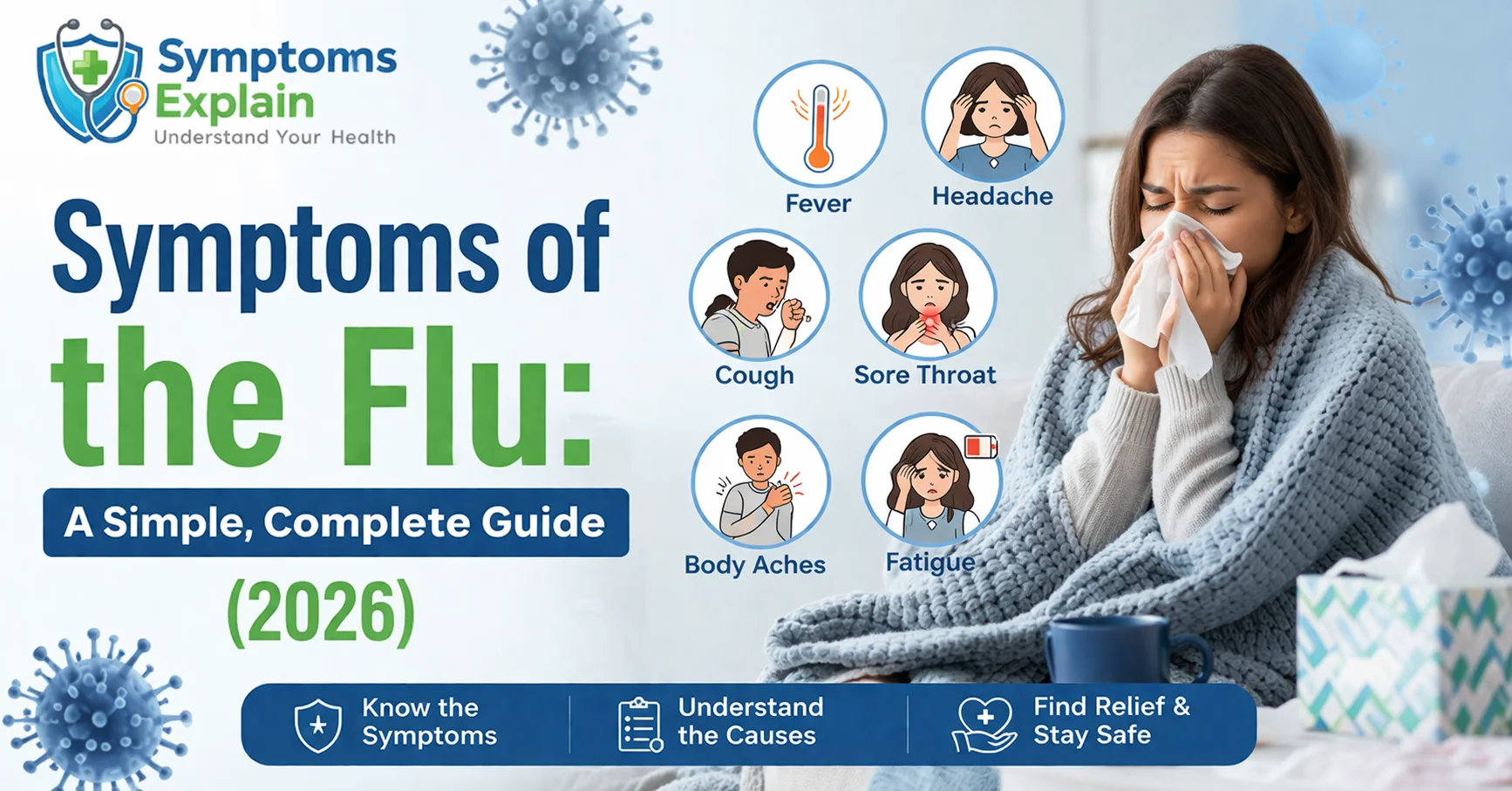
Getting sick is never fun. The flu can hit fast and make you feel very weak. Many people confuse it with a common cold. But the symptoms of the flu are usually stronger and more intense.
In this guide, you will learn everything in simple words. We will cover what the flu feels like, how it starts, and what to watch for. You will also learn about stomach flu, warning signs, and when to see a doctor.
What Is the Flu?
The flu is a viral infection. It affects your nose, throat, and lungs. Doctors call it influenza. It spreads easily from person to person.
When someone coughs or sneezes, the virus can travel through the air. You can also get it by touching surfaces and then touching your face.
The symptoms of the flu often appear quickly. One moment you feel fine. A few hours later, you feel very sick. This is one key difference from a cold.
What Are the Symptoms of the Flu?
Many people ask, what are the symptoms of the flu? The answer is simple. The flu usually comes with strong and clear signs.
Here are the most common ones:
- High fever
- Body aches
- Chills
- Fatigue
- Headache
- Dry cough
- Sore throat
- Runny or stuffy nose
These symptoms of the flu can last several days. Fatigue may last even longer.
Table: Common Flu Symptoms Overview
| Symptom | Severity Level | Common Duration |
|---|---|---|
| Fever | High | 3–5 days |
| Body aches | Moderate-High | 3–7 days |
| Fatigue | High | 1–2 weeks |
| Cough | Moderate | 1–2 weeks |
| Headache | Moderate | 2–5 days |
How Flu Symptoms Start
The flu usually starts suddenly. You may feel fine in the morning. By evening, you feel very sick.
This fast start is a key sign. The symptoms of the flu often begin with:
- Sudden fever
- Chills
- Muscle pain
After that, other symptoms appear. You may feel weak and tired. Even simple tasks feel hard.
Flu vs Cold: Know the Difference
Many people confuse the flu with a cold. But they are not the same.
Table: Flu vs Cold Symptoms
| Feature | Flu | Cold |
|---|---|---|
| Onset | Sudden | Gradual |
| Fever | Common | Rare |
| Body aches | Strong | Mild |
| Fatigue | Severe | Mild |
| Sneezing | Sometimes | Common |
The symptoms of the flu are more intense. A cold is usually mild.
Symptoms of the Flu 2025: What’s New?
People often search for symptoms of the flu 2025. The truth is, flu symptoms stay mostly the same every year.
However, some recent trends include:
- Stronger fatigue
- Longer cough duration
- More cases of mild stomach issues
Doctors also notice that people feel weak for longer periods now. So rest is very important.
What Is the Symptom of Stomach Flu?
Many people ask, what is the symptom of stomach flu? It is different from regular flu.
Stomach flu mainly affects your digestive system.
Common symptoms include:
- Nausea
- Vomiting
- Diarrhea
- Stomach cramps
- Mild fever
Table: Stomach Flu vs Regular Flu
| Feature | Stomach Flu | Regular Flu |
|---|---|---|
| Main area | Stomach | Respiratory system |
| Vomiting | Common | Rare |
| Diarrhea | Common | Rare |
| Body aches | Mild | Strong |
Even though both are called “flu,” they are different illnesses.
Early Warning Signs of the Flu
Recognizing early signs can help you act fast. The symptoms of the flu often begin with subtle clues.
Watch for:
- Sudden tiredness
- Slight fever
- Mild body pain
- Scratchy throat
If you notice these signs, take rest immediately. Early care can reduce severity.
Severe Symptoms You Should Not Ignore
Sometimes, flu can become serious. You must watch for warning signs.
Table: Emergency Symptoms
| Symptom | Action Needed |
|---|---|
| Difficulty breathing | Seek help immediately |
| Chest pain | Go to hospital |
| Confusion | Urgent care needed |
| High fever (persistent) | Doctor visit |
If you see these symptoms of the flu, do not wait. Get medical help.
How Long Do Flu Symptoms Last?
The symptoms of the flu usually last about one week. But some effects stay longer.
Here is a simple timeline:
- Day 1–3: Fever and body aches peak
- Day 4–7: Symptoms start to improve
- Week 2: Fatigue and cough may remain
Recovery depends on your health. Rest and hydration help a lot.
Who Is at Higher Risk?
Some people get sicker from the flu. They need extra care.
High-risk groups include:
- Children
- Elderly people
- Pregnant women
- People with weak immune systems
For these groups, the symptoms of the flu can be more dangerous.
How to Treat Flu Symptoms at Home
Most people recover at home. You can manage the symptoms of the flu with simple care.
Helpful tips:
- Drink plenty of water
- Get lots of rest
- Use fever medicine if needed
- Eat light, healthy food
Table: Home Remedies
| Remedy | Benefit |
|---|---|
| Warm soup | Soothes throat |
| Honey tea | Reduces cough |
| Steam inhalation | Clears nose |
| Rest | Speeds recovery |
These small steps can make a big difference.
When to See a Doctor
Sometimes, home care is not enough. You should see a doctor if:
- Fever lasts more than 3 days
- Symptoms get worse
- You feel very weak
- Breathing becomes hard
The symptoms of the flu can change quickly. It is better to be safe.
How to Prevent the Flu
Prevention is always better than cure.
Here are simple steps:
- Wash your hands often
- Avoid close contact with sick people
- Cover your mouth when coughing
- Get a flu vaccine
These habits reduce your risk of getting the symptoms of the flu.
Personal Insight: What I’ve Seen
From experience, the flu often hits harder than expected. Many people ignore early signs. They keep working and delay rest.
This makes the symptoms of the flu worse. I’ve seen people recover faster when they act early. Rest, fluids, and care really help.
Listening to your body is very important.
FAQs About Symptoms of the Flu
1. What are the symptoms of the flu in adults?
Adults usually have fever, body aches, fatigue, and cough. These symptoms of the flu appear quickly and feel intense.
2. What is the symptom of stomach flu?
Stomach flu includes vomiting, diarrhea, and stomach pain. It mainly affects digestion, not the lungs.
3. How do I know if I have flu or cold?
Flu symptoms are stronger and start suddenly. A cold develops slowly and is milder.
4. How long do flu symptoms last?
Most symptoms of the flu last about 5–7 days. Fatigue may last longer.
5. Can flu symptoms come without fever?
Yes, some people may not have fever. But other symptoms like fatigue and cough still appear.
6. When should I worry about flu symptoms?
You should worry if breathing is hard, chest pain occurs, or fever stays high for days.
Conclusion
The flu is common, but it can feel very serious. Knowing the symptoms of the flu helps you act fast and recover sooner.
Always pay attention to your body. If you feel sudden weakness, fever, or aches, take it seriously. Rest, hydration, and simple care can help you heal faster.
Also, remember that prevention is key. Small habits like handwashing and staying home when sick can protect you and others.
If your symptoms become severe, do not wait. Get medical help right away.
